Watch on YouTube. Listen on Apple or Spotify.
20-year-old Megan Barroso was celebrating Independence Day 2001 with her friends only one hour before her abandoned car was found under highly suspicious circumstances in the middle of the night. Her car was straddling a center median in Moorpark, California only one mile from her home. The engine was still running, the driver’s door was left open & most horrifying of all, her car was riddled with bullets while blood streaked across the interior of the car & Megan was nowhere to be found.
As investigators continued to search for Megan, they came to find that her case was tied to a man who came to be known as the Simi Valley Rapist. He had been terrorizing dozens of young women across the area for five years, slipping into their homes undetected during the darkness of night to sexually assault them at knifepoint. His violence had been building & in Megan’s case, it came down to one tiny speck of glimmering evidence that helped bring a monster’s reign of terror to an end.
Megan Barroso was born on March 15, 1981 as the only daughter & youngest child to Suzan & Arturo “Art” Barroso. The family lived in the quiet community of Camarillo, California in Ventura County just under 50 miles northwest of Los Angeles.

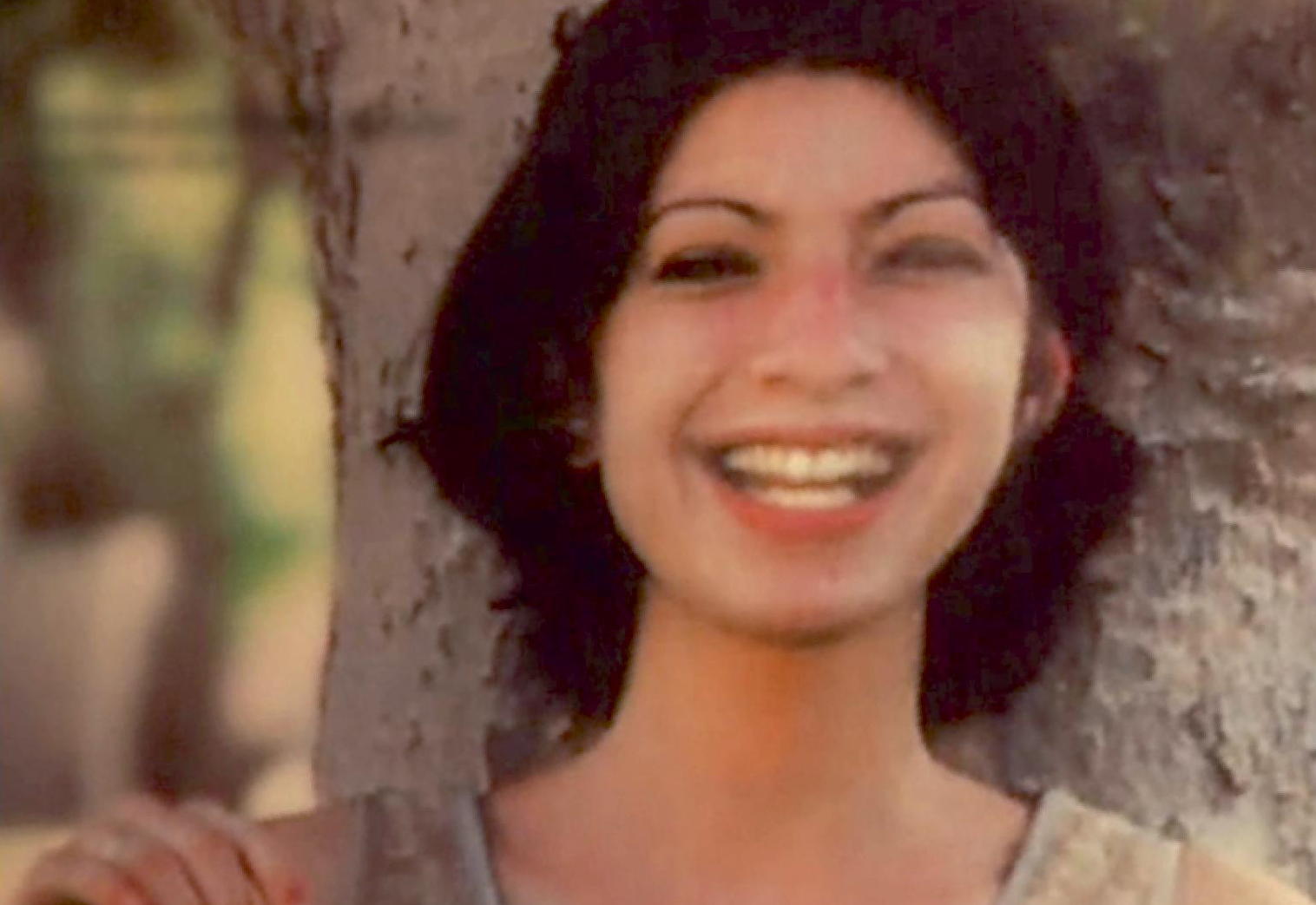
Megan’s parents divorced when she was only a baby & although she & her brother AJ mostly lived with their mom, their dad remained a constant figure in their lives. Megan was an incredibly social, friendly person with a warm smile & a contagious laugh who people were naturally drawn to. From a young age, she had a passion for Irish step dancing & was a member of the Claddagh Dance Company.

She attended Adolfo Camarillo High School for most of her teens, but when her mom accepted a job several hours north, she missed her senior year there. Moving away from her friends at the end of high school was a sad time for her, but she pushed through & earned her diploma through a home-study program.
Several years before her murder, Megan moved back to Ventura County & worked at several temporary jobs until she settled at her most recent job with Gramici, a clothing company in Oxnard where she worked as a production purchasing assistant.
Moving forward to the summer of 2001, Megan was enrolled as a part-time student at Moorpark College & she lived with roommates in an apartment in Moorpark, a city situated 7.5 miles west of Simi Valley.
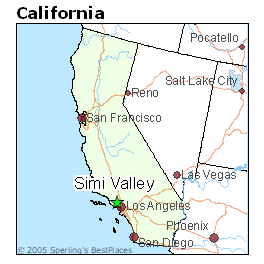
Simi Valley is located in Ventura County & is home to the Ronald Reagan Presidential Library where the former president was buried in 2004. Despite the fact that at the time, a serial rapist was on the loose since 1996, Simi Valley is routinely ranked as one of the safest cities in the nation with an overall crime rate that’s about 45% below national averages, according to FBI crime statistics.
In the week leading up to July 4, 2001, Megan was so excited about her new job. At only 20-years-old, she was thrilled to have her very own cubicle & she’d gotten a name plate to personalize her space.
On Wednesday, July 4, 2001, Megan went to one of her best friend’s family home, Lindsay Gross, to celebrate the holiday. The two had met while working in a young women’s clothing store at a local mall when Megan had just graduated high school & they instantly connected over their love of fashion & music. Lindsay’s father recalled how Megan had not only befriended the family, but she also spent time getting to know his elderly mother by taking walks with her.
After the gathering, Lindsay & Megan went to watch the fireworks display at Silver Strand Beach where they met up with several friends from high school.
Everyone was having a great time & while they were at the beach, a guy flirted with Megan, but she politely let him know that she wasn’t interested. He eventually backed off & at about 10:30 pm, when the fireworks show had ended, the group stopped off for milkshakes before heading to a friend’s apartment in Thousand Oaks.
Right around 2:45 am, now in the early morning hours of Thursday, July 5, 2001, Megan decided she was ready to go home. Lindsay offered for her to spend the night since it was so late, but Megan wanted to sleep in her own bed. She left in her Pontiac Sunfire, a rental car she was driving while her car was getting repaired after an accident.
About an hour later, shortly before 4 am, a Lantz security guard from a nearby business was driving by the area when he found Megan’s four-door dark green Pontiac Sunfire rental car facing south on New Los Angeles Avenue. It was straddling the cement median under the Highway 23 overpass not far from the State Route 118 exit ramp in Moorpark.
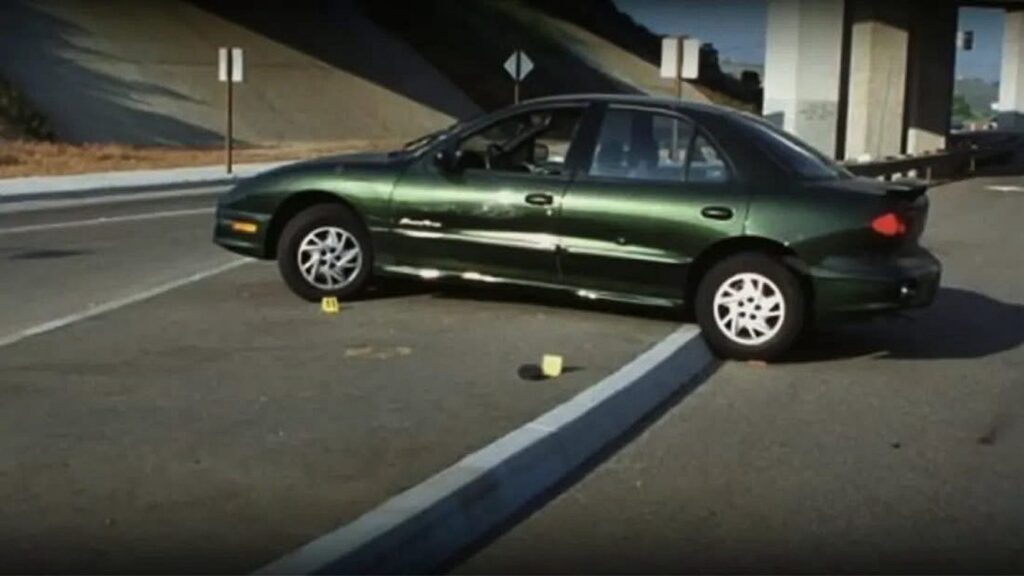
On initial glance, he assumed it was a drunk driving related accident since it was so early in the morning after one of the heaviest drinking holidays in the United States. But, as he got closer, he could hear the engine running while the lights were on, the windshield wipers were running & the driver’s side door was open. Even more concerning, windows had been shattered & the car was riddled with bullet holes while the driver was nowhere to be seen.
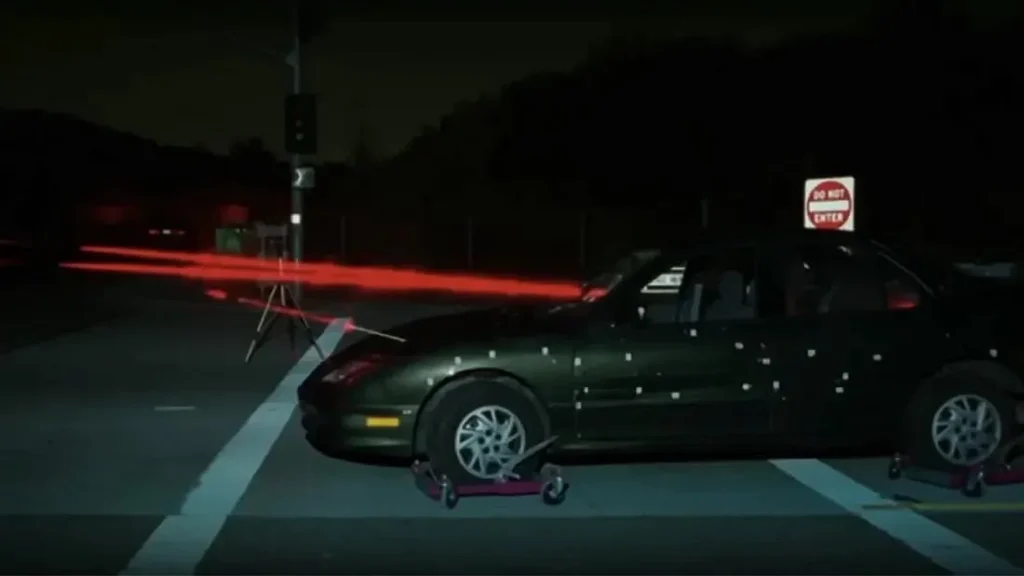
The security guard immediately contacted the Ventura County Sheriff’s Department who cordoned off the area & began an investigation. They determined that six bullets had gone through Megan’s car, three through the windshield, one through the hood, one through the rear passenger door that exited through the rear driver-side side door while the last was fired through the driver’s-side door.
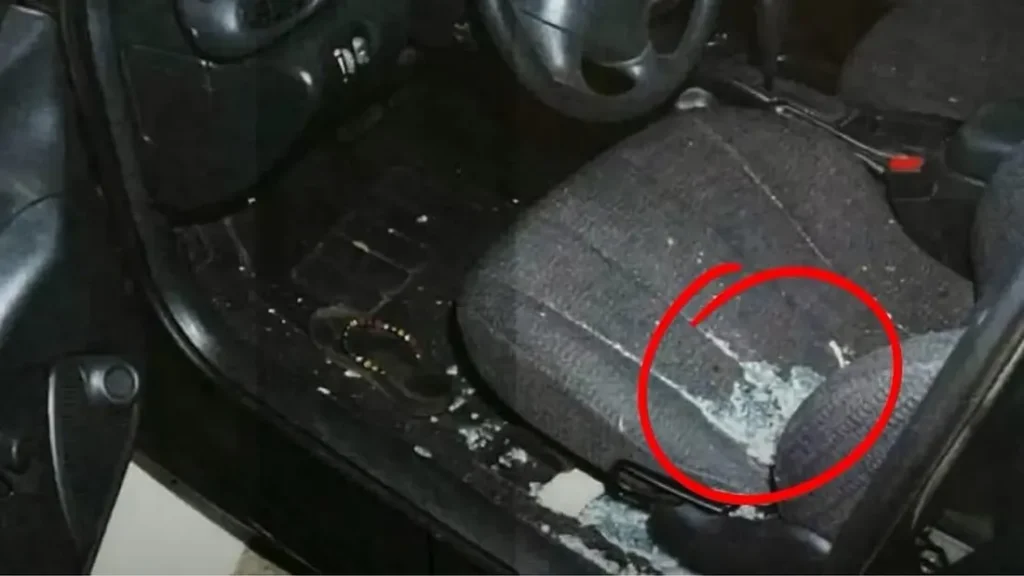
Glass littered the driver’s seat & blood was streaked across the steering wheel as well as the seat & the gear shift. a phone, a purse & a small makeup case were found on the foot-well of the passenger side while a single discarded woman’s flip flop lay outside the driver’s side of the car while the other sandal was missing.
The purse that was smeared with blood held no ID & based on the items scattered along the passenger side footwell, it seemed someone had torn through the purse. Based on the flip flop, the makeup case & the purse, investigators assumed the car had been driven by a female.
They quickly identified the car as a rental which was then traced back to Megan. Her family had already begun to worry as Thursday progressed without word from her, but when detectives notified them about the state of her car & the fact that she was missing, they were absolutely beside themselves with terror.
At 1 pm, the car was towed to the crime lab garage for processing. They hoped the event data recorder in the car, similar to a black box in an airplane, might shed some light as to what happened. Since it was only 2001, finding one felt like a true stroke of luck.
As it was examined, it proved that Megan had come from the off-ramp to the stop sign at the bottom. From a complete stop, she pushed the accelerator down to 100% which told investigators that she had been in a panicked situation, trying to flee from someone. This was when her car landed on the cement divider & came to a stop.
Investigators believe that Megan was on her way home to the Le Club Apartments when someone followed her & eventually began firing shots at her car. Based on the shell casings near her car that had a distinctive green tint, they had come from an AK-47 rifle. There was also a cleaning rod lying nearby that matched what is used for an assault rifle.
Based on the blood in the car, Megan had been wounded, but she continued to drive until her assailant sideswiped her car, evidence that was proven by a long scrape that ran across the driver’s side of her car. Once stopped, the shooter forced her into their car which explained why there hadn’t been a trail of blood on the pavement leading away from her car.
Laser trajectory analysis mapped the path that each bullet had taken. Based on this as well as the position of the blood, Megan had likely been shot in the chest or stomach. The patterns of blood suggested movement, possibly her leaning over to reach for her phone that lay in the footwell of the passenger side.
A search for Megan began immediately in the area using K-9 units, officers on foot & a helicopter using infrared technology, but no leads were found. By mid-morning, law enforcement volunteers were called to expand the search & comb over the surrounding area. Area hospitals were also contacted, but she wasn’t there.
When investigators spoke with Lindsay, she indicated that Megan had been wearing white pants, a green t-shirt, sandals, a green jacket with orange lining, a Claddagh ring her mom had given her that she wore daily & she carried a blue & white bag.
When the guy who had been flirting with Megan that night was interviewed, he indicated that he’d gone straight home after the party & his alibi checked out.
There was no motive whatsoever that investigators could find as there was nothing in Megan’s life that suggested conflicts of any kind.
According to Megan’s father, 52-year-old Art Barroso, his daughter was extremely responsible & routinely contacted him if she was having any problems. He knew in his heart that she wasn’t calling now because she couldn’t. When officers told him that his daughter was missing at 6 am on Thursday morning, each time he called her, it went straight to voicemail.
When Megan had lunch with her grandmother earlier on the fourth, she seemed absolutely fine. She wasn’t having any personal issues & she didn’t have a boyfriend. There were no friends that she associated with that ran with a rough crowd or were involved with drugs or violence.
Art last spoke with his daughter on Tuesday, July 3 when she hadn’t come to his house for lunch that day as she normally did. Megan explained that she had gotten tied up at work, but she apologized for not letting him or her grandmother know that she wasn’t able to make it. She told her dad about the party she was going to the next day in Newbury Park & from what he understood, she was going to be spending time with people she had known for years.
Megan’s car had been found near Simi Valley, a community that was named The Safest Large City in the United States in 1998 based on FBI crime statistics. Despite this title, the Simi Valley Rapist had been breaking into the homes of more than a dozen young women at night since 1996 to bind & sexually assault his victims at knifepoint.
He wore a ski mask & gloves during the assaults & although he had left his DNA behind at crime scenes, it was not a match to any profile in the national database.
According to an FBI profile, the rapist was likely single & a resident of Simi Valley who had failed at long-term relationships with women. He probably had a criminal record that included peeping, burglary or trespassing.
At one point, investigators were wading through a suspect list of more than 400 people while the man remained one of L.A.’s most wanted criminals.
Police believe the rapist stalked the majority of his victims before attacking, trying to learn their names as well as those of their family members, sometimes threatening the family to keep his victims from reporting the attack.
He got familiar with the layout of their homes, their routines & often watched them through their bedroom windows. He once filmed a 15-year-old changing into her pajamas before breaking in & assaulting her.
As time went on, he became increasingly daring & violent, learning from his previous attacks. While he raped some women in their own beds, others he kidnapped & raped at other locations, including his home.
On May 4, 1999, he broke into his 7th victim’s home & found her asleep in her bedroom. He shone a flashlight in her face & identified himself as a police officer before pointing a gun at her & driving her in her car to an unknown location to sexually assault her.
He recorded some of the rapes on video & took photos during the attacks. He forced some victims to shower in front of him after the assaults & sometimes took trophies from his victims such as underwear or other personal items.
Some of the women had been able to fight him off or scream which led him to flee from their homes before he could attack them. He also got violent when his victims tried to fight back, stabbing one woman in the calf & punching another in the face before smashing a beer bottle over her head.
By 2001, based on matching DNA, police believed that the same man was responsible for at least fourteen rapes & kidnappings. For years, he carried on his violence while avoiding capture.
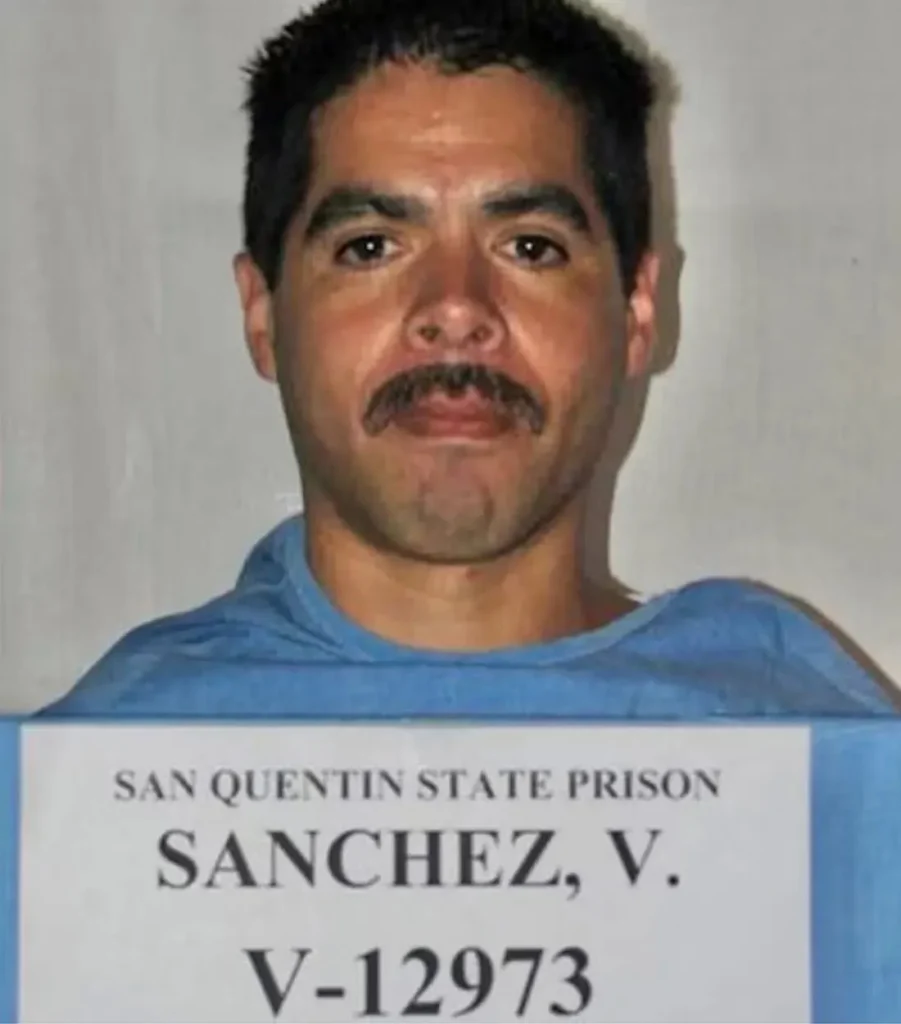
On July 27, 2001, 22 days after Megan went missing, police arrested 31-year-old Vincent Sanchez for burglarizing his next-door neighbor’s home. At the time of his arrest, he was an unemployed carpenter who’d gotten injured in a 1995 work accident & had been living on disability since.
While he remained behind bars, Sanchez called Josh Reno, one of his roommates he rented a tract home with, asking him to get rid of a bag he’d left in a recycling bin outside their house on Woodrow Avenue. He told Josh that it held compromising photos of his girlfriend.
When Josh found the bag, he couldn’t resist a peek inside which was when he found women’s clothing, jewelry, photos & videotapes. The photos depicted women he didn’t recognize who were naked & bound. As he watched one of the videos, he was stunned to see a masked man raping a screaming woman.
Although Sanchez wore a ski mask during the attacks & covered his victim’s faces to conceal his identity, his face was visible at times, once when he pushed the mask up to reveal his face.
Josh immediately called 911 & authorities were able to recognize many of the women as victims of the Simi Valley Rapist. Now, in addition to being under investigation for burglary, Sanchez was also the top suspect for five years of brutal assaults.
Josh told investigators that he noticed his AK-47 assault rifle & ammunition missing about one week after the 4th of July. Sanchez admitted that he’d taken it, but he returned it the following day with a small amount of ammunition. Not only did this weapon match what was used in Megan’s case, but she also fit his preferred victim’s appearance. At 5’8” & 112#, she was thin, young & she also had brown hair.
According to Josh, after Sanchez gave him the rifle back, he noticed the cleaning rod was missing from the Hungarian-made weapon.
When authorities inspected the weapon, they realized the ammunition’s casings were green-tipped which matched what was found at the scene of her bullet riddled car. Ballistics testing soon proved that they were an exact match as was the missing cleaning rod that had been found near Megan’s abandoned rental car.
While the rifle was examined, analysts found something nearly microscopic clinging to the metal; a single flake of red glitter. Investigators wondered if the glitter was somehow tied to Megan.
Lindsay told them that before they left to see the fireworks, she had sprinkled red glitter into Megan’s hair that she bought at Hot Topic. A few pieces were left in the empty bottle that Lindsay had kept from the festivities which she handed over to authorities.
At the Ventura lab, trace evidence analyst Edwin Jones, a glitter expert & collector of over a thousand different samples of glitter in his analysis binder, matched the glitter on the rifle to what was left in Lindsay’s bottle. It was a red hexagonal glitter that was approximately 0.25 mm in diameter, red & shiny on one side & dull on the other.

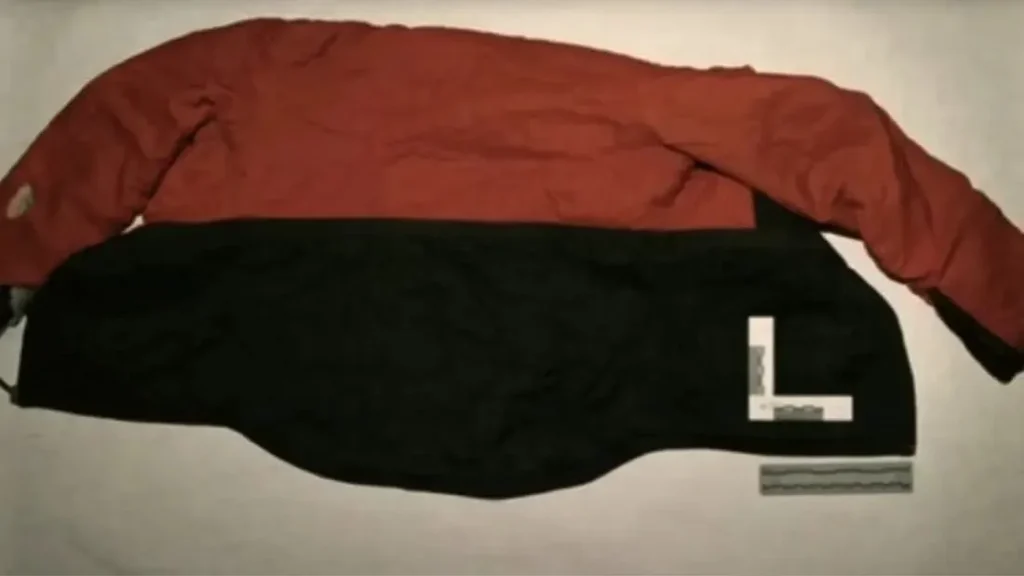
After obtaining a search warrant, when investigators combed through a garbage can behind Sanchez’s house, they found a green jacket with an orange lining that matched what Megan had been last seen wearing. The jacket had a bullet hole through it & small spots of blood on it as well as red glitter.
When his Ford Ranger truck was searched, more flecks of glitter were found in the front seat & in the bed of the truck. Detectives also confirmed that paint fragments from the scrapes on Megan’s rental car had come from Sanchez’s truck. Blood found in the cab of his truck proved to be Megan’s & although the upholstery appeared clean, through chemical testing, blood was also detected on the left side of the passenger seat, the center console & under the seat.
Sanchez’s brother later testified to seeing Sanchez washing his truck early on July 5, the same day that Megan was reported missing. According to Josh, Sanchez had been acting strangely that day & appeared to have scratches on his face. He stayed in his room for the entirety of the day, only coming out at night.
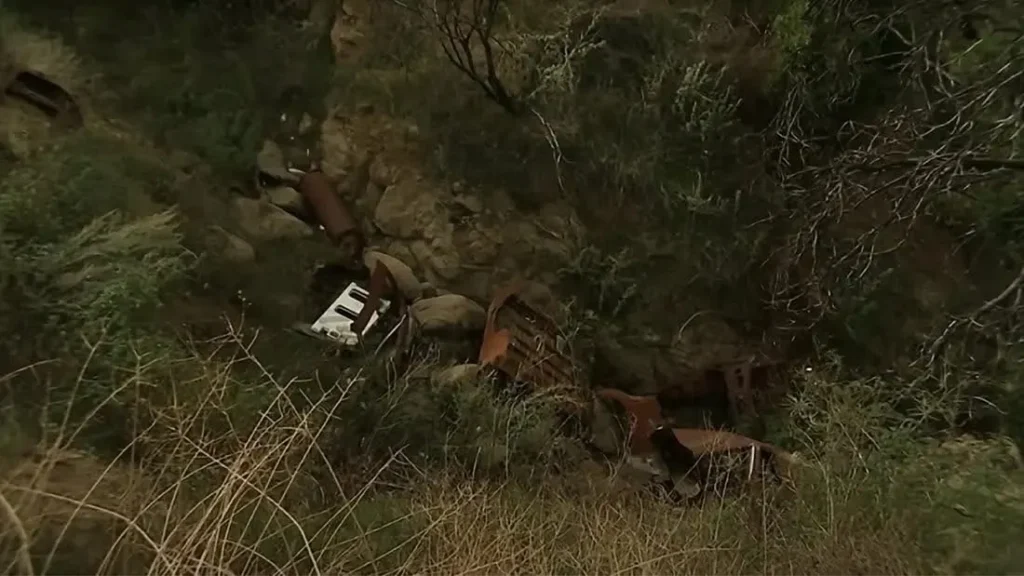
One month after Megan was last seen alive, her body was found by a three-person search team led by dogs at about 8 am on August 4, 2001. Her remains were at the bottom of a 50-foot ravine in Black Canyon under two feet of dead leaves & branches just outside the Simi Valley city limits, about fifteen minutes from where her car had been found abandoned. She wore a green shirt & underwear while her pants were missing.
Her badly decomposed remains were initially identified by her clothing as well as the claddagh ring she wore on her left middle finger that her mother had given her when she was 17. Dental records definitively confirmed this. Although her white capri pants were missing, due to the extent of decomposition, it was impossible to determine if she’d been sexually assaulted.
According to Ventura County Medical Examiner Ronald O’Halloran, two pieces of a bullet were found lodged inside Megan’s remains after she was shot once in the abdomen. A heartbreaking fact is that she likely would have lived for several hours, even up to a day or more after she was shot as the bullet fragments appeared to have missed vital organs. Had she received medical attention, she may have survived, but instead, she’d been tragically left to die a painful death alone.
On Sunday, August 12, 2001, more than 500 people came to pay their final respects to Megan at Peace Lutheran Church in Camarillo. The overflow of mourners watched the ceremony on large TVs in an annex of the church while Megan’s ashes were held in a small urn near the altar. There were two rows of Irish dancers, each wearing a traditional dress & holding an empty pair of dancing shoes to represent a missing dancer.
Reverend Jerry Ester, whose daughter was a friend of Megan’s & Megan had lived with the family for more than two years, wanted the congregation to celebrate in Megan’s life rather than dwelling in the violence of her death.
Criminalists were able to pick out ten pieces of red glitter from her scalp that matched what was inside the tubing Lindsay had given investigators.
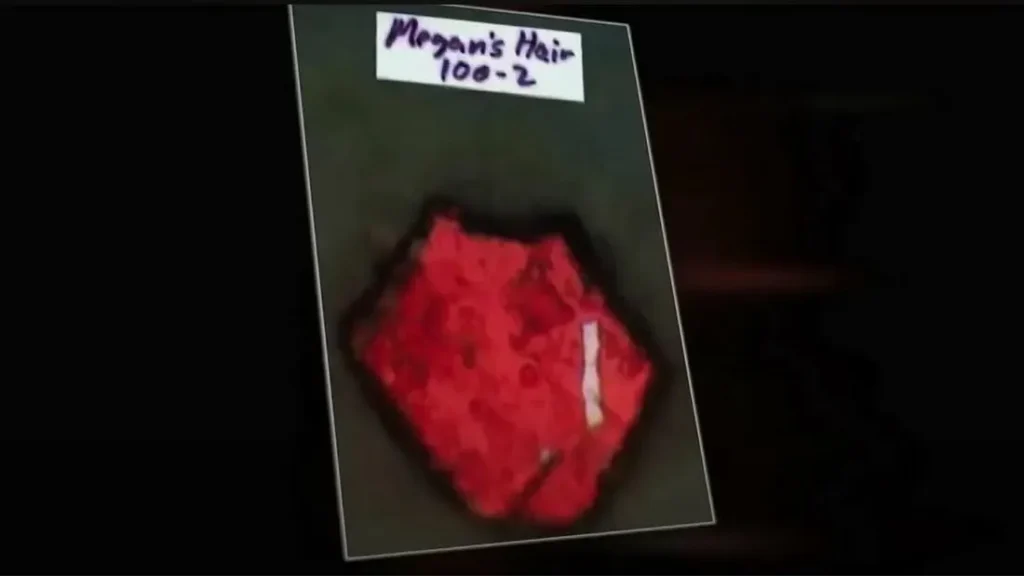
Glitter ended up being one of the keys to figuring out what happened to Megan. Anyone who has handled glitter knows it’s notoriously nearly impossible to get rid of. Although Sanchez had spent hours trying to clean his car in the early morning after Megan’s murder, he hadn’t gotten all of it. It remained on the rifle, Megan’s scalp, her jacket, the front seat of his truck & the truck bed.
With the evidence against him, Sanchez confessed to the previous rapes as well as Megan’s murder. However, at the time, under California law, the court wanted to pursue the death penalty which meant that prosecutors needed to prove that he not only killed Megan, but did so while trying to kidnap or sexually assault her.
Since Sanchez wouldn’t admit to it & because forensic scientists couldn’t determine how long she’d survived or if she’d been sexually assaulted, investigators were tasked with working tirelessly to recreate Megan’s final moments.
They needed to determine how the bullets had traveled through her body, in what position she’d been transported to Sanchez’s truck, where her pants were & if she was wearing the same underwear she’d worn earlier that day.
Sanchez was in court on September 4, 2001, 12 days before his 32nd birthday, to be arraigned on a grand jury indictment that charged him with sexually assaulting 14 women from September 6, 1996 to July 9, 2001 as well as first-degree murder for Megan’s death.
The murder count contained special circumstances alleging that he killed her while attempting to kidnap & rape her, or he killed her while commiting those acts. These circumstances would make him eligible for the death penalty.
A full picture of Sanchez emerged from the 1,145 pages of grand jury testimony. He targeted 15 women beginning in September 1996 until his terrifying spree ended on July 9, 2001, five days after he gunned Megan down when he kidnapped & raped a woman.
Vincent Henry Sanchez, the man who became known as the Simi Valley Rapist, was one of eight children born to Margaret & Mariano Sanchez, strict, but loving parents. Margaret & her daughters all dressed conservatively & wore no makeup. Television was not allowed in their home.
Sanchez attended Royal High School where he was a member of the wrestling team. He dated several classmates as well as girls in his neighborhood, but during his junior year, he dropped out & moved to Utah where he has relatives.
When he moved back to California in 1991, the 21-year-old began a tumultuous relationship with Dona Conrad, a 17-year-old single mother. They moved in together, but often fought about Dona’s 1-year-old daughter. She later told authorities that he often forbade her from feeding or clothing her baby, arguing that she needed discipline since he felt the baby was a spoiled brat who cried too much.
According to court documents, when he caught Dona feeding the child in March 1992, he became enraged. He pushed Dona to the floor & began choking her until she nearly lost consciousness. Later, he picked the baby up & told Dona there was something wrong with her as the baby’s eyes rolled to the back of her head & she struggled to breathe.
Court records don’t explain exactly what happened to the baby, but after she was rushed to Palmdale Hospital, both Sanchez & Dona Conrad were charged with child abuse. Sanchez served less than two years for the offense.
On his release, he returned to Simi Valley where he rented a home he shared with four roommates. As far as they could tell, he seemed like a nice guy who offered to cook them his favorite Mexican dishes, he was always clean-cut, well dressed & they described him as immaculate.
In late 1995, while he was working in construction, he was injured in a crane accident when he broke both legs & required surgery that included skin grafts. He was subsequently awarded a substantial workman’s comp settlement.
After the accident, his roommates noticed changes in him, saying that he began to drift & spent more time camping. As the years went on, he became increasingly withdrawn & spent much of his days in his room, even moving items he normally kept in the living room into his bedroom.
He soon began dating a woman with four children who was ten years his senior, Luz (LOOSE) LaFarga, who described Sanchez as a controlling man who bordered on obsessive. Their relationship ended after she had to obtain a restraining order against him, accusing him of breaking into her home & threatening to kill her. It was during their relationship when the rapes began in September 1996.
According to Sanchez’s friends, on July 4, he’d been drinking beers at home, chatting with neighbors & watching the fireworks before he left at 2:45 am on July 5 in his dark green Ford Ranger. 70 minutes later, Megan’s abandoned car was found under the Highway 23 overpass. Since there was no evidence that he had been previously stalking Megan, this was no doubt a crime of opportunity when he just so happened to pass her on her way home.
Vincent Sanchez’s trial began in May 2003, nearly two years after Megan’s murder. He pleaded guilty to 14 sexual assaults & admitted to murdering Megan with the rifle that he’d taken from his roommate.
Since he was charged with sexual assault in connection to Megan’s murder, something he denied, a jury needed to determine if he would be eligible for the death penalty.
The prosecution provided all of the evidence, including the rifle, the shell casings, Megan’s jacket that was found at his house, her blood found in his truck as well as the glitter.
According to James Roberts, an analyst with the Ventura County Sheriff’s Department, based on the bullet holes, cartridge casings & other evidence found at the crime scene, Sanchez fired one shot into the hood of Megan’s car, three into the windshield, one into the driver’s door while the sixth went through the rear passenger door. Based on the angle of this shot, Sanchez likely fired it into the back of her car during a freeway chase that occurred before the shooting at the intersection began.
Roberts spent months conducting tests & compiling measurements to paint a picture as to how the shooting happened. There were six bullet holes in Megan’s car & six cartridges found in & around the intersection. He believes that the sixth cartridge was ejected in Sanchez’s truck when he fired the rifle during the freeway chase before reaching the intersection. As he stepped out of his truck to approach Megan’s car, the cartridge fell out.

The pattern suggests that Sanchez stood outside the crosswalk about five feet from the bumper of her car & while he was firing, he stepped to his right as the car accelerated past him & turned left onto New Los Angeles Avenue where it crashed across the center median & came to a stop.
Two of the shots through the windshield were fired in close proximity to each other & one of the bullets had clipped the left side of the driver’s headrest. The third bullet broke apart after hitting the bottom of the windshield, scattering inside the car.
The prosecution theorized that Sanchez chased Megan on the Moorpark Freeway & passed her as she exited onto New Los Angeles Avenue. As her car came to a stop at the end of the offramp, he got out of his truck & began shooting at her. After he shot her, he pulled her from her car, tried to rape her & left her in the ravine to die.
Although the medical examiner couldn’t confirm that she had been raped, the fact that she wore only a t-shirt & underwear when her remains were recovered, was a strong indication that she had been.
Sanchez’s public defender, Neil Quinn, didn’t dispute that he fatally shot Megan, but argued there was no rape attempt or kidnapping. He went on to say that the shooting had been a spontaneous act in a drunken rage after a breakup, rather than a planned sexual assault as Megan’s case had been an outlier to his previous attacks.
The time of her death was an important factor as Neil Quinn argued that she likely died before a rape occurred based on the lack of evidence of a struggle inside her car. He also noted the sudden deceleration of her car as it rolled onto the center median as evidence that she had lost consciousness before quickly dying.
He went on to say that his shooting of Megan was different from his previous rape cases, arguing that had he wanted to rape Megan, he would not have used lethal force.
However, there were more than 20 bloodstains around Megan’s purse & small makeup case that suggested she had been alive & trying to reach for her cell phone that was found on the passenger floor next to the spilled contents of her makeup case.
Trace evidence analyst Ed Jones testified that the stains were consistent with a person with a bloodied hand trying to open the case. The coroner had also found metal fragments in Megan’s right hand consistent with an injury.
When the fatal bullet tore through the driver’s side door & hit Megan in the left side, medical examiner O’Halloran told jurors that had Megan gotten medical treatment within a half hour of being shot, her chance of survival would have been very good.
O’Halloran believes that when Sanchez pulled her from her car, she was wounded but likely alive. He did acknowledge that although the bullet did not appear to have hit the aorta, fragments could have nicked her left kidney, but he believes otherwise.
Former military surgeon Dr. Martin Fackler also testified that Megan may have survived after being shot, but decomposition makes it difficult to determine. He admitted that it’s possible she could have immediately slipped into unconsciousness & died sometime after.
Another pathologist, Richard Mason, testified that she could have lived for as little as 15 minutes or as long as two days depending on whether the aorta or kidney had been hit.
Jurors heard testimony from victims of the Simi Valley Rapist who described the horrifying home invasions & subsequent attacks that entailed hours of captivity, assault & threats with a knife. They were also shown one of the videos Sanchez recorded of himself during an attack while the defense argued that because the recordings were so graphic & disturbing, showing them to jurors would be unfairly prejudicial, compromising Sanchez’s right to a fair trial.
The judge ruled that the footage would be shown only to jurors while audio would still be heard throughout the courtroom.
After four days of deliberation, on August 5, 2003, the jury found Sanchez guilty of first-degree murder, kidnapping, attempted rape & related special circumstances in the fatal shooting of Megan Barroso.
Three months later on November 4, 2003, he was sentenced to death. During the hearing, 33-year-old Sanchez apologized & told the judge that he deserved to die for killing one woman & raping so many others.
When Art Barroso was given a chance to speak, he called Sanchez a coward who hid behind the threat of knives & guns to control women & he should now die like a man.
After executions in California were frozen by a court order in 2006 & eventually temporarily suspended in 2019 after Governor Gavin Newsom signed an executive order on March 13, 2019, his sentence was converted to life in prison.
Megan had been only 20-years-old when her life was taken by a monster she just so happened to cross paths with on her way home from a fun night with friends. She was a sister, a daughter & a friend who should have had decades of life ahead of her.
This case is a sad reminder of how quickly danger can enter an ordinary night. Although justice was thankfully served in the end, it will never bring Megan’s precious life back.
Her friends fondly remember Megan as a young woman who loved music, especially Wham & Billy Idol. She had a tendency of leaving the cabinet doors open, she hated to take out the trash & she loved eating her ice cream from a coffee cup while forgetting to put the ice cream away.
Suzan Barroso clings to the memories of all the things she & her daughter did together. After so many community members came together to bring her daughter home, Suzan hit the nail on the head when she said, It was the evil that took down Megan, but it was the good that brought her back.
References:
- VC Star: Bullet-riddled car found; driver gone
- VC Star: Simi rapist became bolder, more violent
- VC Star: Sanchez admits rapes, killing Megan Barroso
- VC Star: ‘I raised a good girl,’ mother says
- Oxygen True Crime: Megan Barroso’s bullet-riddled car found after Fourth of July
- Oxygen True Crime: Specks of glitter help lead to man who murdered college student after 4th of July fireworks
- Popular Mechanics: Inside the glitter lab
- Medium: One fleck of glitter: The case of Megan Barroso
- Medium: A glitter of hope: How an unlikely piece of evidence put away a violent rapist & killer
- VC Star: Simi rapist became bolder, more violent
- Los Angeles Times: Slain woman was shot, autopsy shows
- Los Angeles Times: Coroner unable to say if slain student was raped
- Los Angeles Times: Autopsy inconclusive, court is told
- Los Angeles Times: Murder suspect took assault rifle, witness tells judge
- Los Angeles Times: Experts agree on survival time after shooting
- Los Angeles Times: Slaying suspect ordered to trial
- Los Angeles Times: A chilling picture of accused killer
- Los Angeles Times: No evidence of struggle in victim’s car, judge told
- Los Angeles Times: Expert describes shots fired into slain student’s vehicle
- Los Angeles Times: Crowd mourns slaying victim
- Los Angeles Times: Simi Valley rapist is convicted of kidnapping, first-degree murder
- Los Angeles Times: Sanchez receives death sentence
- Los Angeles Times: Simi Valley Rapist is convicted of kidnapping, first-degree murder
- Los Angeles Times: Blood in truck linked to slain college student, experts say
- Los Angeles Times: Police say rape suspect has long criminal record
- Wikipedia: Simi Valley, California
- Ventura County District Attorney Term Report 2003-2006
- New Spirit: What to know about Simi Valley CA population culture laws politics sports business & healthcare
- California Department of Corrections & Rehabilitation: History of capital punishment in California