Watch on YouTube. Listen on Apple or Spotify.
For years, women had been disappearing from the streets of Anchorage, Alaska. The true extent of what was happening wasn’t brought to light until Monday, June 13, 1983 when a 17-year-old girl was found running terrified, naked & handcuffed down a highway. She later told Anchorage police officers a harrowing tale of being abducted by a man who had brought her to his home, chained her to a pole, raped & tortured her for hours.
Since Anchorage was growing at an exceptionally rapid pace during the late 1970s & early 1980s due to the construction of the Trans-Alaska Pipeline, women were able to disappear far more easily than they should have. Since these women worked as dancers, escorts or sex workers, they were already living with an increased risk of violence, but because people were coming & going, sudden disappearances were commonplace.

For twelve long years, glaring red flags had been blatantly ignored which allowed a sick, sadistic, unassuming man to take vulnerable women into the wilderness to hunt them like game. He deliberately targeted women that he believed society wouldn’t come looking for, who police wouldn’t believe or whose disappearances could be written off as someone simply leaving town.
It wasn’t until the bodies of four young females were discovered in the wilderness over the course of three years when authorities finally began to take the idea of a serial killer more seriously.
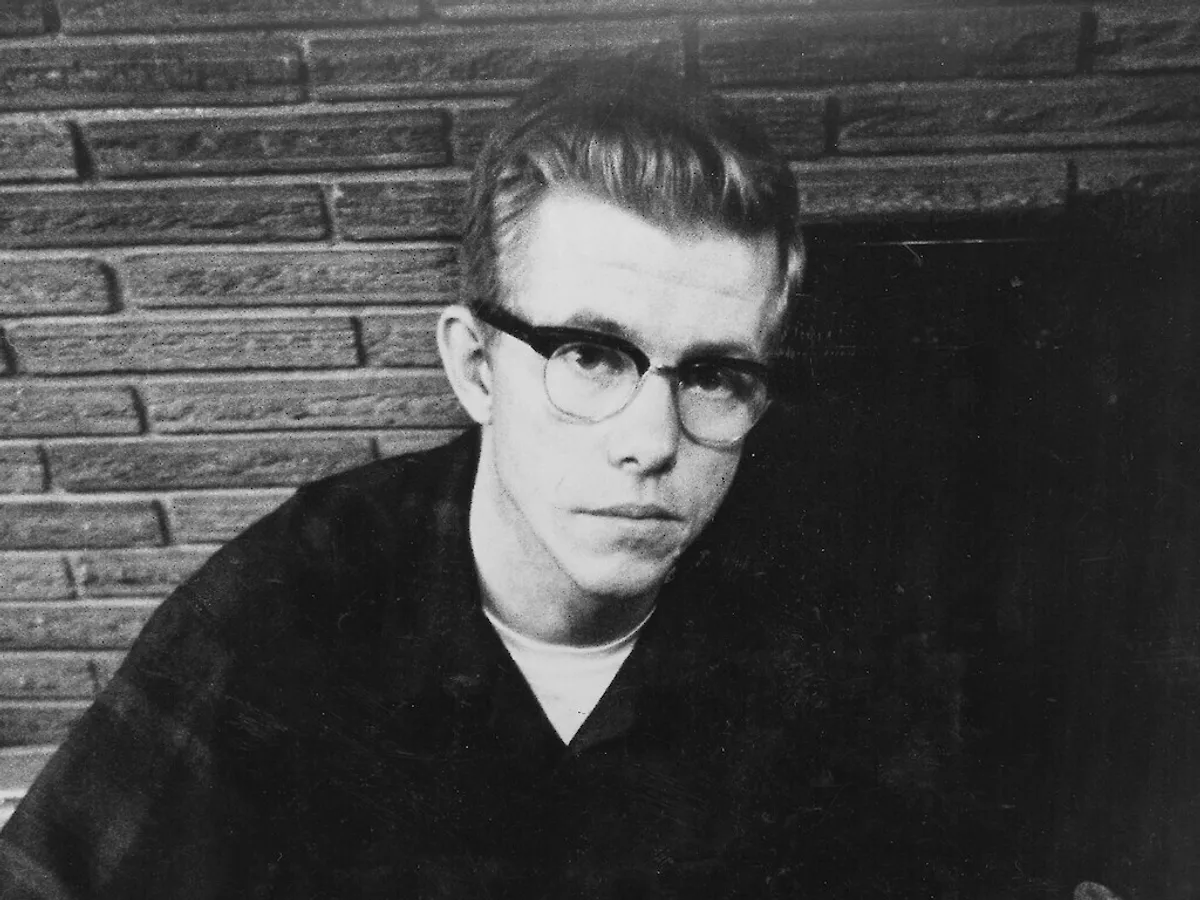
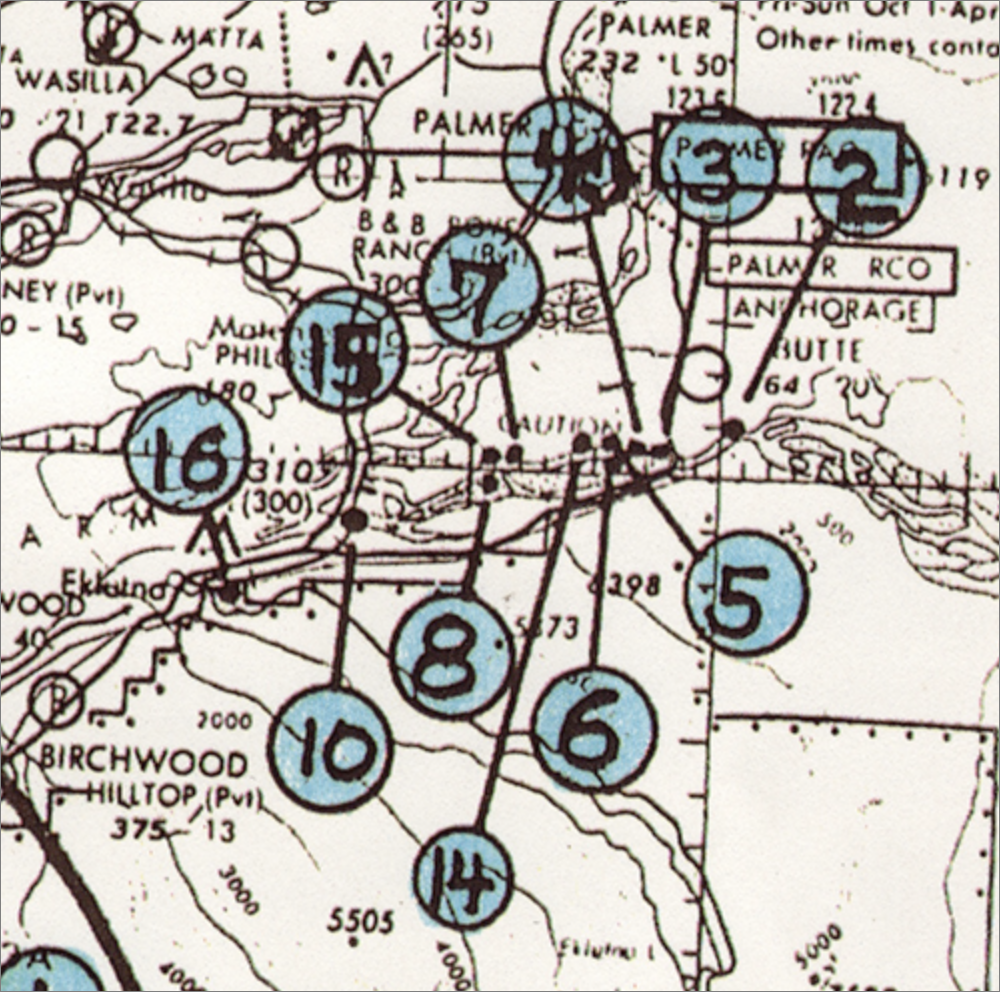
Although he may have looked like an unassuming family man on the outside, at 45-years-old, Robert “Bob” Hansen would eventually confess to killing 17 women. His confession came after investigators found two aviation maps in his home with over 20 markings on them that were no doubt indicating where he discarded his victims’ bodies.
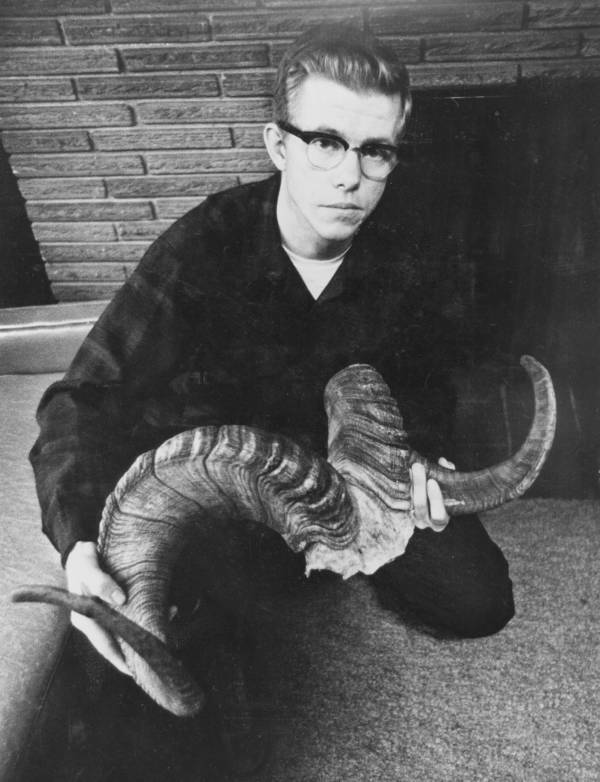
Following his 1983 arrest, Robert Hansen was dubbed The Butcher Baker since he had once been a trusted, familiar face in the community at his local bakery where he served residents & law enforcement their morning cup of coffee, donuts & pastries.
Robert Christian Hansen was born on February 15, 1939 in Estherville, Iowa to parents Christian “Chris” & Edna Hansen. At 10-years-old, his family moved an hour south to Pocahontas, Iowa where his father purchased a local bakery. Chris, who was a Danish immigrant, was a harsh disciplinarian who often forced Bob to work long hours at the bakery from a young age.
Although Bob was naturally left-handed, his father forced him to use his right hand, which was said to have caused a neurological disruption that led to a lifelong stutter. His stutter, paired with his painfully shy demeanor & the severe acne that marked his face, made Hansen the target of his classmates’ bullying.
While the boys teased him relentlessly, his female classmates rejected him. He had little to no friends & was described as a loner who was very isolated much of the time. To occupy his time, he turned to outdoor sports of solitude, including hunting, fishing & archery.
At 18-years-old, after his high school graduation in 1957, Hansen enlisted in the U.S. Army Reserve in an attempt to escape Iowa as well as the painful memories of his childhood. While he was completing his basic training at Fort Dix in New Jersey, he ventured over to New York where he had his first sexual encounter with a sex worker.
During this experience, he felt empowered for the first time in his life in the presence of a woman. Not only were they attentive toward him, something girls had never been in the past, but he also felt a sense of superiority.
After about a year & a half, 20-year-old Hansen came back to Pocahontas & moved into his own apartment. He began serving one weekend a month in the reserves in conjunction with working at his father’s bakery as well as volunteering as an assistant drill sergeant at the police academy in Pocahontas.
At 21-years-old in 1960, Hansen began dating a girl who was one year younger than him named Phoebe Padget, the daughter of a local chiropractor. They gravitated toward one another since they were each known to be introverted, socially awkward & struggled to fit in with their peers.
During their relationship, he convinced one of his father’s bakery employees to help him burn down the high school’s bus barn on December 7, 1960. While the 16-year-old boy served as his lookout, Hansen poured gasoline throughout the area & set the building on fire, charring the bus barn & all of the school buses.
After three months had passed, Hansen was sure he was going to get away with arson while he was in the midst of planning his wedding to Phoebe. However, weighed down by his conscience, his young accomplice contacted the police to confess on March 29, 1961, naming Robert Hansen as the person responsible for the fire.
After he was arrested, Hansen’s parents hired the best attorney they could find to represent him while Phoebe stuck by his side believing he was innocent. Unsure how the trial would go, the couple decided to speed up their wedding & only three days after his arrest, they were married at the local Lutheran church.
Before their ceremony, Phoebe made her husband-to-be promise her that he was innocent. She warned him that should she find out otherwise, she would divorce him.
To avoid a harsher sentence, Hansen pleaded guilty & was sentenced to three years in the Anamosa State Penitentiary. He later indicated that the fire was his way of getting revenge on school, the root of all of his childhood pain & anguish.
During his time in prison, a psychiatrist diagnosed him with manic depressive illness accompanied by periodic schizophrenic episodes as well as infantile personality, which is traditionally characterized by emotional immaturity. In 1980, the term bipolar disorder replaced manic depressive illness as a diagnosis in the DSM-III.

Hansen also worked with a speech therapist while he was behind bars through the nearby University of Iowa which greatly improved his ability to speak confidently. After serving 20 months of his 36 month sentence, he was released at 24-years-old in May of 1963.
Not had Phoebe filed for divorce while he was behind bars, but his parents were so ashamed by their son’s actions that they sold their Pocahontas bakery & bought a resort in Minnesota.
On his release, he moved to Minnesota to work at his parent’s resort, which is where he met his second wife, 20-year-old Darla Henrichsen. After getting married that same year, they eventually went on to have two children together, a daughter named Christy & a son named Johnny.
Four years later in August 1967, after several jail sentences for petty theft, Hansen told Darla that he felt drawn to Alaska because of his love of the outdoors. At 28-years old, he & his 26-year-old wife relocated over 3,000 miles away to Anchorage, Alaska.

Hansen quickly got a job as a baker & cake decorator at the local Safeway grocery store while Darla worked as a teacher. They began settling into their new home state, Darla, making friends at the Central Lutheran Church while Hansen joined the Alaska State Archery Association in 1971 at 32-years-old.
As time went on, they bought a house, they had their daughter, followed by their son. After Hansen got involved in some real estate investments with a man from church, they flipped some properties for a profit which allowed him & his family to move into a single-family home in Muldoon at the northeast corner of Anchorage.
Darla, the ever-trusting wife, never once questioned where her husband spent his free time. As a baker, Hansen worked very early morning shifts, essentially in the middle of the night, which is how he became acquainted with Anchorage’s red light district. He later told investigators that he paid women to perform oral sex on him in his car, something he would never have dared to ask of his wife.
Moving forward to 1981, Hansen opened Hansen’s Bakery, an establishment he paid for with funds from an insurance fraud scheme when he took his hunting trophies off the walls of his den, claiming they had been stolen. Hansen’s Bakery became a fixture in town & he even delivered free donuts to the Anchorage Police Department (APD).

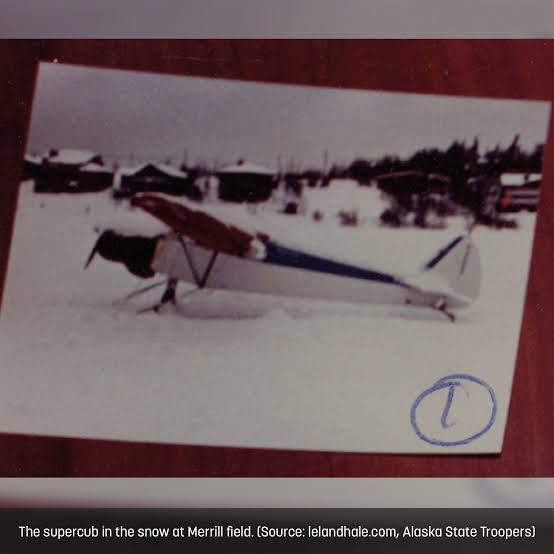
He spent much of his free time hunting & in January 1982, he bought a blue & white Piper Super Club bush plane that he kept at Merrill Field Airport in Anchorage. This allowed him to fly out to deeper parts of the wilderness that were unreachable by car.
Not long after Hansen & Darla relocated to Alaska, Anchorage became what is known as a boom town, a place where the population grew massively over a short period of time due to the development of the Trans-Alaska Pipeline System. This is an 800-mile/1,288 km, 48-inch-diameter crude oil pipeline that was completed in 1977 that stretches from Prudhoe Bay on Alaska’s Arctic coast south to Valdez. Because of Alaska’s prevalent permafrost, more than half of the pipeline runs above ground.
On July 8, 1980, thirteen years after Hansen settled into town, highway maintenance workers found the body of a young woman in a gravel pit in Seward, Alaska, a 2 hour & 17 minute drive south of Anchorage.
The victim came to be known as the Bear Lady to state troopers after an Alaska State Trooper who was dispatched to the scene found & killed a black bear that was tampering with the remains that had been wrapped in a sleeping bag.
Although the remains were badly decomposed & had been scavenged by wildlife, the medical examiner determined that the victim had been struck in the head with a blunt object & shot twice with a .22-caliber revolver.
As investigators began looking over area missing person’s reports, they believed the victim was 24-year-old Joanna Messina. She was last seen two months earlier on May 19, 1980 when she & her German shepherd left her campsite just north of Seward. Acquaintances reported her missing when they failed to return.
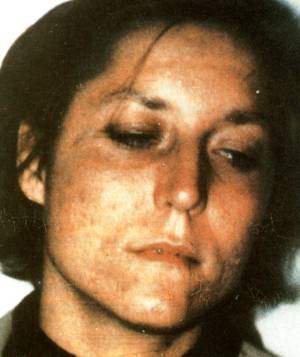
Investigators learned that Joanna Messina had been using the alias Joanna McCoy since she’d relocated from New York to Alaska months earlier. For unknown reasons, she’d left her husband, her family & her job as a dental assistant behind. When she arrived in Seward she had initially been living in a boarding house owned by a former veterinarian & his wife.
According to other boarders, Joanna was always with her German shepherd & she spent much of her free time reading in her room. When she began to struggle financially, she moved out & went to stay in a tent in a nearby campground.
After locating Joanna’s family in New York, experts were able to definitively identify the victim as Joanna Messina with the use of dental records.
Because Anchorage & the surrounding areas were growing so quickly, more houses & roads were being built in areas that were once wilderness. When electrical workers were out on July 17, 1980, nine days after Joanna’s body was found, they were shocked to find the skeletal remains of a young woman buried in a shallow grave along Eklutna Lake Road, 36 miles northeast of Anchorage & 161 miles south of Seward where Joanna’s body was found.
Although much of the body was missing, the victim’s skull was present with remnants of long, reddish-brown hair attached as well as teeth that were intact. An autopsy determined that she died from a stab wound to her back.
It’s unclear exactly what date the woman went missing, but investigators & experts believe it was about eight months earlier in November 1979.
Since there was no identification with her remains as well as the fact that investigators weren’t able to match her description to the stack of women in missing persons’ reports, she became known as Eklutna Annie. With no leads, her case quickly went cold.
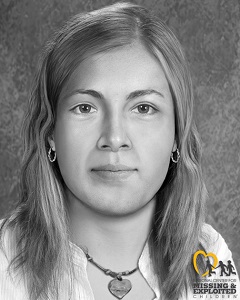
Based on her remains, she was likely somewhere between 16-25-years-old with a very small frame, likely standing no taller than 4’11”-5’1”. Her ears were pierced & she was Caucasian with possible Native American mix.
She wore a brown leather jacket, a light-colored knit sweater, jeans & red knee-high, high-heeled boots with a nylon zipper along the side. She wore various pieces of jewelry, some that were handmade, containing turquoise stones as well as a Timex watch with a brown face. Salem brand cigarettes found in her jacket pocket suggest she was a smoker.
Experts were able to build an image of what they believed the victim had looked like in life. This reconstruction was released to the media, but despite the passage of 46 years, Eklutna Annie’s true identity has remained unknown.
Initially, investigators did not connect the murders of Joanna Messina & Eklutna Annie because they were separated by a three hour drive. After Eklutna Annie’s body was found, homicide detective Maxine Farrell of the APD believed that a serial killer could be responsible since ten local young women from Anchorage were also missing.
When she brought her theory to her superiors, she was left feeling angry & frustrated after they essentially laughed in her face, considering her idea ridiculous.
On September 12, 1982, a little more than two years after Joanna & Annie’s bodies were found, two off-duty Anchorage police officers were out hunting moose 34 miles northeast of Anchorage in a remote area along the Knik River.
As they walked along the landscape, they saw a couple of pieces of clothing lying on the ground before they came upon a dark blue moon boot sticking out of the eart as well as a piece of denim. When they moved the fabric to the side, they saw skin underneath & realized it was a body.
State troopers responded to the area & began digging, first noticing the distinct smell of decomposition before finding a young female victim buried in a shallow grave. The victim had an ace-bandage wrapped around her head & eyes that had been secured with metal clips.
She was fully clothed wearing blue jeans, a baby blue ski jacket that had darker trim on the shoulders, a sweater, underwear & a bra. Although she wore nothing on her feet, a pair of moon boots were found in her grave. A metal key marked with the number 18 was found nearby while no purse or ID was recovered.
The medical examiner, Dr. George Lindholm, determined that she had been shot three times in the back with a .223-caliber rifle. One of the bullets had entered her chest & traveled directly through her heart. Dr. Lindholm found pieces of copper jacketed bullet fragments in the victim’s chest cavity while troopers at the scene had also found a .223-caliber shell casing from a high-powered semi-automic rifle often used to hunt large game.
Despite the gunshot wounds to her body, the victim’s clothing lacked bullet holes which made investigators conclude that the victim had been naked when she was shot & later redressed.
Using dental records, the victim was identified as 23-year-old Sherry Morrow who was reported missing by her boyfriend, Dale Yonkoske, nearly one year earlier on November 23, 1981. According to Dale, he last saw Sherry a week before on Monday, November 16, 1981 when he dropped her off at the Wild Cherry Bar on East Fourth Avenue at 11:30 pm. Sherry worked there as a waitress & a dancer.
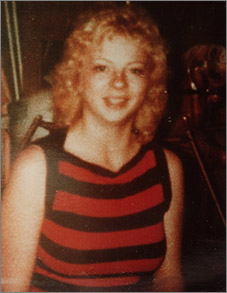
She had been wearing silver wire frame glasses as well as clothing that matched what she wore when she was found, but her beloved gold necklace with an arrowhead pendant that she never went anywhere without, was missing.
When Dale dropped Sherry off, she planned to spend the night at her friend Lisa Nyland’s house & then go to a doctor’s appointment the next day on Tuesday, November 17. When she didn’t come home on Tuesday, Dale contacted her doctor, who indicated that she hadn’t shown up for her appointment.
According to Lisa, when Sherry spent the night, she mentioned her plans of meeting an unnamed man at Alice’s 210 Restaurant at noon on Tuesday after he offered to pay her $300 to take photos of her.
Moving forward to one year later on Friday, September 2, 1983, two men were hunting moose about a mile downstream on the Knik River from where Sherry Morrow’s body was found when they found the significantly decomposed body of a fully clothed female in a shallow grave.
According to the medical examiner, she had been once shot in the back with a bullet that had passed through her heart. Investigators found a shell casing from a .223-caliber rifle near her body just as they had in Sherry Morrow’s case.
With the use of dental records, the victim was identified as 30-year-old Paula Goulding who was last seen about four months earlier. She had been working as an exotic dancer at the Great Alaskan Bush Company for about a week when she vanished.

According to her roommate, after she met a man at the club, she agreed to go on a date with him on April 25, 1983. He planned to fly her out to the woods in his plane for a modeling shoot.
With the finding of four women, Joanna Messina, Eklutna Annie, Sherry Morrow & Paula Goulding, over a three year period of time, authorities could no longer deny that a serial killer could very well be responsible. Each victim was young, slim-built with blond or light brown hair & had vanished after scheduling a daytime date with a man.
Moving the clock back three months from when Paula Goulding’s remains were found, it was the middle of the night on Monday, June 13, 1983. Two APD officers, Gregg Baker & Wayne Vance, were out on patrol when at about 3-4 am, they were notified by dispatch that a man on his way to work came upon a white female who was running naked down 5th Avenue in handcuffs.
Although the man tried to convince her to allow him to take her to the police station, she insisted that she wanted to be alone & asked if he could drop her off at the Woods Motel instead. After he did, he contacted the police to report the incident.
When the officers responded to the motel, they found 17-year-old Cindy Paulson in a room by herself. After they removed her handcuffs & found clothing for her to wear, she began to calm down & managed to tell them what happened to her that night.
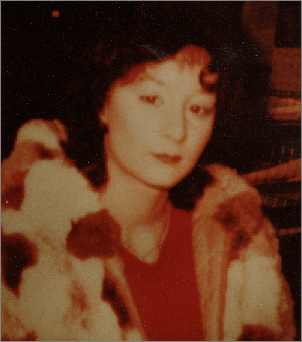
Cindy had been working on the corner of Fifth & Denali the night before when a man pulled into a nearby parking lot & offered to pay her $200 for oral sex. Although he wanted to bring her back to his house, she told him that she felt more comfortable just staying in his car.
As she climbed into the car, he handcuffed her & held her at gunpoint as he drove her to his house on Old Harbor Road in Muldoon. He brought her down to his den where the walls were lined with taxidermied animals & he wrapped a chain around her neck four times, securing it to a pole in the center of the room. Over the next handful of hours, he repeatedly raped & tortured Cindy on a bearskin rug.
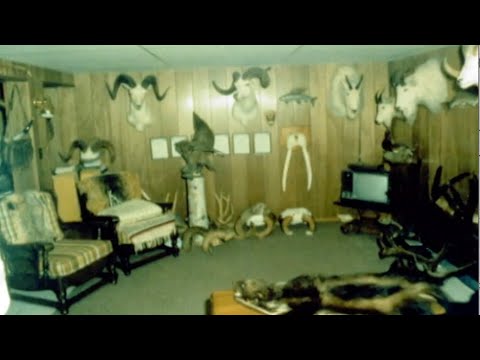
When he was finished & had woken up from a nap, the man told her that he planned to fly her to his cabin in the woods so they could spend the weekend together. Cindy was sure that if she went with him, she was going to die.
Still handcuffed, he drove her to Merrill Field Airport where he began loading supplies into his small airplane. Noticing he was distracted, she took a moment of opportunity to flee from his car, desperately running down a gravel road naked, barefoot & still handcuffed.
As she ran across an open field, she glanced back & saw that he was trailing after her with a gun. Noticing a truck driving, she waved the driver down, jumped in the cab & begged the man to drive.
As the officers drove Cindy past Merrill Field Airport, not only was she able to point out her abductor’s plane, but an airfield security guard had also written down the man’s license plate number & vehicle description after he noticed Cindy running terrified from his green Buick Century. The officers came to find that both the car & the plane belonged to 44-year-old local bakery owner, Robert Hansen.
When APD officers were dispatched to his home, Hansen claimed that he’d been out hunting with his friends during the previous night until the early morning hours while his family had been away. On his way home, he said he stopped by the airfield to fix a seat in his plane. Both men that he claimed to be with lied to confirm his alibi.
When Cindy was taken to the hospital for the completion of a rape kit, evidence of semen was found inside of her body that supported her story. However, being only 1983, DNA technology wasn’t yet advanced enough to prove that it had come from Hansen.
When officers went down into Hansen’s basement den, they found it exactly as Cindy had described it although there was no direct physical evidence of the attack, such as the chains she described him restraining her with.
Officer Gregg Baker was shocked when the lead investigator told him that he believed that Hansen was innocent. He felt it was more likely that when Cindy bumped up their agreed upon price for sex, Hansen refused to pay, which made her angry.
Moving forward three weeks to July 1983, Officer Baker was that much more disgusted when he learned that Cindy’s case had been closed without an investigation since Hansen’s word had been taken as the truth. Since Baker fully believed Cindy, he wasn’t about to let things go, so he began to look further into Hansen’s background.
He quickly learned that Hansen was far from the upstanding citizen he presented himself as. Twelve years earlier in November 1971, at 32-years-old, he was arrested after he tried to abduct an 18-year-old real estate agent named Susan Heppeard.
He first noticed Susie when they were at a stoplight together on November 15, 1971. After politely smiling in his direction, he took it as an invitation & followed her home. After she went inside, he knocked on her door & asked if he could use her phone book. When he asked her out on a date, she declined, letting him know that she had a boyfriend.
Eleven days later, he came back to her house with a gun, but thankfully her screams alerted her roommates, who contacted police while Hansen fled. About 30 minutes later, he was arrested & then released on bail days later on December 2, 1971.
Although he denied the incident, his photo was taken & placed into a book of sexual offenders.
Less than three weeks later on December 19, 1971, an 18-year-old woman named Patricia Roberts was standing in the parking lot of the Nevada Club, a bar on East 4th Avenue. After Hansen offered to pay her for sex, she got into his car & kidnapped her at gunpoint, driving her 100 miles away to the Kenai Peninsula at Cooper Landing where he raped her at a motel.
After Patty somehow convinced him to bring her back to Anchorage, he threatened that he would kill both her family if she reported him.
One week later, Patty & her father, who was an Alaska State Trooper, went into the APD on December 26, 1971, to report what happened. Patty had initially kept quiet, but after learning that a local 18-year-old girl named Beth van Zanten had been abducted & murdered only three days after her abduction, she fully believed the same man was responsible.
When she was shown five black & white photos of men of a similar age range, each wearing horn-rimmed glasses, she immediately pointed at the photo of Robert C. Hansen as the person who had abducted her. When she was shown a book containing sixty photos, once again, she immediately pointed to Hansen’s photo on the last page.
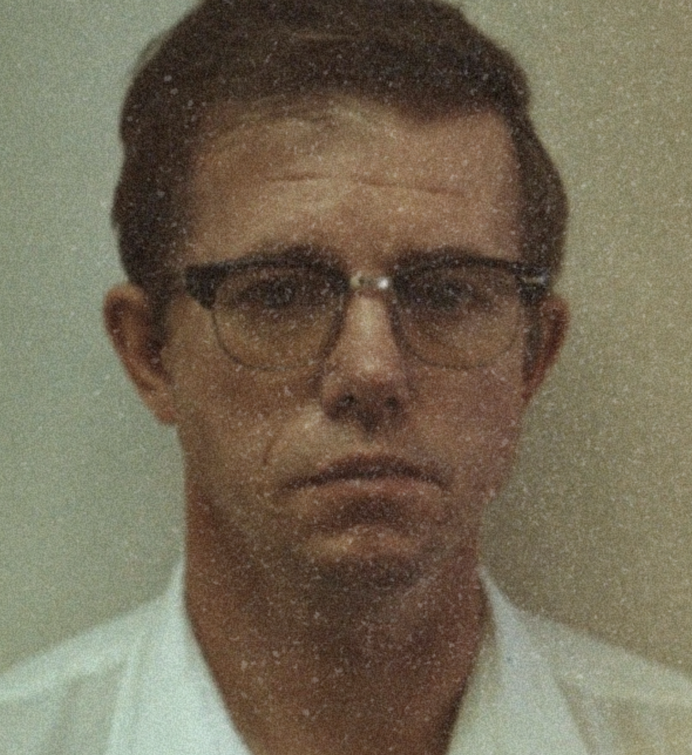
When he was arrested, he claimed that after he hired Patty for sex, they had gotten into an argument over money, denying that he ever abducted or sexually assaulted her without consent.
Hansen’s lawyers negotiated a plea deal; if he agreed to plead guilty to the assault with a deadly weapon in Susan Heppeard’s case, they would drop the charges for Patricia Roberts.
On March 24, 1972, he was sentenced to five years in prison for the attack on Susan Heppeard, but ended up serving only three months in jail. After he was sent to live in a halfway house for six months, he later admitted that during this time, he watched the sex workers walking up down the street, looking forward to his next attack.
On November 1, 1973, he was released on probation. Through it all, the community continued to view him as a friendly man while his wife stuck by his side. By this time, they had one child with their second on the way.
As Officer Baker read Hansen’s history, paired with the knowledge that many area women were missing & that the bodies of three females had been discovered over the past several years, he felt that much more convinced that Cindy Paulson was telling the truth.
Since his superiors within the APD weren’t planning on investigating Hansen further, Baker bravely went past them & brought all their files to the Alaska State Troopers. State trooper Glenn Flothe & prosecutor Frank Rothschild officially became aware of Hansen at this point.
When he was brought down to the station on October 27, 1983, about three & a half months after Cindy was abducted, officers went to search his house while Darla & their two children were home. Finding no evidence in the main areas of the home, an officer went up into the attic where he found a .223 rifle that the FBI forensic lab was able to match to the casings found near Sherry Morrow & Paula Goulding’s graves along the Knik River in September of 1982 & 1983.
When they pulled back some of the insulation in the attic, they also found a bag with women’s jewelry inside that belonged to several missing women, including the gold arrowhead necklace that Sherry Morrow always wore.
Hansen was arrested that day & initially charged with Cindy Paulson’s kidnapping & assault as well as weapons violations, theft/burglary-related charges & insurance fraud for falsely reporting hunting trophies stolen to receive insurance money.
Hidden behind the headboard of the bed he shared with his wife, officers found an aviation map of Anchorage while a second map was found in his attic. There were 24 colored circles on these maps that trooper Glen Flothe theorized might have represented victims’ gravesites.
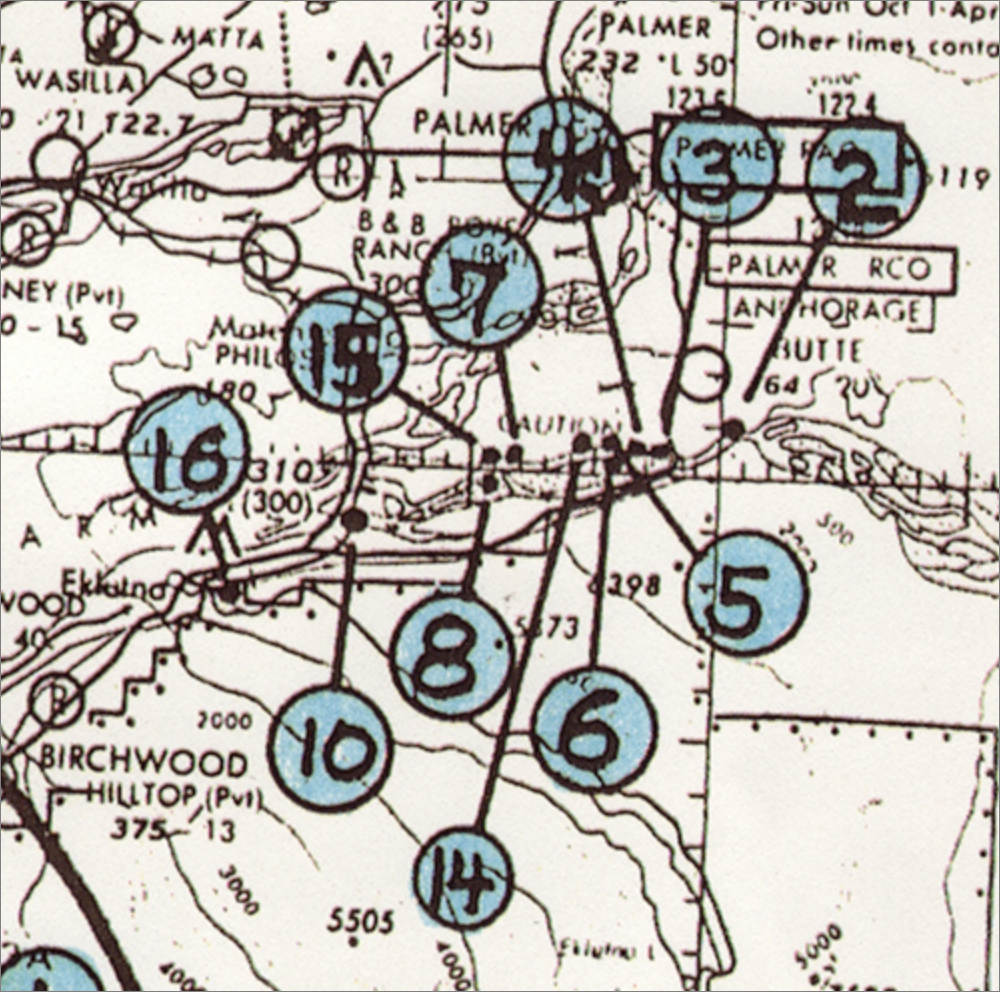
When he brought the map to a trooper who investigated an earlier case, he asked him to show him where exactly the body had been found on the map. The trooper took one look & said, you’ve already got it marked. This was when they realized that this case was far darker than they could have ever imagined.
Four months later, on February 22, 1984, Hansen confessed to the murder of the female victim known only as Eklutna Annie. He believed she was from Kodiak, Alaska, but he couldn’t recall if she had been a dancer or a sex worker when he picked her up downtown & told her he was going to take her home.
When Annie realized that he was driving away from town, she started to get scared & asked him to take her back to Anchorage. After he told her they were going to another location, he pulled out a gun & told her that if she did what he asked, she wouldn’t get hurt.
When he drove out to Eklutna Lake, his truck got stuck along a desolate road. After Annie helped him free his truck from the mud, he said that she pulled out a knife & began to run as she screamed, Don’t kill me! He claimed that things escalated as he pulled the knife from her grip & as she fell to her stomach, he stabbed her in the back.
To this day, the troopers’ Cold Case Investigation Unit is continuing to work with genealogical research labs on creating a DNA profile for Ekluntna Annie to construct a family tree in hopes of finding potential family members who can confirm her identity.
Despite the aviation map with 24 markings, Hansen was claiming that Eklutna Annie was his only victim. Prosecutor Frank Rothschild & district attorney Victor Krumm told him that they would wait until the spring thaw to bring tracking dogs to each marking. At that moment, Rothschild said he saw an immediate transformation in Hansen. His face got very red, the hair on the back of his neck literally stood up & his face suddenly changed from Bob the Baker to Bob the Serial Killer.
After making a plea bargain to be charged with the four murders of Joanna Messina, Eklutna Annie, Sherry Morrow & Paula Goulding, as well as the abduction & rape of Cindy Paulson, Hansen agreed to a full confession. This included giving the details about his victims & showing the burial sites that were marked on his aviation map in exchange for serving his sentence in a federal prison & avoiding media publicity.
Over the next 12 hours, Robert Hansen confessed to a total of 17 murders. Over a 12 year timeframe, he said he had abducted & raped at least 30 women that he ultimately let go between 1971-1983. However, between 1980-1983, 17 women were less fortunate. After raping them, he released them into the woods & hunted them with his rifle like game.
According to Hansen, he met Joanna Messina on the Seward docks in May 1980. After they chatted & joked for a while, he invited her to dinner, imagining they were going to have what he described as a normal date. When he mentioned his plans to go fishing the next day, Joanna explained that she needed to get back to her campsite because she had a job interview with a cannery the following day.
When she asked him for money, he made the assumption that she was a sex worker which angered him since it was his interpretation that they were just on a date, enjoying each other’s company.
He drove Joanne & her dog to a remote area near the Snow River/Kenai Lake region where he struck her with a .22-caliber revolver & shot her twice. He also shot her dog once before he disposed of her body in a gravel pit, dumped her belongings as well as her dog’s remains in the woods & threw the revolver into the Snow River.
Hansen did voice remorse over Joanna’s murder, saying that things went bad, that she had likely been desperate & he had an awful lot of second thoughts about it.
In 1981, at 23-years-old, Sherry Morrow had been working as an exotic dancer at the Wild Cherry on East Fourth Avenue. As a sex worker, she used various aliases, such as Georgia or Sherry Graves. After she was promised money for a photoshoot, Hansen drove her to a remote service road along the Knik River on November 17, 1981 as he didn’t buy his plane for another two months.
After he handcuffed & blindfolded her, Hansen said that although she fought with him & tried to run away, he was able to catch her again. As she screamed at him, he said he shot her, however, the medical examiner determined that she had been shot three times in the back, likely as she was running away.
After he buried her, his car got stuck along the muddy road as he tried to leave. He described panicking & rocking his car back & forth until he was able to finally reach harder gravel.
He went on to tell investigators that had the women gone along with what he wanted out in the wilderness, he would have allowed them to come home. If they fought, they would stay.
31-year-old Paula Goulding, who was born in 1951 in Arizona, came to Alaska from Hawaii. After working as a secretary in Fairbanks, she moved to Anchorage to work as an exotic dancer at the Great Alaska Bush Company.
Paula agreed to go to the woods with Hansen for a modeling shoot on April 25, 1983. After he landed his plane near a building where hunted animals were cleaned & processed, he referred to it as a meat shack & Paula immediately sensed that she was in danger. As she began to run away from him, he grabbed his rifle & shot her with a .223 bullet. Her body was found five months later.
Although Hansen confessed to 17 murders, only 12 of his victims were recovered. Alaska State Troopers used his aviation maps to recover seven more bodies throughout April & May 1984.
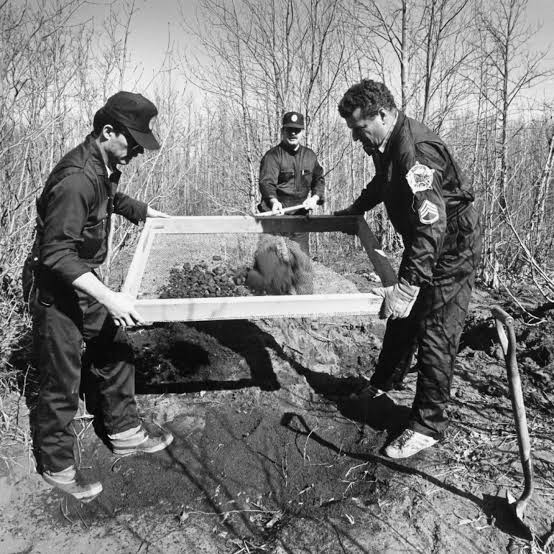
The bodies of 28-year-old Malai Larsen & 23-year-old Sue Luna were recovered on April 24, 1984. Malai had been reported missing on July 10, 1981, the same day she was last seen alive. Her body was found in a parking lot close to the Knik Arm Bridge.
Sue was last seen alive on May 26, 1982 when she told her friends that she was planning to meet a man at a downtown restaurant at noon who was going to pay her $300 for a photoshoot. She was an Asian girl with a very small stature who had come to Alaska from Washington state. According to Hansen, he took her out to the river, stripped her & made her run like an animal while he hunted her down.
The next day on April 25, 1984, investigators recovered the partially skeletal remains of Colorado native, 19-year-old Robin Pelkey, close to Horseshoe Lake in Palmer, Alaska. Police believe she was murdered in 1983 after Hansen both stabbed & shot her.
Robin remained unidentified for 37 years during a time when she was known only as Horseshoe Harriet, until forensic genealogy was used to determine her identity in October 2021.

The following day, two more bodies were recovered on April 26, 1984. 24-year-old Angela Feddern was last seen sometime in February 1983 on Fourth Avenue in Anchorage. She wasn’t reported missing until three months later in May when the owner of the nightclub where she was a dancer contacted police. Her body was found near Figure Eight Lake.
22-year-old Teresa Watson was last seen in Anchorage on March 25, 1983 when she told her roommate that a man was going to pay her $300 in exchange for an hour or two of company. Hansen abducted & murdered her at Scenic Lake. Since the ground was still frozen at the time, he was unable to bury her, so he left her where she died.
Three days later, on April 29, 1984, the body of 20-year-old Tamara “Tami” Pederson was found 1 ½ miles from the Old Knik Bridge after Hansen pointed out its location on a map. She was a dancer at a club in Anchorage who last spoke with her family on August 7, 1982. During their conversation, she told them she’d been offered money to pose for photos.
On May 9, 1984, 41-year-old Lisa Futrell’s body was found buried next to a gravel pit south of the former Knik Arm Bridge. She met Hansen at a nightclub where she worked & he kidnapped her on September 6, 1980. When she didn’t come home the next day, her housemates reported her missing.
The following year, on April 20, 1985, the body of 20-year-old DeLynne Frey was found on August 20, 1985 on a Knik River sandbar by a bush pilot who was practicing landings. She was initially buried as Jane Doe in an Anchorage cemetery until four years later when an Alaska State Trooper recognized her jewelry in a case photo in 1989 & she was able to be identified. DeLynne, who went by the nickname Sugar, was a waitress from Baltimore who was last seen alive in March 1983 before she vanished from Anchorage.
24-year-old Roxane Easland vanished on June 28, 1980. Over the previous two weeks, she was living at the Budget Motel in Anchorage with her boyfriend. She was scheduled to meet a man that day downtown on Fourth Avenue. Although Hansen confessed to her murder, her body has never been found.
24-year-old Andrea Altiery, a native of Hawaii who went by the nickname Fish, worked as an exotic dancer. She was last seen getting into a taxi at 11 pm to go to the Boniface Mall on December 2, 1981. She planned to meet an unnamed man for a photo shoot & to perform exotic dances. When Hansen’s home was searched, several pieces of Andrea’s jewelry, including her beloved fish necklace, were recovered.
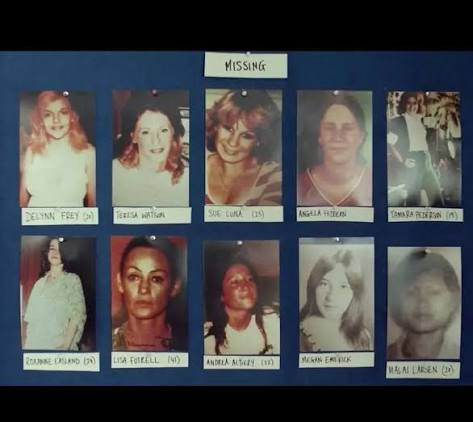
Hansen indicated that after they met, he threatened Andrea with a gun, abducted her, blindfolded & handcuffed her. While they were on a service road off Palmer Highway, he unbound & raped her before killing her with a .22 automatic pistol after she fought back. He tied a duffel bag filled with gravel to her body & threw her remains into the Knik River from a railroad bridge. Her body has never been recovered.
On February 27, 1984, after pleading guilty to the four murders of Joanna Messina, Eklunta Annie, Sherry Morrow & Paula Goulding as well as the abduction & rape of Cindy Paulson, Hansen was sentenced to 461 years in prison without the possibility of parole.
Although he confessed to 17 murders, investigators suspect that he is responsible for additional deaths. Other women vanished during his killing spree, but Hansen has denied responsibility for their deaths.
Police believe that 18-year-old Celia “Beth” van Zanten was Hansen’s first victim, the young woman who prompted 18-year-old Patty Roberts to come forward about her abduction & rape that happened three days earlier. She left her home in Anchorage on December 22, 1971 to make the short walk to the nearby HI-LO grocery store to pick up some soda when she vanished. Her body was found three days later on Christmas Day in a remote national park. Her murder remains unsolved.
17-year-old Megan Siobhan Emerick was last seen in Seward, Alaska where she was a student at the formerly Seward Skill Center on July 7, 1973. She vanished when she was walking out of a dorm laundry room. All of her belongings, including her ID, were left behind.
Although Hansen denied being responsible for her disappearance, he admitted to being in Seward on the day she vanished. Her body has never been found & her case remains unsolved
22-year-old Mary Kathleen Thill vanished while her husband was away working on the Trans-Alaska Pipeline. She disappeared on July 5, 1975, nearly two years to the day after Megan. Like Megan, she also vanished from Seward, Alaska. Although he denied having anything to do with her death, he admitted to being in Seward that day.
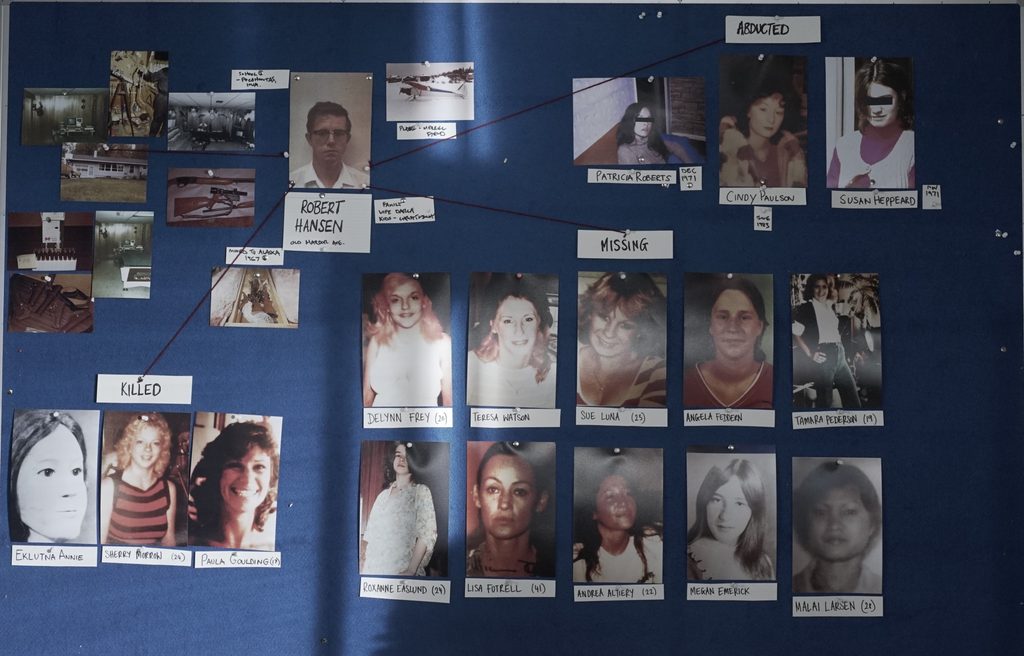
Even though Hansen was responsible for so many deaths, prosecutor Frank Rothschild didn’t regret not being able to pursue the death penalty. He knew how much Hansen loved the outdoors, hunting & fishing within the Alaska wilderness. Instead of being able to do that, he was stuck inside a rancid cell with nothing to look at & with terrible people surrounding him which was the biggest punishment he could face.
On August 21, 2014, at 75-years-old, Robert Hansen died of natural causes at Alaska Regional Hospital in Anchorage after his health began to decline over the course of a year.
During the rapid growth of Alaska’s largest city, women in & around Anchorage were vanishing for years, but because many people were in & out of the state looking for a way to make quick cash, sudden disappearances were commonplace. Robert Hansen realized that sex workers & exotic dancers were harder to track & less likely to be missed, which is exactly why he chose to prey on these women specifically.
All the while, he remained hidden behind the facade of a quiet, married, local business owner who was a family man. He believed that people would be more likely to believe him rather than the women he felt the world wouldn’t fight very hard to protect. For a long time, he was sadly correct.
Hansen’s story ultimately ended because one young woman survived. Even after Cindy Paulson was found naked, handcuffed & traumatized, running through the streets of Anchorage, it was Hansen who certain investigators believed.
After her escape, Cindy went on to get married & have three sons. She worked alongside actress Vanessa Hudgens, who starred as herself in the 2013 movie based on her story, The Frozen Ground. During a May 2026 interview, Cindy, who is now a grandmother, revealed that she has been clean & sober for ten years. It was her voice that ultimately brought Robert Hansen down, ending his terrifying reign of terror against innocent, vulnerable women.
Robert Hansen didn’t see the women that he raped & murdered as human beings. He saw them as objects whose fear, pain, families, futures & lives meant nothing compared to his own sick desires.
He once told investigators that one of his favorite places to take his victims was the Knik River northeast of Anchorage where he didn’t have to concern himself with how loud his terrified victim would scream. After he got what he wanted from them, he released them into the wilderness where he hunted them down like wild animals. While his name became infamous, the names that deserve to be remembered are the women whose lives he took.
References:
- RBC-UKRAINE: What features give infantile person away: Main signs of immaturity
- Alyeska pipeline: Trans Alaska Pipeline System (TAPS)
- Butcher Baker – True Crime Alaska: Backstory: Sherry Morrow reported missing
- Butcher Baker – True Crime Alaska: Backstory: Sherry Morrow’s good friend Lisa
- Butcher Baker – True Crime Alaska: The arrest of Robert C. Hansen: Finding Sherry Morrow
- Butcher Baker – True Crime Alaska: Her name is Joanna
- Butcher Baker – True Crime Alaska: Catching Robert Hansen: A missed opportunity
- Butcher Baker – True Crime Alaska: Patty Roberts meets one scary ass man
- Butcher Baker – True Crime Alaska: Robert Hansen’s flight map
- Butcher Baker – True Crime Alaska: Arrest of Robert Hansen: Stealing from himself
- Butcher Baker – True Crime Alaska: Backstory: What the hunters found
- Butcher Baker – True Crime Alaska: Cold case, old case
- Butcher Baker – True Crime Alaska: Hansen’s victims: Lakes of the Upper Kenai
- Wicked Horror: Victims spotlight: Remembering the victims of Alaska’s “Butcher Baker”
- Alaska Public Media: Alaska troopers ID serial killer’s victim 40 years after murder
- Oxygen True Crime: One of ‘The Butcher Baker’s’ unknown victims identified as missing teen
- IMDB: The Frozen Ground
- People: Robert Hansen spent a decade hunting & killing 17 women in the Alaska woods. Here’s how the serial killer was finally caught
- People: How teen’s split-second decision saved her life & led to notorious serial killer, who hunted victims like animals
- The Charley Project: Mary Kathleen Thill
- The Charley Project: Megan Siobhan Emerick
- The Charley Project: Andrea Mona Altiery
- A&E: Robert Hansen, the ‘Butcher Baker’ serial killer who hunted his victims like animals in the wild
- Newsweek: ‘Butcher Baker’ prosecutor Frank Rothschild shares the serial killer’s breaking point
- Amazon Prime: The Butcher Baker: Mind of a Monster
- Absolute Crime: The Butcher Baker: The search for Alaskan serial killer Robert Hansen
- Criminal Minds Wiki: Robert Hansen
- Wikipedia: Robert Hansen
- Wikipedia: Murder of Eklutna Annie
- Medium: Robert Hansen: The Butcher Baker of Alaska
- Podcasts by Happy Scribe: Serial Killers: “The Butcher Baker” Robert Hansen Pt. 1
- Podcasts by Happy Scribe: Serial Killers: “The Butcher Baker” Robert Hansen Pt. 2
- Peacock: World’s Most Evil Killers, Robert Hansen, season 7, episode 18
- The Washington Post: Robert Hansen, convicted serial killer in Alaska, dies at 75
- CBS News: Alaska “Butcher Baker” serial killer Robert Hansen dies at 75