
Watch on YouTube. Listen on Apple or Spotify.
In January 1980, the Gilligan family of four returned to their Evansville, Indiana home completely unaware that a stranger was waiting inside. In the short time they had been out, someone had broken into their house & when they walked through their garage door, he was still there.
What began as a burglary turned into something far more horrifying. The Gilligan family had no way of knowing the danger they were walking into that night. But one of the most disturbing details of this case was how they came to be targeted in the first place.
In 1980, the Gilligan family of four consisted of 30-year-old Patrick, his 30-year-old wife, Theresa & their two young children, 5-year-old Lisa & 4-year-old Gregory. They lived at 3413 Aspen Drive in an upper middle class neighborhood of Evansville, Indiana where the lawns were well-manicured, neighbors were friendly & there was a strong sense of community. It was the type of place where children rode up & down the streets on their bikes when the weather was nice, rather than a place where one could imagine a brutal quadruple homicide happening.

According to Theresa’s sister, Diana Harrington, Patrick & Theresa had the kind of love that few people are lucky enough to experience. After they were married on July 5, 1969, they welcomed Lisa into their lives on May 6, 1974 & Gregory the following year on September 25, 1975.
Patrick, who was born George Patrick Gilligan, worked as a warehouse manager for LB Jones Furniture. According to Diana, he was the brother she never had, a fantastic father & husband who was very protective of his family & always wore a smile on his face.

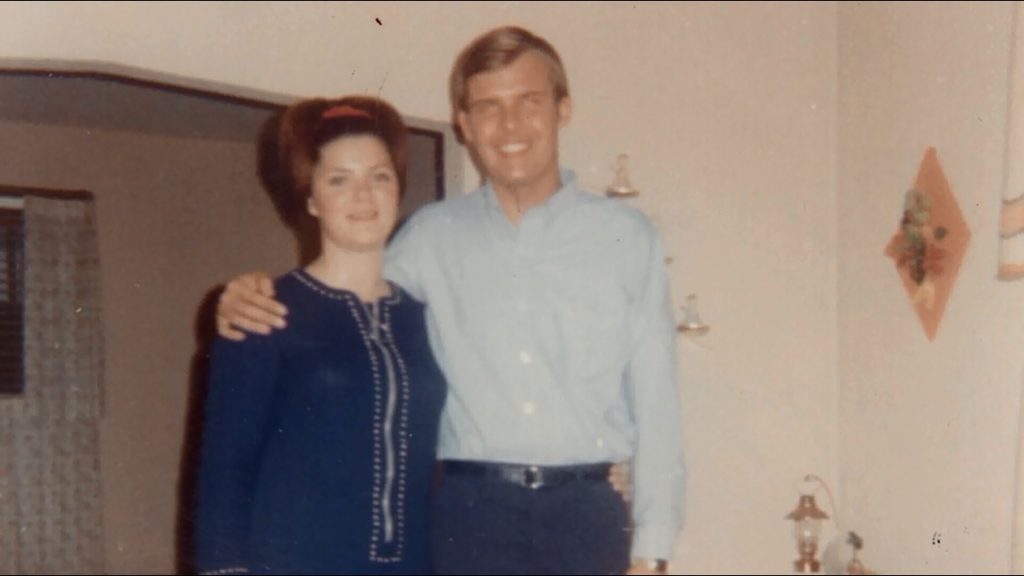
Diana had always looked up to her only sibling since Theresa was such a wonderful mother & wife. She went on to say that they were an all-American, normal, loving family.
Since Patrick had Monday, January 14, 1980 off from work, he & Theresa did what they typically did on his day off; they spent the day together as a family. Since Lisa & Gregory had each gotten $5 for Christmas, they took them shopping so they could each pick a gift.
When they were finished, Patrick went over to his in-law’s house to help Theresa’s father chop firewood before Theresa & the kids met him there. Lisa & Gregory were excited to show their grandparents what they’d chosen at the shops that day.

As they pulled back into their driveway at about 8 pm, they came in through the garage door & found themselves face-to-face with a man they had never seen before.
Moving forward two hours to about 10:15 pm, Indiana State Trooper Thomas Snyder was dispatched to a reported burglary at the home directly next door to the Gilligan’s at 3501 Aspen Drive. Ralph Hendricks contacted the police after he came home that night & realized that his house had been burglarized.
When Trooper Snyder went next door to the Gilligan’s to see if they’d seen or heard anything unusual that night, his knocks to their front door went unanswered. As he walked around to the back of the home, he noticed that the window to the back door had been broken. Tape had been placed over the glass before it had been shattered, likely to reduce the noise, just as had been the case at the Hendricks home.
Assuming he was dealing with another burglary, Snyder entered the home for a welfare check. As he made his way to the family room, he was horrified to discover four dead bodies lying on the floor. Theresa lay face up, still wearing her winter coat; her hands were bound behind her back & there was a bullet hole through her head. Patrick was lying close by, also face up, with bindings to his wrists that had been partially untied. He had also been shot in the head while his face was brutally bludgeoned to the point that he was unrecognizable. Lisa & Gregory had been loosely restrained together back-to-back with a vacuum cleaner cord before they were each also shot in the head.

The scene was so brutal that the crime scene tech, who had seen nearly everything up until that point in his career, had to sit down to compose himself. He was overcome with emotion since he had a little girl & boy of his own at home that were about the same age as Lisa & Gregory.
Gathering officers believed the quadruple murder was likely a burglary gone wrong. Not only had their next-door-neighbor’s home been burglarized, but Theresa’s purse, which was sitting on a chair, had been rifled through. Glass from a nearby gun cabinet was shattered around the floor & only one long gun remained inside while the others were missing.
Knowing that the perpetrator or perpetrators were heavily armed, officers feared they would strike again before they could catch them.
When investigators canvassed the neighborhood, several witnesses reported seeing a light blue four-door Plymouth in the area around the timeframe of the murders. Since the car was old & run-down in appearance, it seemed out-of-place in their well-kempt neighborhood.
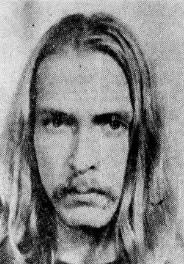
Officers from the Evansville Police Department got together with the sheriff’s department as well as the Indiana State Police to discuss recent burglaries that may have involved windows that had been taped before they were broken. Three detectives immediately stood up & named Richard Milligan & Donald Wallace Jr., two men who had lengthy criminal records. They were drug addicts who often broke into homes to support their addictions.
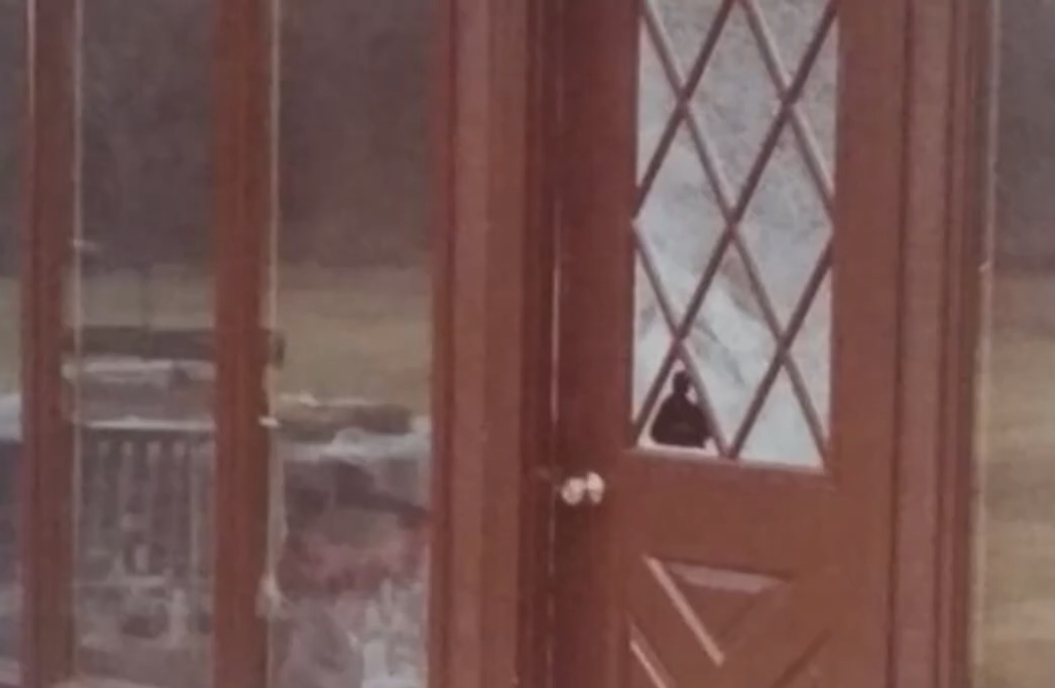
As they looked into their backgrounds, they came to learn that Richard Milligan owned a light blue Plymouth. When they staked out his last known address, they surrounded the blue Plymouth with guns drawn as it pulled into the driveway. Rather than Richard Milligan, a young female stepped out of the car. Officers immediately recognized Debbie Durham, who was Milligan’s friend, since she had legal issues of her own.
They immediately noticed a large diamond engagement ring on her left ring finger that she was very unlikely able to afford. She told officers that it had been a gift from her boyfriend, 22-year-old Donald Wallace, who was typically Richard’s accomplice.
The ring was quickly identified by a jeweler as something that originally belonged to Patrick’s mom, but had been resized for Theresa.
When the car was searched, officers found stolen property inside, including jewelry as well as guns that belonged to both Ralph Hendricks as well as the Gilligans. There was also a set of walkie-talkies that Gregory’s uncle had given him for Christmas only weeks earlier.
According to Debbie, since Richard Milligan was in jail on burglary charges, he’d allowed her to borrow his car. After she was taken into custody, she denied having anything to do with either burglary or the murders.
Although she initially denied knowing where Donald Wallace could be, after she was shown photos from the crime scene & told that the ring belonged to the young mother who had been murdered, she admitted that she’d seen him the night before at her mom’s house.
When detectives went to Debbie’s mom’s house, they spoke with her sister, Donna Madison, who saw Wallace driving the blue Plymouth between 7-9 pm the night before. When he came back to their house, he was carrying an army jacket over his shoulder. She heard him ask Debbie for matches, but finding a cigarette lighter instead, he went into the yard to burn the jacket.
A neighbor confirmed Donna’s story, saying she saw a man with shoulder length hair standing by the fire that night who fit the description of Donald Wallace.
When Officer John Crosser inspected the burned area, he saw a container of lighter fluid as well as a partially burned Army jacket with stains on it that were no doubt blood. When the pockets were searched, he found a set of wedding rings without stones in them as well as some fragments of glass. When the glass was analyzed, it was determined that the shards fit into a pattern matching the hole in the Gilligan’s back window.
Debbie & Donna’s brother, William Madison, told officers that when Wallace came over that night, he was carrying a briefcase with a couple guns inside. He also showed them a police scanner, a CB radio, as well as some rings that had been taken from the Gilligan home.

That night, Wallace tried to sell the CB radio, police scanner & guns to a man named Randy Rhinehart. Several witnesses later testified that Debbie had shown them multiple pieces of jewelry that could be traced back to the Gilligans.
According to Debbie, when Wallace came over at about 9:30 pm, he took his clothes off & gave them to her so he could change. Noticing a piece of fleshy-whitish-red matter on his jeans, she asked him what it was & he said that it must be a piece of brain. He went on to say that when he was caught burglarizing a home by the residents, he shot them all in the head.
He was surprised when the man came in through the garage & they began struggling before the rest of the family came inside. He tied the man up while the woman tied her children up & then he tied her up last.
After the man managed to get free from his restraints, he shot him in the head, bludgeoned him with a barbell & then shot the woman in the head twice, killing her in front of her children. Since they were crying for their mother, he shot them each once. He went on to say that he murdered the adults because they would have been able to identify him.
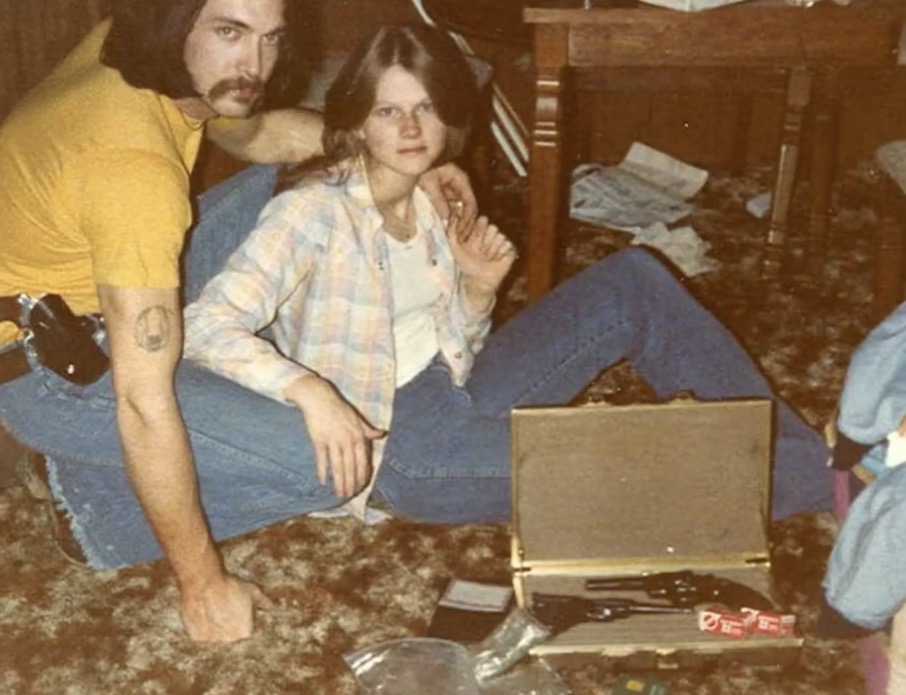
Not only did Debbie hand over the jeans Wallace had been wearing on the night of the murders, but she also gave investigators photos they had taken of the things he had stolen from both homes so he could send them to a friend in jail to show off what he’d taken.
When they developed the photos, officers saw Debbie sitting on the floor with Wallace squatting behind her with the stolen items spread out in front of them, including guns & cash. Wallace wore a .38-caliber gun on his hip that matched the murder weapon.
While Wallace had type O blood, a serologist found type AB human blood on his jeans which matched Theresa, Lisa & Gregory’s blood type. Type B blood was found on a brown cotton glove that Wallace had been wearing, which was a match to Patrick’s blood type.
According to two of Wallace’s friends, Mark Boyles & Anita Hoeche, he called them one day after the murders on Tuesday, January 15, saying he was in trouble & needed a ride. After they picked him up, he told them that he’d gotten too greedy the night before. After breaking into one house, he said he should have never gone to the next one since he’d gotten caught there.
When the man came in & gave him trouble, he was forced to tie the rest of the family up. He told Mark & Anita that it was bothering him that the little girl was screaming & crying & since he didn’t want the two children to grow up with the trauma of not having parents or having seen their parents being killed, he killed them too. He said the woman was screaming so he had to shut her up.
Mark & Anita told officers that Wallace had been at their house, but he’d left, since he knew he was a wanted man.
That same evening, the police got a call from a local football coach, Bob Ashworth, who had been out walking his dog. Since he’d seen the coverage about Donald Wallace, he thought it was really suspicious when he noticed a man scaling a trellis & climbing into the attic of a home. By this time, officers had received hundreds of phone calls with tips from the community, so when they were dispatched to the home in question, they doubted it would lead to anything.
When an elderly woman answered the door of the home, she was unaware that anyone might be hiding upstairs, saying that no one had lived in the second-story in years. All the lightbulbs had been removed from the attic to be used elsewhere so it was very dark up there. As the officers made their way toward the door of the attic, they called out their presence, but got no response.
When one of the officers cocked his shotgun, they suddenly heard a voice call out, just a second. Although the man who came to the top of the stairs claimed to be Richard Milligan, officers knew that it was 22-year-old Donald Wallace. He was arrested, charged with four counts of murder & taken into custody less than 30 hours after killing the Gilligan family.
Two court-appointed psychiatrists determined that Wallace was incompetent to stand trial as he was suffering from acute paranoid schizophrenia. During a hearing held in May 1980, they described delusions expressed by Wallace of plots against him, believing that the CIA & Masons were trying to place him before a firing squad. He also believed that others were plotting against him, including his attorney as well as other members of the court. The doctors went on to say that his condition would be very difficult to fake.
A cellmate of Wallace, who was a member of the sheriff’s department, testified that he only displayed these psychotic mannerisms during selective times when he was in the presence of staff & authorities, which made him believe that he was faking psychosis. However, during the hearing, the court deemed him incompetent to stand trial & Wallace was subsequently confined to a mental hospital over the next two years.
During another competency hearing in June 1982, several witnesses, including staff from the mental hospital as well as former cellmates, testified that Wallace had been bragging about faking his mental illness, bragging that he liked to beat people at their own game. He said that the longer he dragged things out, the less chance the state had of convicting him.
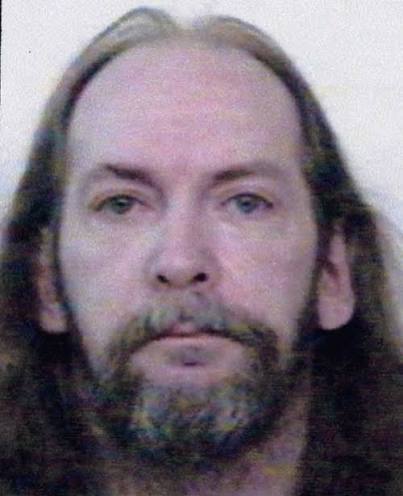
Wallace was an extremely intelligent man with an IQ of 130, placing him in the 98th percentile of the general population.
He told others that he would rather spend the rest of his life in the hospital than go to the electric chair. He had faked all of his psychological issues, including his paranoid delusions that he previously described to his appointed psychiatrists. He had been hoarding his medication, taking extra doses on days he had a court hearing so he would appear sedated.
Letters were also presented to the court that he’d written to Debbie Durham, who was also in prison at the time for burglary charges, that indicated he fully understood what he was doing.
As the hearing came to a conclusion, Wallace was deemed competent to stand trial.
After pleading not guilty, his trial began on August 31, 1982 & lasted just over three weeks.
The defense argued that Wallace had an accomplice on the night of the murders. While he had been burglarizing the home of Ralph Hendricks next door, his accomplice murdered the Gilligan family. However, the prosecution had solid evidence that he & he alone had been responsible, presenting forensic blood matches found on the jeans & gloves he wore that were a match to the Gilligan family members.
The fragments of glass recovered from the ground where Wallace had burned his Army jacket to hide evidence perfectly fit a fracture pattern from the broken window at the back of the Gilligan’s home. Jurors were also shown the photos of Wallace & Debbie posing with the stolen money as well as handguns & other items taken from the Gilligan & Hendricks homes. These items were recovered from Wallace or through his immediate network, including the ring that belonged to Theresa.
Several of his acquaintances took the stand to testify against him, telling the jury that Wallace had come back that night wearing blood-spattered clothing, detailing explicitly how he had executed the family.
On September 22, 1982, after 90 minutes of deliberation, the jury found Donald Wallace Jr. guilty on all four counts of murder.
At the sentencing phase of the trial, the judge found there were three aggravating factors that made him eligible for the death penalty: he committed the murders while he was burglarizing the house, he committed multiple murders & he committed the murders while on parole for a prior, unrelated felony.
The defense was then tasked with trying to convince the jury to decide on life vs. death by relying on Wallace’s difficult childhood. He had spent years of his life in psychiatric hospitals as well as juvenile security prisons where he claimed he learned to become a criminal in order to gain respect from his peers. They also highlighted his high IQ, arguing that he could be rehabilitated & serve a useful purpose while spending the rest of his life in prison. Meanwhile, the prosecution argued that he historically used his high intelligence for manipulation, rather than showing genuine psychosis.
On September 23, 1982, after about 2 ½ hours of deliberation, the jury recommended the death penalty. One month later, Donald Wallace was sentenced to death on October 21, 1982.
While Wallace remained on death row for 23 long years, although he refused to publicly admit that he & he alone had committed the crime, he did privately confess.
In July 1992, 12 ½ years after losing her family, Theresa’s sister, Diana Harrington, wrote Wallace a letter, saying she had been haunted by questions in the years since her sister, brother-in-law, niece & nephew were executed in their home. Who was killed first? Had the children watched their parents die or had her sister been forced to watch her babies die? She wondered how much pain they had been in & how scared they must have felt.
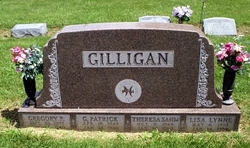
She also grappled with the sequence of events that night, wondering why, if Patrick had been shot first, had he been struck with barbells afterward to the point that he was unidentifiable by facial recognition & his casket had to remain closed during the funeral.
Wallace responded in a letter, writing how at the time of the murders, his life had been reduced to injecting drugs & commiting burglaries so he could get more drugs.
After he had taken some radios & jewelry from the home, he heard the garage door opening, explaining that he was essentially trapped inside since all of the locks had been deadbolted. When Theresa & the kids came through the door, Patrick was still in the car so he held them at gunpoint before Patrick soon followed.
Initially, he had no intention of harming the family, only planning to restrain them so he could escape. Noticing a vacuum cleaner, he decided to use the cord to bind the kids while he also bound Patrick & Theresa. When Patrick managed to get his hands free, he began attacking Wallace. While they struggled over the pistol, Patrick was shot in the head, falling to his hands & knees which is when Wallace struck him twice with a barbell to finish him off.
He recalled that Theresa had been brave, only concerned with calming & comforting her children. After Patrick was killed, he wrote that everything went to hell & the rest of the family was dead within ten seconds, saying that drugs, panic & insanity made it all happen too fast to understand.
He described the night as a frenzied blur where no conscious decisions had been made, writing that he was bewildered by what he had done as he took the scene in afterwards, his whole body feeling intensely ill. He wrote that he’s since re-lived the scene repeatedly in nightmares, usually staying awake for 40-60 hours at a time so he would be too tired to dream.
However, his actions after the murders completely contradicted what he’d written. After they lay dead on the floor of their family room, he calmly gathered their belongings before driving off into the night in the blue Plymouth. Only hours after the family had been slaughtered, he & Debbie proudly posed for photos with their stolen items. With no remorse, Wallace had callously told his friends the story of how he’d executed them.
He later claimed that the letter he wrote to Diana had been entirely made up as a way to ease her grief.
After 23 years of exhausting all of his appeals, 47-year-old Wallace sat down for his first & last interview In 2005, one week before he was scheduled to die by lethal injection at the Indiana State prison. He was finally acknowledging what he had done to the Gilligan family on Aspen Drive on the night of January 14, 1980.
He described that night as a moment of utter madness & panic, saying that Patrick attacked him, which he couldn’t blame him for. He couldn’t answer why he chose to kill Lisa & Gregory, saying he felt like he was disconnected during the murders as if he was watching a movie.
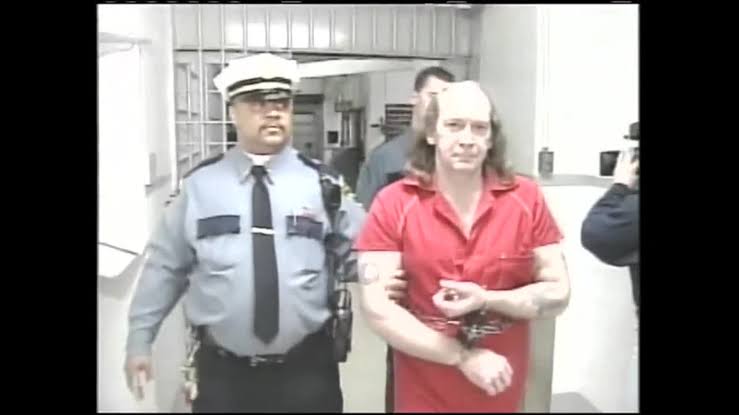
In the days leading up to his execution, Wallace visited with a few friends, declined clergy & watched TV while he ate his last meal of filet mignon, baked potato soup & a chocolate truffle cake from a local restaurant. After he was strapped to the table he said, I hope everyone can find peace with this. He was pronounced dead at 12:23 am on March 10, 2005.
Rather than attending the execution, family & friends of the Gilligan family gathered at St. Theresa’s Catholic church for a memorial service. It was the same church where Patrick & Theresa had been married as well as where their funerals had been held.
Diana had the goal of focusing on her sister & her family, rather than on the man who killed them. With more than 200 people in attendance, they gathered for prayer as well as to share stories & fond memories of the family.
The following year, Diana Harrington & her husband, Ted, published a book about the crime & the journey they endured in the aftermath titled, Surviving the Death Penalty.
Patrick & Theresa Gilligan had been a loving couple who were raising their two young children in a safe area of Indiana when they came home one evening & walked into a situation they could have never anticipated. Within a matter of minutes, the lives of four people who so many had cared for were erased, while their memories will carry on in the hearts of those who loved them. No matter how many decades go by, Diana will forever feel the loss of Patrick, Theresa, Lisa & Gregory Gilligan.
References:
- Justia U.S. Law: Wallace v. State
- Criminal: The blood truth (pt 5)
- Authors Den: Confession letter of a murderer, Donald Ray Wallace Jr.
- Authors Den: Six shots that still ring in my ears, Wallace describes victims’ last moment
- 13 WTHR: Last words
- 9 News: Indiana executes man convicted of killing family of four
- The Herald Times: Woman wants slain sister’s family remembered as execution nears
- The Yard: Crime Blog: Murder in Evansville
- Courier & Press: Investigation Discovery to explore 1980 mass murder of Evansville’s Gilligan family
- Murderpedia: Donald Ray Wallace Jr.
- YouTube: FeeltheHistory: A family’s worst nightmare – The Gilligan family murder
- YouTube: Under the Ash Tree: The murder of the Gilligan family
- The Cinemaholic: Who were Donald Ray Wallace Jr. victims? How did he die?
- Alchetron: Donald Ray Wallace
- Amazon: Surviving the Death Penalty
- Apple TV: Dead of Winter: Midnight Mass – S1, E6
- Find a Grave: Gregory Patrick Gilligan
- Find a Grave: Lisa Lynn Gilligan