
Watch on YouTube. Listen on Apple or Spotify.
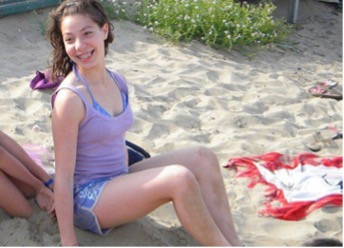
On a cold November evening in 2010 in the small Italian town of Brembate di Sopra within the province of Bergamo, 13-year-old Yara Gambirasio left her gymnastics studio & never came home. After waiting three agonizing months, not knowing where she was, her family was devastated when news did come. Yara was the type of girl who others described as kind, responsible & full of potential. She was a bright light within her quiet community where nothing terrible was ever supposed to happen. But that night evil found her.
When Yara left her home at 5:15 pm on Friday, November 26, 2010 to go to her gym that was about 800 meters from her home, she hadn’t intended on being gone long. She was busy getting ready for her rhythmic gymnastics event that was going to be held in two short days. She had done all she could to prepare, but she still needed to drop off a stereo with her instructor. Looking back, her mom feels tremendous guilt since she was the one to suggest that Yara get ahead by dropping it off.

As she walked out the front door that evening, she wore black leggings, a black sweatshirt with a Hello Kitty logo on the back, a black jacket & black gloves with glitter. She said goodbye & her family wasn’t worried since they knew exactly where she was headed, but sadly, this was the last time they ever saw her alive.
As 7 pm rolled around & Yara had been gone for nearly two hours, far longer than her parents anticipated, they started to grow concerned. Yara was the type of girl who would let them know if she was going to be even as little as five minutes late, but each time they called her, the phone would ring 3-4 times before it went to voicemail. After they went to the gym & realized she wasn’t there, they began driving around, looking for her, but when they weren’t able to find her, Yara’s father contacted the police to report her missing.
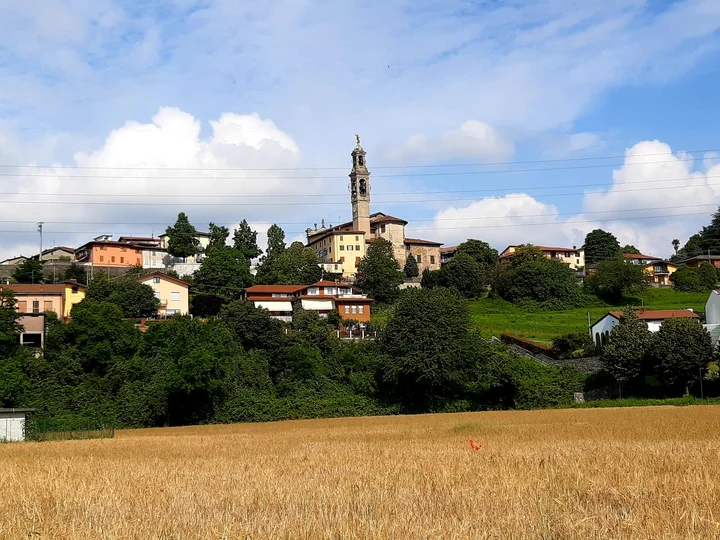
Brembate di Sopa is a small, charming town located in northern Italy about 28 miles (45 km) northeast of Milan & in 2010, it had a population of 7,832. It’s a peaceful place where people can go to escape the hustle & bustle of major tourist destinations. From the quiet tree-line streets, there are views of the wooded mountains in the distance as well as medieval structures.
Within minutes of her father’s phone call, the magistrate on duty dispatched both state police officers as well as the military police to Brembate di Sopa. As the investigation began, Yara’s gym instructor confirmed that she had briefly stopped by & before she headed out, she did some light training. Her cell phone proved that the last known contact Yara had was a text message she sent to her friend Martina at 6:44 pm. In the message, they agreed to meet at 8 am on Sunday & this is the last that anyone heard from her.
Yara’s sports center was situated in a large complex that had many entrances & exits. It held an arena, a swimming pool, a running track, courts & not only were athletes always in & out, but it was situated along a busy road. There was a public CCTV camera in front of the gym, but it had gotten damaged during a summer storm so there was no footage of Yara leaving.
According to those who saw her at the gym that night, she walked in carrying her speaker at about 5:30 pm & after she put it down, she sat with the younger girls who were training. She stayed for about an hour, leaving at 6:30 pm. She seemed to be in a happy mood & she was excited for her upcoming event.
One young man who the Gambirasio family knew, Enrico Tirono, reported seeing Yara on her way home. He told investigators that she was with two men near an old Citroen (car). However, it sadly later came out that Enrico made the whole story up for attention.
Investigators initially thought that Yara might have gone to a friend’s house, but her parents were adamant that she would have never done so without letting them know. At 13-years-old, Yara still had an innocence about her; she wore braces & was not yet interested in boys. Her life was all about gymnastics, her friends & her family. She left the house on that cold Friday night without her purse & she hadn’t intended to be gone long. As the hours continued to tick by, investigators could no longer deny that something terrible had likely happened to her.
When bloodhounds were brought in, rather than following the expected route from the sports center back to Yara’s home in Via Rampinelli, they went in the opposite direction to an isolated area with warehouses & factories. The dogs traveled nearly 1.2 miles (2 km) until they arrived at the gate of a shopping mall that was under construction. Three of the dogs led investigators to an electrical systems storage room 9 miles (15 km) away in nearby Mapello. When the team analyzed the last signals from Yara’s cell phone, they showed that it had been in Mapello at 6:49 pm, five minutes after she sent her last text.
Although everything suggested that Yara’s family had nothing to do with her disappearance, investigators interviewed those closest to her first. Over the next few days, they spoke with each member of the Gambirasio family, looking for any indication that they knew more than they were letting on.
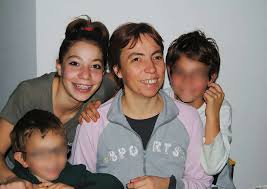
Yara’s parents were both well-known & respected within their community. Her father, Fulvio, was a large, solid man who wore thick glasses & worked as a local construction surveyor. His father had been the local postman, like his mother before him. Yara’s mother, Maura, worked as a kindergarten teacher in the nearby town of Longuelo. She had a 15-year-old sister, Keba, & two younger brothers, 9-year-old Natan & 4-year-old Gioele. According to her father, Yara was the soul of their close family, the glue that held them all together. She was someone who radiated kindness & joy & her siblings absolutely adored her.
In addition to the Gambirasio family, investigators put wire taps on hundreds of phones. They also tried to trace those who owned cell phones that had passed through Mapello on the day she disappeared, which amounted to about 15,000 people.
One of these phones belonged to a Moroccan man named Mohammed Fikri. In one conversation that was heard via wiretap, he said, Forgive me God, I didn’t kill her. When Yara vanished, he had been working in a builder’s yard in Mapello, but by the time investigators began looking into him, he was on a boat bound for Tangier, a city in northwestern Morocco.
On December 4, Italian authorities intercepted the boat & arrested Fikri. When they searched the van he had been driving, they located a bloodstained mattress. As investigators dug deeper, they learned that the blood was unrelated to the case & he was quickly cleared.
As autumn transitioned to winter, Brembate di Sopra became the focus of a media frenzy as national camera crews came into town to cover the story of Yara’s disappearance. The Gambirasio family, who were panicked & grieving, only wanted privacy so they closed their curtains to avoid the onlookers & media attention. They also declined to take part in what is known as a torchlight procession where people walk along carrying flashlights, glow sticks or lights to raise awareness in Yara’s case. Nuns from the Ursuline order, who taught at Yara’s school, came to pray with Yara’s mother, Maura & a mass was held in her honor.
Because Brembate di Sopra is closer to Switzerland than it is to Naples, many recognized that their desire for privacy was culturally driven. Those living in this area tend to be more reserved than those living in more southern regions of the country. It’s said to be a place where gossip isn’t typical & people don’t share information unless they double check its accuracy.
Although they avoided the media, the Gambirasio family were desperate to find Yara so they shared photos of her with the press in the days after she disappeared, but days & weeks continued to go by & no one came forward with any information.
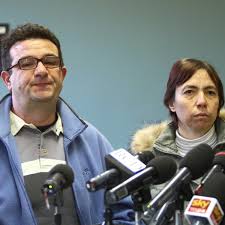
Yara had been missing for a month when her family got through Christmas without her & growing desperate, they agreed to make a televised appeal. Maura was said to be so uncomfortable that she was unknowingly rolling her eyes while Fulvio, who wore a rugby shirt, hesitantly read a plea: Help us return to normality. He explained that their family values revolved around love, respect & honesty & he indicated that they wouldn’t be giving any interviews.
On the afternoon of February 26, 2011, exactly three months after Yara disappeared, a middle-aged man named Ilario Scotti, was out flying a radio-controlled plane in an industrial area of the small town of Chignolo d’Isola, a location 10 km (6 miles) south of Brembate di Sopra. The plane wasn’t working properly & when Scotti landed it amongst tall weeds, he bent down to retrieve his plane & noticed some rags laying on the ground. When he looked more closely he saw a pair of shoes & was horrified to realize that he was looking at a body.
When investigators arrived, they found that the body was in an advanced state of decomposition. The female victim wore a Hello Kitty sweatshirt & a black bomber jacket with an elastic waist, clothing that matched the description of what Yara was wearing when she left her home three months earlier. They also found her iPod & the SIM card & battery for her LG phone while the phone itself was missing.
Despite exposure to the elements & animals, her clothing from the waist up were well preserved while her leggings were extensively torn & her underwear had been cut at the sides with a blade.
The autopsy was conducted by Italy’s most famous forensic pathologist, Professor Cristina Cattaneo, who determined that Yara had died in the field where her body was found as grass from the field was clutched in her hands. She also discovered traces of lime in Yara’s respiratory passages as well as the presence of jute, a vegetable fiber that’s used to make rope, on her clothing.
Although Yara’s purple bra was found unhooked & her underwear had been cut, she had not been sexually assaulted. She had suffered multiple injuries from a sharp weapon that had pierced her clothing in various spots, there was a wound to her head & her wrists had been cut, but none of these injuries were fatal. It appeared that after she was attacked, her killer left her to die from exposure or hypothermia. Had she been found quickly, she would have likely survived.
The presence of lime & jute suggested that Yara’s killer could potentially be in the building trade. The forensics team obtained two DNA samples, one from Yara’s phone battery & the other from two fingers of her black gloves, but there were no matches to any of the samples on record.
In April 2011, two months after Yara’s body was found, the commander of the scientific investigations department in Parma contacted the chief investigator, Letizia Ruggeri, with good news. Male DNA was found on Yara’s underwear & leggings as it was likely that the murderer himself had been wounded during the struggle, leaving his DNA behind. Ruggeri & her team named this suspect Ignoto 1 or Unknown 1.

Because the workload was so immense, Ruggeri divided the list of duties; the police were responsible for taking DNA samples from anyone associated with Yara or those who had been in areas of concern, while the military force focused on phone records, cross-referencing all mobile phones that had moved from Brembate di Sopra to Chignolo d’Isola on November 26, 2010. The owner of each phone whose number appeared in both locations were asked to provide a DNA sample.
The work was very slow & methodical, requiring geneticists in Parma, Pavia & Rome a minimum of six hours to transform just a few samples of DNA into something that could be read & compared on a computer screen. The manpower & cost of the investigation was tremendous & became one of the most expensive manhunts in Italian history.
In the meantime, Yara’s funeral was held on a hot morning in May 2011 where onlookers watched as the hearse slowly drove toward her sports center carrying her white coffin that was topped with a huge bouquet of white flowers. The ceremony was held in the sports center where Yara had spent countless hours training & where she had been last seen alive. There was a large crowd outside who watched the funeral on a giant screen while they heard condolences from Giorgio Napolitano, the president of the Republic.
By this time, investigators had taken thousands of DNA samples, yet they still had no leads. Since Yara’s body was found within an area of shrubs near a nightclub called Sabbie Mobili, an Italian phrase for Quicksand, Ruggeri began looking into the club’s patrons since she was aware that murderers often dumped bodies in areas that they are familiar with.
Although it seemed like a long-shot, in the spring of 2011 investigators began taking DNA samples outside the club on busy Friday & Saturday nights. The club itself had a reputation for violence; on January 16, 2011, a man from the Dominican Republic had been murdered outside its doors. Since members of the club were required to have a membership card to enter, the authorities were easily able to track down anyone who regularly went there.
One of the samples that was collected from Sabbie Mobili seemed exceptionally similar to the suspect, Ignoto 1 (Unknown 1). However, the man who had given the sample, Damiano Guerinoni, was excluded when investigators learned that he had been in South America on the day that Yara went missing. Although he may have not been the person responsible, geneticists were convinced that he was a close relative to the murderer.
As the team of investigators continued to work on the case, the pieces of the puzzle began to fall into place. They learned that Damiano’s mother, Aurora Zanni, lived near the Gambirasio family & had worked for them as a helper twice a week for ten years while Yara had been growing up.
Aurora was a middle-aged woman who had grown close to her employers since she spent so much time in their day-to-day lives. She fondly recalled that when Yara would ask her to watch her gymnastics moves, she would remind her not to hurt herself. At the time of Yara’s disappearance in 2010, she was no longer working for the family, but she described her relationship with the family as excellent. When Aurora found herself in the center of Yara’s investigation, she described it as the worst thing that could happen to her.
Not only did investigators intercept the phone calls between Aurora & Damiano, but they also interviewed them & closely surveyed them. Ultimately, by the summer of 2011, Ruggeri had to accept that there wasn’t a connection & it had been nothing more than a crazy coincidence. The only lead they had was that Damiano’s DNA was exceptionally similar to that of Ignoto 1.
A year into the investigation, there was immense pressure to find Yara’s killer & thousands of people were being DNA tested. Some locals who hadn’t been approached for a sample suggested to the press that the investigation was haphazard. Politicians began making personal attacks against Ruggeri, accusing her of being incompetent & one, Daniele Belotti, went as far as to write an open letter in January 2012 to the minister of justice, asking for her to be replaced by someone of proven experience. In April 2012, Ruggeri filed a lawsuit against the man for defamation.
These outward objections toward Ruggeri held undertones of sexism since she was a female who was leading such a high-profile investigation. She was an unconventional, single-mother who had a blackbelt & rode her Vespa to work. Since she decided to drop the case against Mohammed Fikri, she felt that many people believed that she’d made the wrong decision.
Despite the targeted criticism, Ruggeri continued to focus on the DNA from Guerinoni & her team spent months recreating his family tree. They built a complete genealogical tree that dated back to 1815 with other branches of the family going back as far as 1716.
They learned that the roots of the family tree were within the small village of Gorno, a 45 minute drive north of Bergamo. Damiano Guerinoni’s father had a brother, Giuseppe, who died in 1999 & when investigators visited Giuseppe’s widow in September 2011, they found two stamps that he had licked. One was to validate his driver’s license while another was on a postcard he’d sent to his family.

With this DNA sample, there was finally a breakthrough in the case when geneticists were convinced that Giuseppi Guerinoni was the father of Ignoto 1, the suspected murderer. The team quickly put a picture together of who Giuseppi & his family were. He had been a stocky man with a rugged face who worked as a bus driver & played the accordion at village festivals. He & his wife, Laura Poli, had three children together, a girl & two boys.
After Giuseppi’s death in 1999, Laura became a Jehovah’s Witness & moved to the nearby town of Clusone. Since Ignoto 1 was male, investigators focused on her sons, Pierpaolo & Diego. Like his mother, Pierpaolo was also a Jehovah’s Witness while Diego struggled with drug addiction. However, the brothers proved not to be a match to Ignoto 1 & neither man had children.
This suggested that Giuseppe Guerinoni had a child outside of his marriage. Ruggeri turned her attention to finding a woman, who 30 to 40 years earlier, had an affair with a married man & had given birth to a boy who went on to murder Yara Gambirasio.
Investigators began searching the villages of the Bergamo Alps which was a difficult task due to the defensive residents. Locals struggled to understand why they would be trying to take DNA samples of elderly women in connection to the murder of a 13-year-old girl. Within these small communities, fear was growing at the idea of a murderer living among them.
Investigators came to learn that prior to his death in 1999, Giuseppe Guerinoni would visit a spa resort south of Milan called Salice Terme without his wife for two weeks every May beginning in the early 1960s. During the spring of 2012, a team of investigators began searching records for all of the women who stayed at the resort at that time of year. They obtained DNA samples from single mothers & women who left the mountains for lower Bergamo, but when they found no matches, they began expanding their search. They started looking at women who were hidden behind the walls of a marriage & since divorce in Italy was only legalized in 1970, until that time, many women were forced to stay in their marriages despite abuse or infidelity.
While investigators were searching for the mother of Ignoto 1, Yara’s parents hired their own investigator, Giorgio Portera, a freelance geneticist, who reviewed the investigation & explained it to them. For nearly a year, he fought to have Giuseppe’s body exhumed from a cemetery in Gorno for additional sequences of DNA. Investigators had only been able to compare 13 Short Tandem Repeat (STR) regions or sequences of DNA with the DNA of Ignoto 1. Confirmation of paternity requires that at least 15 STR regions be compared.
On March 7, 2013, workers chiseled into the slot in the cemetery wall where Giuseppe’s body was held & removed his remains. These remains were transferred to a hospital in Bergamo for examination before they were returned to Gorno only hours later. When DNA was extracted from his remains, 29 STR regions could now be compared which solidified that Giuseppe Guerinoni was most definitely the father of the murderer.
As word of the investigation spread among the small towns & villages, gossip began to swirl as curiosity grew & suspicions surfaced about the mysterious lover of the late Giuseppe, who also happened to be the mother of a murderer.
It was Marshall Giovanni Mocerino, Ruggeri’s right-hand man, who ended up blowing the lid off this case. He was aware that while Giuseppi was driving a public bus in Ponte Selva in the 1960s & 70s, he would have driven many young women to their jobs within the various factories. When he questioned his fellow bus drivers, one said that Giuseppe had confessed to having a young woman in trouble. Another former colleague described Giuseppe as a womanizer, but it wasn’t until June 2014 when a source of Mocerino gave him the name he’d been looking for.
The mystery woman in question was Ester Arzuffi, who had been a neighbor of Giuseppi’s in Ponte Selva in the late 1960s. In 1966, when she was 19-years-old, she married Giovanni Bossetti, a man who suffered from various ailments, including depression. Meanwhile, she was an outgoing, good looking woman who worked at a textile factory a few miles away & took the bus on a daily basis.
When investigators cross-checked the DNA samples they’d obtained, they realized that Ester had been tested in July 2012, but an error had been made. Rather than comparing her DNA to Ignoto 1, they compared it to Yara’s. When they retested her DNA they confirmed that she was the mother of Ignoto 1.
Although she left Ponte Selva in 1970, Ester continued her affair with Giuseppi & in the fall of 1970, she gave birth to twins, a boy & a girl. The boy was Massimo Giuseppe Bossetti, a slim young man who liked to go out & have fun with his friends, earning himself the nickname, the animal.
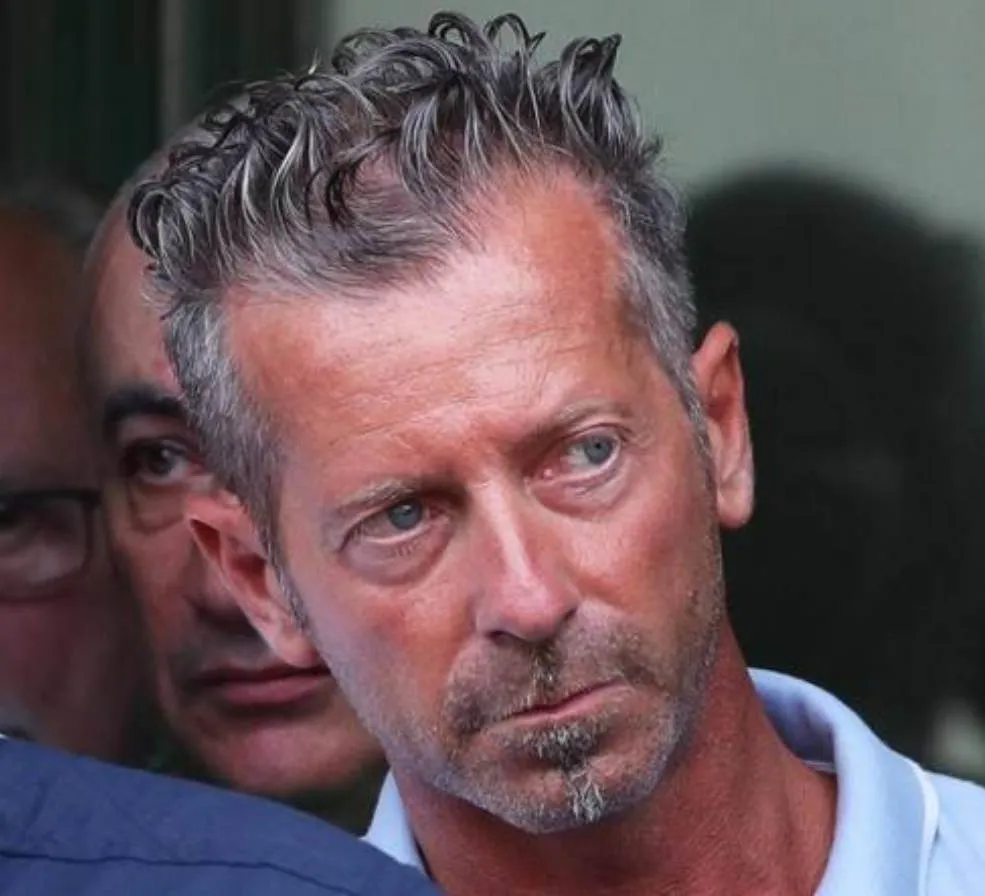
Now in 2014, he was a 42-year-old married construction worker with three children, two young daughters & a son, living in Mapello, the hamlet near Yara’s home where her cell phone last connected on November 26, 2010.
In order to obtain his DNA, investigators set up a fake road block to breathalyze drivers on June 15, 2014 & when Massimo stopped, they pretended that the machine was malfunctioning in order to obtain two samples from him. After his DNA was sent for overnight testing, results proved he was an exact match with Ignoto 1.
Not only was his DNA a match, but surveillance video depicted his van passing Yara’s gym sixteen times on the night she went missing. He was arrested & charged with Yara Gambirasio’s murder on June 16, 2014 after nearly four years of continuous investigation.
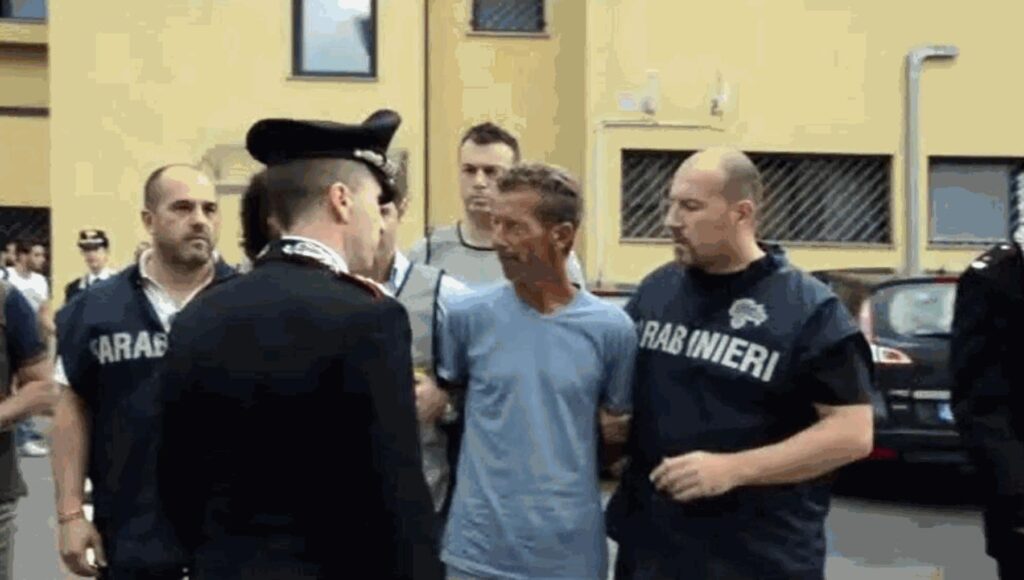
Investigators learned that Massimo was often in the area around Yara’s home. He parked his car behind her sports center, ate at a pizzeria at the end of her street & used a tanning facility nearby for weekly sessions. When he was confronted about frequenting the tanning bed close to Yara’s home, he vehemently denied it. When he eventually admitted that he did use the tanning beds at this location, he claimed he lied because he didn’t want his wife to know he was spending the money when finances were tight. According to his co-workers, Massimo was a known liar & he’d gone as far as making up a story about having a brain tumor.
His internet searches were also concerning & proved he was very obsessed with prepubescent girls. Not only was his van seen passing Yara’s sports center sixteen times on the night she disappeared, but his cell phone records also proved that his phone had been in the area of Brembate di Sopra that evening. He’d switched his phone off from 5:45 pm until the following morning at 7:34 am.
When Massimo’s wife, Marita Comi, confronted Massimo with the evidence that was stacked against him while he was behind bars, he continued to maintain his innocence.
Although Ruggeri may have been initially criticized during the investigation, she was celebrated for her brilliance after Massimo’s arrest.
During the trial in July 2015, Massimo pleaded not guilty while his lawyers argued that the DNA evidence only proved presence, not responsibility. He argued that he had no idea how his DNA ended up at the scene.
Before the court ended up finding Massimo guilty, he spoke & said, I might be stupid, an idiot, ignorant, but I’m not a killer.
On July 1, 2016, he was sentenced to life in prison. Since that time, his attorneys have continued to appeal the conviction.
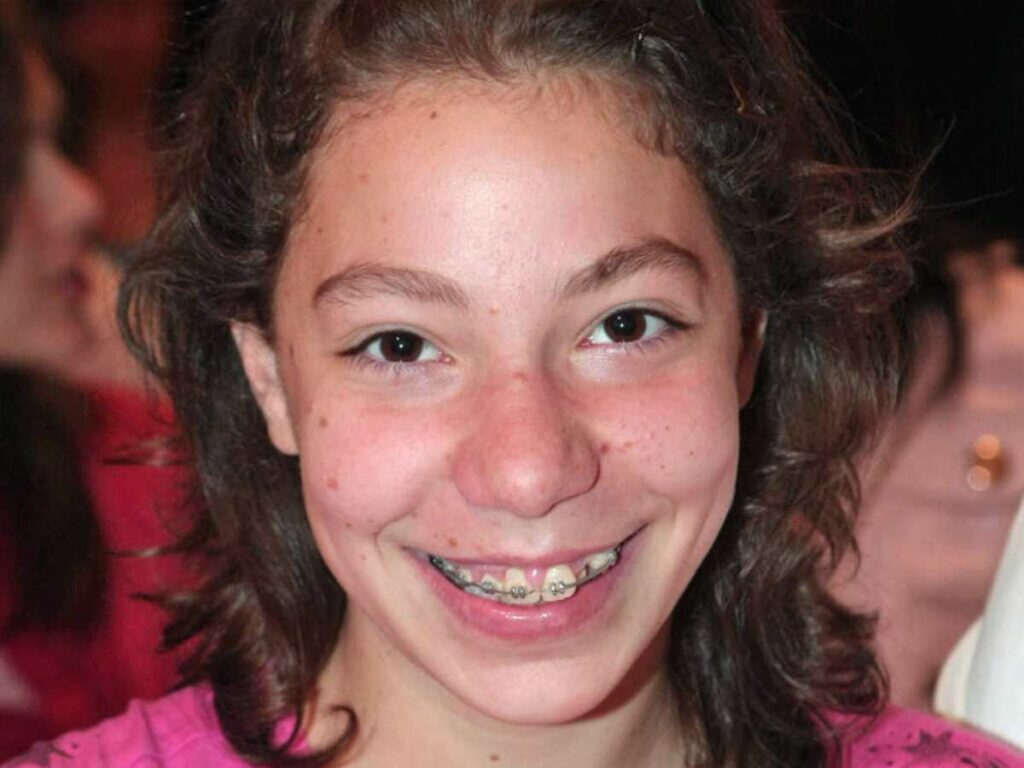
This case left four families utterly devastated; Yara’s family were forced to learn how to live a new normal without their beloved daughter & sister while Ester Arzuffi’s husband, Giovanni Bossetti, learned along with the entire country that none of his three children were his. The investigation revealed that Ester’s third child, Fabio, also had a different father although Ester continued to deny every straying from her marriage. If all of this wasn’t enough, Giovanni was also diagnosed with terminal cancer. Giuseppi’s widow, Laura, also had to come to terms that not only had her late husband been unfaithful, but he had other children. Meanwhile, Massimo Bossetti’s family was grappling with the idea that he murdered a 13-year-old girl.
References: