Watch on YouTube. Listen on Apple or Spotify.
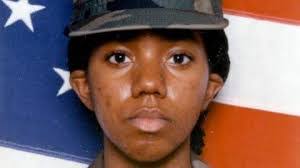
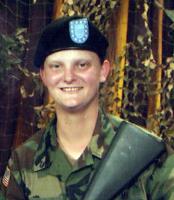
19-year-old LaVena Johnson was a U.S. Army soldier who was found dead in a contractor’s tent on the military base in Balad, Iraq in 2005. Although her family was told that her death had been a suicide, they believe this conclusion was the laziest, most insulting cover story they could have ever slapped onto this tragedy.
LaVena had only been in Iraq for about eight weeks when she was found dead. Her family was eventually told that her death was from a self-inflicted gunshot wound through the mouth from her assigned M16 rifle. However, discrepancies began piling up, beginning with her autopsy which suggested that she had been attacked before her death.
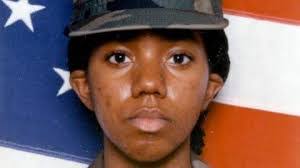
Her family’s suspicions began during LaVena’s funeral when they were able to view parts of her body, including a small wound to her head that was much smaller than would be expected from an M16 rifle. They also couldn’t understand why the white gloves she wore in her casket had been glued to her hands.
It wasn’t until they were finally able to view photos of her body that were taken when she was found in the tent as well as during her autopsy, when they became convinced that LaVena had been attacked & murdered. These photos depicted a broken nose, a split lip, scratches & bruising to her arms, chemical burns to her right leg, hand & even more concerning, her genitals. The white gloves that had been glued to her hands during the funeral concealed acid burns, specifically to her dominant hand that she would have used to pull the trigger.
Although LeVena’s death was ultimately ruled a suicide, her family remain convinced that she was murdered & the Army covered it up.
At 7:30 am on the morning of Tuesday, July 19, 2005, Dr. John & Linda Johnson awoke to the sound of the door bell ringing at their Florissant, Missouri home. When Linda looked out the second-story window, her heart sank when she saw a soldier standing on their front porch. Since their daughter was stationed in the Army in Iraq, they knew the news was going to be devastating.
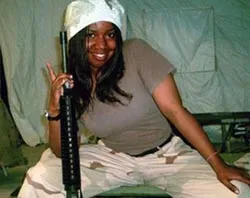
As John opened the door, Linda stood on the second-story balcony that overlooked the foyer. The soldier held a little black book as he asked them to confirm that they were the parents of Private LaVena Lynn Johnson. As he stepped inside, he read from his book, saying the words that were their absolute worst nightmare, We regretfully inform you that your daughter, Private LaVena Lynn Johnson is dead.
John & Linda understandably lost it, believing that they must be in a nightmare. Meanwhile, their other four children woke from the commotion & immediately began screaming & crying as they learned the news of their beloved sister’s death.
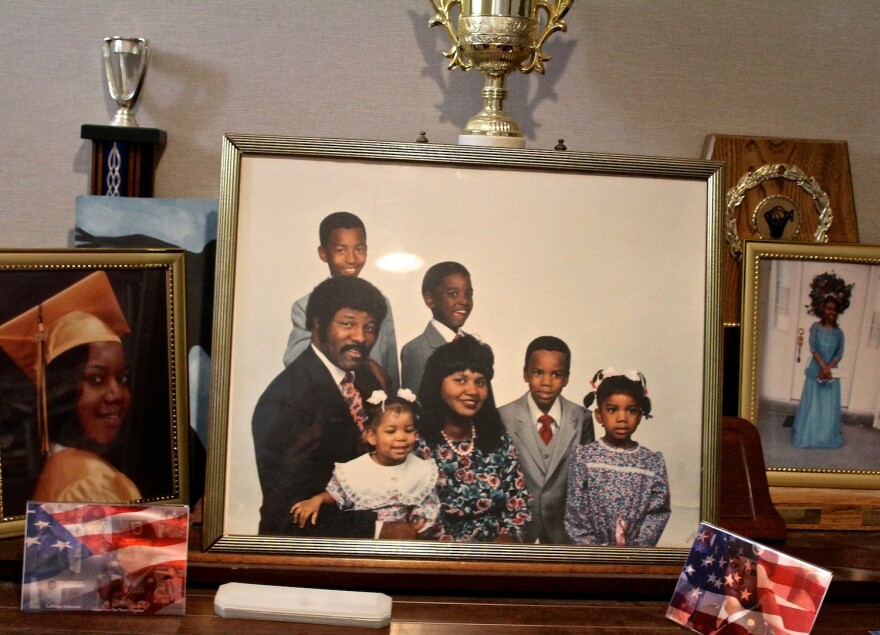
John recalls hearing the officer, who stood with a cold look on his face, mention that his daughter was dead from a self-inflicted injury. When he asked the officer to clarify, he told John that LaVena’s death was under an active investigation.
The idea that their daughter would have harmed herself was incomprehensible. They had only just spoken to LaVena two days earlier on the morning of Sunday, July 17, 2005, a time when she was her usual happy, bubbly self. She excitedly told her parents that she would be coming home sooner than expected. She sounded eager to be assigned to the 129th Corps Support Battalion which would allow her to rotate back to the States in a few months. She was looking forward to being home for Christmas, she talked about decorating the tree with her younger sister, something they did together every year.
One day after John & Linda were told that their daughter was dead, a casualty liaison came to their home, this is the person responsible for making funeral arrangements. He asked the family to consider having a closed-casket funeral based on their daughter’s injuries. He told John that LeVena was found dead in her barracks with a gunshot wound to the head, but it wasn’t until the next day when a family friend, who knew someone who was also in Balad, let them know that LaVena hadn’t been found in her barracks, but rather, a contractor’s tent. This lack of clear-cut information made John begin to believe that the Army was trying to cover for someone of higher rank & prestige.
John & Linda were traumatized as they drove to the airport to pick up LaVena’s remains as the last time they’d made that very drive, their daughter had run to them with open arms, so excited to see them while she was home on a leave. This time 19-year-old LaVena was in a casket that had been draped with an American flag.
LaVena Johnson was born on July 27, 1985 in the middle-class town of Florissant, Missouri to parents Dr. John Johnson & Linda Johnson as one of five children.

After graduating from Hazelwood Central High School with honors, LaVena followed in her father’s footsteps, enlisting in the Army on September 15, 2004. As a young boy, John had lived with his family in a housing project in St. Louis until he graduated from high school. He then joined the Army, serving for three years until he was discharged & began taking college courses, eventually earning a doctorate in psychology. Both he & Linda had civilian jobs in troop support for the Army; John was a military psychologist for his entire career.
Since the Johnsons had five children, during her senior year of high school, LaVena began to worry about her parents funding her college career even though John assured her that they would be fine. Interested in going to school in California, she wanted to pay for her own tuition & felt that the Army was the perfect way to do so.
Although John & Linda were initially against this idea, they eventually came around to support their daughter’s decision. Army recruiters had visited her high school & LaVena, being very strong willed, was set on joining. Only months later, she was deployed to Iraq, permanently stationed in the city of Balad, 50 miles north of Baghdad.
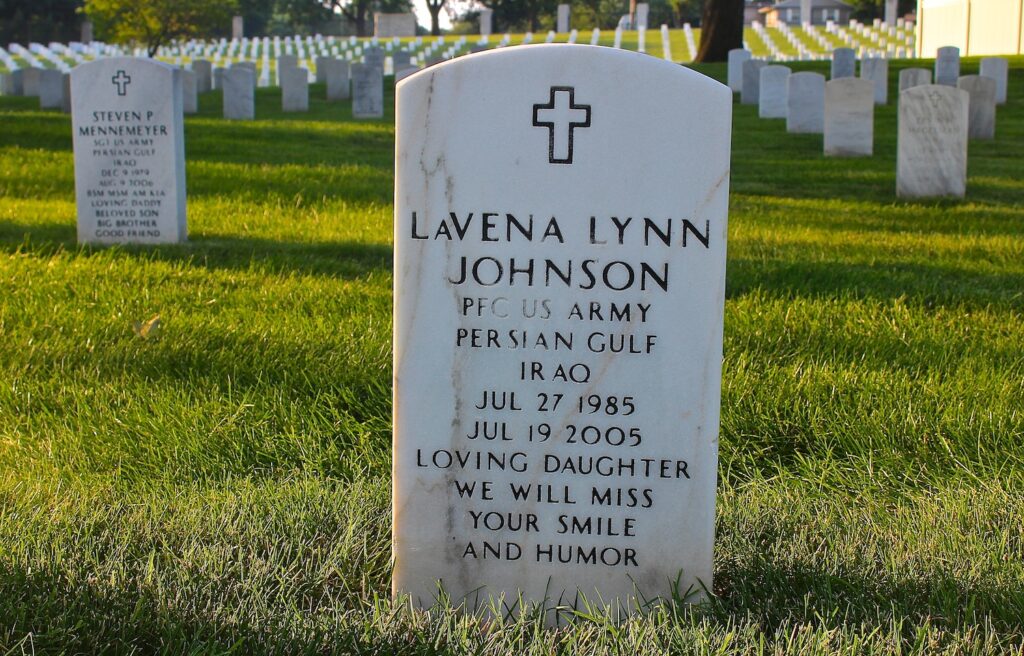
LaVena’s funeral was held on July 27, 2005, a day that would have been her 20th birthday. She was buried with military honors at Jefferson Barracks National Cemetery & was posthumously promoted to private first class & awarded good conduct & commendation medals.
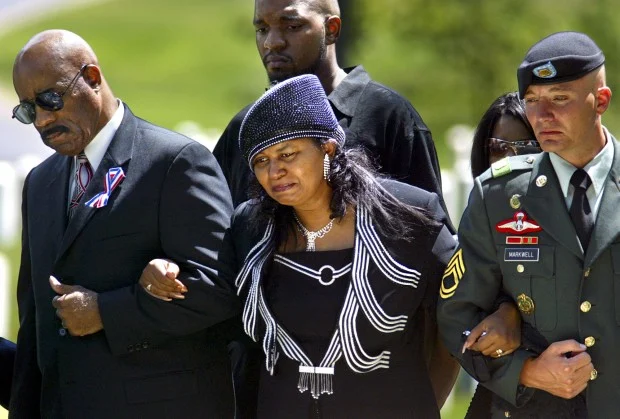
As John stood by his daughter’s body, he looked her over & noticed a hole on the left side of head near her temporal lobe, something that didn’t make sense to him since LaVena was right-handed. Even more concerning, the white gloves she wore had been glued to her hands.
Although LaVena’s autopsy had been completed five days earlier on July 22, John & Linda still hadn’t heard from the medical examiner. They were still very much in the dark regarding the circumstances that led to their daughter’s death.
It wasn’t until August 3 when John heard from Dr. Edward Reedy. During their conversation, when he asked about the hole that he’d seen to the left-side of his daughter’s head, he was told that it was the exit wound from LaVena’s M16 rifle. Dr. Reedy informed him that she had placed the barrel of the gun into her mouth & pulled the trigger. However, right away this made no sense to John for a number of reasons.
LaVena stood at only 5’1” (61”) while the weapon in question was 40” inches long & John didn’t believe it would have been physically possible for her to do what Dr. Reedy indicated. When he brought this up, Dr. Reedy’s response was, Well, she managed. John was also stunned to learn that a sexual assault kit hadn’t been collected during the autopsy & when he asked why, Dr. Reedy said it wasn’t indicated since there hadn’t been signs of a struggle.
John also questioned the unexpectedly small size of the wound to his daughter’s head, which appeared to be more from a hand revolver, rather than from an M16 rifle. Dr. Reedy went on to say that there had been considerable damage & that the bullet had exited the back of LaVena’s head. However, during the funeral, John had seen with his own eyes that it had actually exited the left side of her head, but Dr. Reedy just responded, It depends on the angle that you’re looking at.
Two ballistics experts, Donald Marion & Cyril Wecht, later told the family that LaVena’s wounds were not consistent with an M16 & the exit wound appeared to have been caused by a 9 mm pistol.
In many cases, at close range, an M16 bullet will exit the body causing an irregular, torn wound that can be several inches wide due to the bullet turning sideways in the body as well as from fragmentation. Although there are some cases when a smaller wound occurs after the bullet passes straight through & doesn’t fragment, but oftentimes, when the skull is penetrated, a much larger, more destructive wound results.
Immediately, John & Linda were convinced that LaVena had not done this to herself. Colonel Ann Wright, who served in the US Army for 29 years & now works to raise awareness of sexual assault in the military, publicly supported their cause. She wrote the article, Is There an Army Cover Up of Rape and Murder of Women Solidiers, which indicated that one in three women who join the military will be sexually assaulted or raped by men in the military.
According to statistics, of the 120 women who have died in Iraq, over 50% were unrelated to combat. Half of these deaths (about 25) have been under highly suspicious circumstances. Within these cases, the military have determined that most of these women committed suicide while their family members have strongly disputed these findings & are calling for further investigation.
Ann defines these instances as command rape, an act that has been named because it’s happening so frequently, when a male of higher rank preys on young women who are new to the military. After a woman has been sexually assaulted, they’re often told, Who would believe your story over mine?
In 2016, 14,900 members of the military were sexually assaulted, many of which happened on more than one occasion. 81% of victims did not report the crime due to shame & fear of retaliation.
Around August 16, 2005 John contacted the casualty liaison about receiving more concrete information regarding the circumstances of his daughter’s death. When the man got back to him later that day, he indicated that due to the highly concerning evidence, the investigation could take up to a year to complete.
John explained that he was an ex-military member who had worked for the Army for 25 years. It was his experience that when the Army made a decision, they would typically not alter it, even if the decision had been wrong.
On September 19, the liaison gave John a copy of Dr. Reedy’s autopsy which concluded that LaVena’s death had been a suicide. However, later that same day, a criminal investigator visited the Johnson home & told Linda that they would do everything in their power to determine what happened to their daughter.
When John received copies from the military that included photocopies of LaVena’s deceased body, one depicted her lying on her back with her left arm stretched out & her right arm draped over her face. He was understandably wracked with emotions, seeing his beautiful baby girl in such a horrific way.
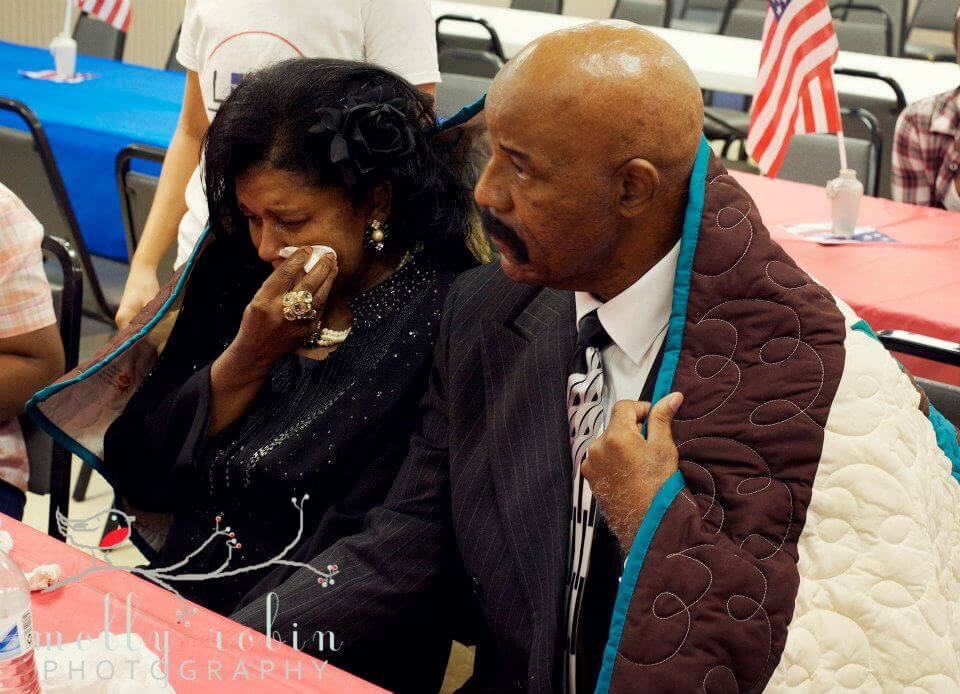
More & more documents began to come out that included witness statements, a time when John & Linda came to believe that she had been sexually assaulted during her time in the military. LaVena was receiving medical treatment for genital warts which she had been diagnosed with on July 9. According to the doctor, LaVena had been shocked by the diagnosis & was upset during her visit & although they suggested that she seek counseling to deal with the stress, she declined.
Since LaVena had been in charge of a communications facility, she was able to call & email her family on a daily basis, something that helped put them at ease. During the majority of these phone calls, LaVena sounded very happy, but over time, she confided in her parents that she was feeling disrespected by some of her superiors.
During a phone call home on July 14, 2005, five days before her death, LaVena specifically mentioned an incident that involved a group of soldiers who disobeyed her orders & refused to leave the communications room despite her having authority over them. As they began to disagree, the general came into the room, causing the group to disperse without him needing to say a word.
LaVena felt that these soldiers were disrespecting her because she was a young female yet, rather than supporting her, the general scolded her for failing to get the soldiers to listen to her. This was when she began to feel as if she was being personally targeted.
Over the next two & a half years, with the assistance & support of their family & friends, John & Linda fought for the documents concerning LaVena’s death. Through the Freedom of Information Act & the help of his local Congressional representative, William Lacy Clay, the Army finally provided John the documents within a CD. This was when he was able to see photos that the Army had taken of his daughter’s body as it lay when LaVena had been found in the contractor’s tent as well as after she had been disrobed during the investigation.
Although the initial autopsy supported LaVena’s cause of death, the photos that John viewed suggested otherwise.
LaVena, who was barely 5’ tall, weighing less than 100#, appeared to have been struck in the face with a blunt instrument, possibly a weapon stock. While her nose was broken, her teeth had been knocked backwards. The back of her clothing contained debris which suggested that she had been dragged from one location to another. He saw bruising & teeth marks to her upper body while the right side of her back & her right hand had been burned after a flammable liquid had been poured over her & ignited. Her genital area had suffered tears & there was a substance running out of it, potentially lye, a corrosive liquid, which John believed was utilized to destroy DNA evidence of a sexual assault.
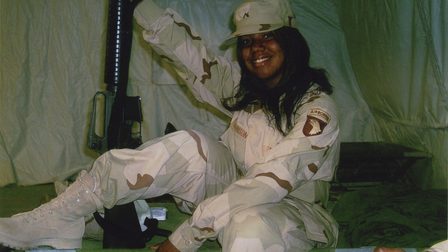
Despite the wounds John observed on LaVena’s disrobed body, when she was found in the contractor’s tent she was fully dressed. There was a trail of blood from outside the tent leading to the inside which suggests that she was attacked, re-dressed, dragged into the tent that was owned by Kellogg Brown & Root (KBR) which was then set on fire.
John believes that his daughter was raped & murdered by a contractor. Sadly, rape by contractors in Iraq & Afganastan is not rare. In July 2005, the same month LaVena died, 20-year-old Jaime Leigh Jones was working in Iraq when she was allegedly gang-raped & beaten by KBR employees & then locked in a shipping container by managers after she sought out law enforcement.
Although Jaime & her lawyers lost a federal suit against KBR, nearly 40 other female KBR employees who worked in Afghanistan & Iraq told them stories of rape, beatings & sexual harrassment.
According to the Army’s investigative report which included many witness statements, sometime between 1:20-1:30 am on the morning of Tuesday, July 19, 2005, two witnesses heard a boom that sounded like a car backfiring & noticed a flash of flames coming from a tent adjacent to the mess hall.
When they ran to the tent to extinguish the fire, they found two small fires burning inside. Three feet into the tent was where they found LaVena, who was lying on her back, face up with her left arm stretched out & her right arm across her face. An M16 rifle was stretched out across her left wrist. There was blood present & she wasn’t moving. The witness didn’t check for signs of life, but he immediately left the tent, secured the scene & called for rescue.
Another witness recalled seeing LaVena lying on her left side with the rifle parallel to her body with the muzzle facing down. However, they admitted that because they had been focused on extinguishing the fire, fearful that LaVena & the tent would catch on fire, the weapon could have also been facing up. Although they quickly attempted to remove LaVena’s body, they felt they needed to attend to the fire first. They indicated that everything was smoking, including parts of LaVena’s body & after both fires were extinguished with dirt, the wooden bench inside began to smoke & re-ignite. When they moved the bench outside the tent, they noted a pool of blood underneath. An aerosol can was lying on the floor adjacent to LaVena’s right leg that appeared to have exploded.
The general theme from her fellow soldiers was that LaVena was an incredibly happy, positive person who was always laughing, cracking jokes & trying to keep the mood light. They saw that she was a religious girl who was very close to her family, she was adapting well to working in Iraq & other than mentioning a recent breakup, she rarely spoke of personal matters.
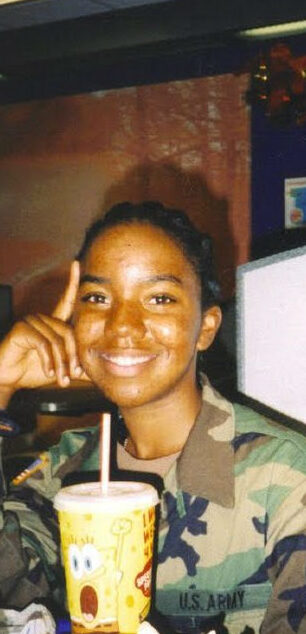
As additional soldiers were interviewed later that morning, they discussed that they were close friends with LaVena & indicated that her boyfriend of two months who she met in the Army when she was stationed in Kentucky, had broken up with her over email on Monday, July 18. When she tried to get ahold of him to make amends, she was told that he wanted her to stop calling because he’d met someone else. Although they could see that she was hurt by this, she tried to shrug it off.
Because of these statements, the military is claiming that she had been so distraught by this breakup that she took her own life. Small pieces of charred papers were found scattered by her body, something the general claimed were letters from her boyfriend that she set on fire before shooting herself.
While most people indicated seeing no signs of depression in LaVena prior to her death, one friend mentioned that in the two weeks before her death, she had talked about killing herself, but she hadn’t been concerned since she said it in a joking manner. One month before death, when another friend asked her if she would actually kill herself, she said that she wouldn’t because she didn’t want to hurt her family.
Another friend indicated that over the past two months, LaVena had made several comments about how she hated her life & wished she were dead. During a time when her fellow soldier had a knife stuck in a can, LaVena tried to pull it out & when she was warned to be careful & not cut herself, she said that she hoped she would & that she would die. She had also given her some of her belongings, specifically a bag of Chapstick & a case full of CDs.
Those close to LaVena were also shocked when they noticed that she began smoking in the days before her death since she had always been very much against smoking. When they asked her why she would possibly start, she said, Some of us have things going on in our lives. She told another friend that she was going to live her life because she might not live that long.
According to the investigative report, LaVena got off work sometime between 4-5 pm on Monday, July 18, the evening before her death. She had been scheduled to meet two other soldiers at the running track to prepare for an upcoming physical fitness test at 8 pm, about five hours before her death, but she didn’t show up. This was highly out of character as she had never missed work or had even been late for anything to do with work before. When they went by to check on her later that night, she didn’t answer the door.
Rather, she met with a male soldier & spent about 4 hours with him in his room until they left to get snacks, LaVena buying a soda & M&Ms. They stopped off at Burger King & he indicated that she had been in a good mood & seemed happy. While they were walking together sometime close to midnight, LaVena asked him if he was scared to meet God & talked about the end of the world. When he asked her if she wanted to kill herself, she responded, Hell naw, stupid! When he asked her a second time, she said, Why would I? I have a lot to live for.
It’s suggested that sometime after this, LaVena left the barracks & eventually walked across the post & went into a trash-filled private contracting tent owned by KBR. She found a wooden bench inside, sat down, used an aerosol as an accelerant to ignite the bottom of the bench in an attempt to set herself on fire, she then put the rifle in her mouth & pulled the trigger with her right thumb.
After fellow soldiers heard a boom & saw fire in the tent at about 1:20 am, they found LaVena’s body.
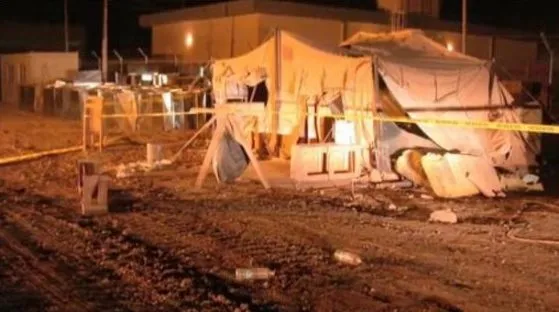
Army investigators initially believed that LaVena’s death was a homicide, something that was indicated on their paperwork. However, it wasn’t long before higher officials decided that the investigation needed to stop & her death should be classified as a suicide. As a result, despite strong evidence that suggested a homicide, no further investigation took place.
According to reports, a shell casing was found under LaVena’s right leg although witnesses at the scene indicated they had not seen it. Had she taken her own life, the shell casing would have ejected out of the right side of the gun & landed anywhere between 5-15 feet or even up to 24 feet away depending on what it may have ricochet off of inside the tent.
When a gunshot residue kit was collected from LaVena’s body, the report indicated that while residue was recovered, the number was insignificant. There were a number of reasons as to why this would be the case: The weapon itself didn’t deposit a significant amount of GSR, the timeline of the event vs. the collection, if the body was moved, if the hands were rubbed, if there was an explosion adjacent to the body or if LaVena’s hands had been soiled. There was also the possibility that LeVana hadn’t discharged the gun herself.
No latent prints were found on LaVena’s M16 rifle that were suitable for identification while John indicated that the bullet that killed his daughter has never been found & she did not leave a suicide note.
Despite the fact that CBS & ABC spent thousands of dollars sending multiple teams to the Johnson home, as well as 60 Minutes, who paid to have LaVena’s body exhumed in 2007, each backed away from airing her story. It was clear to John that these networks were unwilling to cover the case because the military would pull advertising from those channels.
Although the results of the second autopsy were inconclusive, new x-rays proved that LaVena’s neck had been broken. It also proved that the military had removed part of her tongue, vagina & anus, something that hadn’t been documented in the first autopsy report nor had the Johnsons been told. John believes that these body parts had been removed to conceal whatever happened to their daughter.
John spoke with a woman named Joy Priest who lost her 20-year-old daughter, Tina Priest, in Iraq in March 2006, in what the Army deemed a suicide from a gunshot wound to the chest. Her death came two weeks after she reported being sexually assaulted by a fellow soldier.
According to the ballistic investigation, at 5’2”, Tina would have been unable to shoot herself with her M16 weapon as the Army claimed. When Joy went back to the Army with these findings, they told her that she must have pulled the trigger with her big toe, however, there is no mention in any credible sources that Tina had been found with her shoe missing.
In the wake of immense grief paired with the fact that it can be very difficult & daunting to begin an investigation against the Army, many families who believe their child’s death during deployment is suspicious, do not.
John was initially told that his daughter’s death had been combat related, something he didn’t understand since LaVena had been working in a telecommunications room. As he continued to comb through the paperwork, he was shocked to read the words, Johnson was not mentally sound at the time of her death.
John questioned why LaVena would have been allowed to carry around an M16 rifle had she been depressed & not mentally sound. He also wanted to know specifics as to why they believed she was depressed. When they wrote back, they indicated that her fellow soldiers noticed a recent change in her eating habits.
A fellow soldier who had been with LaVena since deployment classes at Ft. Campbell, Kentucky noticed that in the week before her death, LaVena, who was vegetarian, had started eating ice cream 3-4 times a day. This was something she previously avoided, saying she wanted to lose a little weight. However, John noted that temperatures in Iraq were soaring over 120 degrees at the time so it wouldn’t be unusual to eat more ice cream.
Not only has the military been uncooperative, but according to the Johnsons, Congress has also been of little help. When a team of Congressional staffers did investigate LaVena’s death, nothing came of it. One of the staffers reached out to the media anonymously & indicated that when the team requested the autopsy photos, the Army pushed back hard. This staffer suggests that if you believe the Army’s version of how LaVena died, you need to check your intelligence for a power outage.
Although nearly 21 years have passed since LaVena tragically died at 19-years-old, the question of murder vs. suicide still remains. The Johnson family refuse to give up & continue to dispute the Army’s findings & pursue the truth regarding her death.
In 2010, a documentary about LaVena’s story was released, The Silent Truth, & as of that time, 143 women have died in Iraq, 25 of which were non-combat related deaths, 8 of which have been deemed suicides. Each of these grieving family’s requests to have their daughter’s cases re-opened have been denied. Meanwhile, the Army stand by their investigation that LaVena’s death was a suicide.
The mysterious deaths of female soldiers coincide with an increase in reported sexual violence against women in the military. In 1970, only 1% of the military was made up of females while in 2011, this number jumped to about 15%, nearly 200,000 in all. As this number has grown, sexual assault cases went up 26% from 2007 to 2008 & another 33% the following year.
Because a victim is in a vulnerable position, in a far away country surrounded by violence & confusion in a warzone, there is an air of intimidation following a rape. Oftentimes, the perpetrator may be a member of the victim’s chain of command. Not to mention, when a victim dies in a violent area, their death can sometimes be easily chalked up to unsafe security.
LaVena’s family have spent more than two decades fighting for answers about how she really died, but whether it was a cover-up, a botched investigation, or something far darker, the official story does not line up with the evidence.
At the time of her death, 19-year-old LaVena Johnson had been thousands of miles from home, bravely serving her country. She was a beautiful soul who was loved by her family, she was a sister, a daughter & someone who deserves the truth.
When you learn about this case, it isn’t only about whether you believe the official conclusion or not. It’s about the fact that so many things were left unexplained, things that, if this were your child, you wouldn’t be able to just accept & move on from. If this can happen to LaVena Johnson, it can happen to anyone whose story becomes inconvenient.
References:
- Facing South: Is there an Army cover up of rape and murder of women soldiers?
- Plex: The Silent Trutha
- United States Army: Criminal Investigation Command: Statement from the U.S. Army Criminal Investigation Command of the PFC Lavena Johnson investigation
- Huffpost: The silent truth documentary – aka – the LaVena Johnson murder cover-up
- STLPR: 10 years later, a soldier’s family still grieves & questions the Army’s version of her death
- ID Crimefeed: Was the death of Army Private LaVena Johnson murder or suicide?
- Facts on United States military sexual violence
- Npr: Soldier’s family challenges Army suicide report
- Democracy Now: Suicide or murder? Three years after the death of Pfc. LaVena Johnson in Iraq, her parents continue their call for a congressional investigation
- Hue and Cry: The death of PFC LaVena Johnson
- Toward Freedom: Sexual violence against women in the U.S. military: The search for truth & justice
- Medium: Murder in a military tent