Become an Apple Subscriber or Patron to listen.
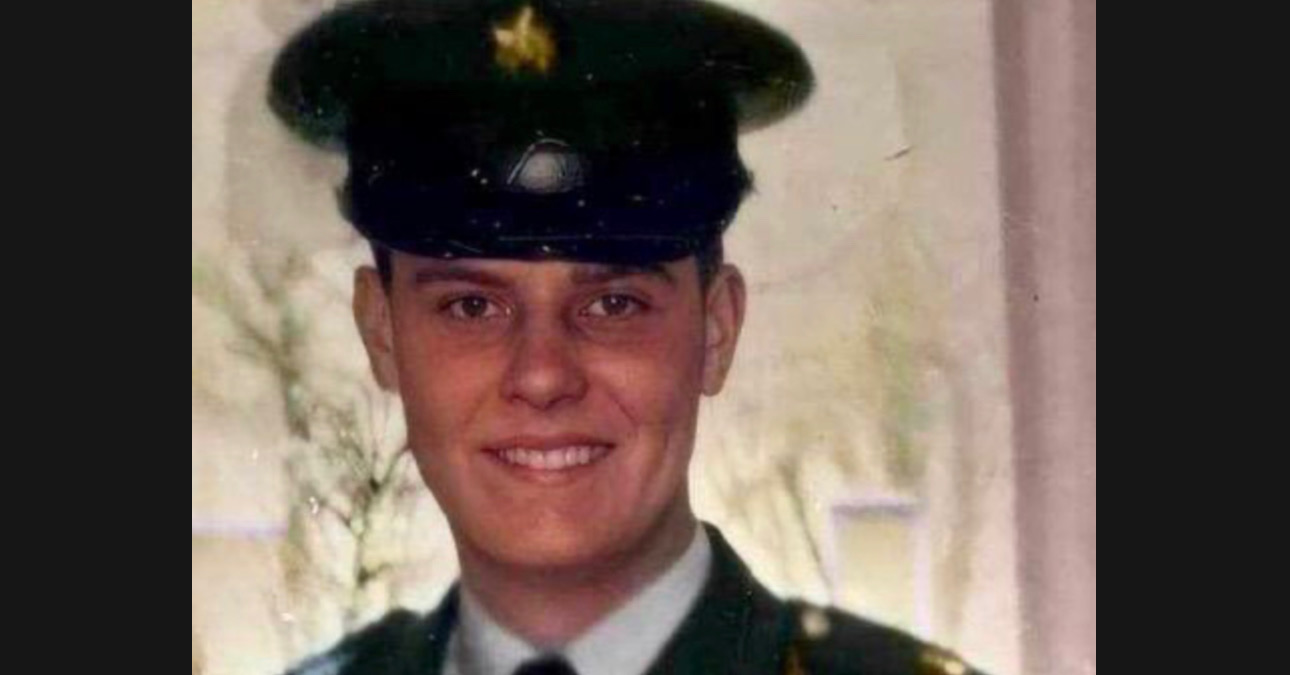
During Thanksgiving of 1972, 21-year-old Gregory Dahl Nickell was back home in Vernal, Utah after he was honorably discharged from the Army. When he took an 18-year-old woman out on a blind date on the Saturday night after the holiday, November 25, 1972, their night ended in the early morning hours of Sunday morning in absolute horror. After Greg was murdered, his date was kidnapped & raped & sadly, more than 50 years would pass before any murder charges were filed.
According to David Montgomery, a man who served alongside Greg in Vietnam in 1970, they were with the 3rd Squadron, 4th Cavalry in Cu Chi, Vietnam, a hot zone during the war’s escalation into neighboring Cambodia. Greg had been looking forward to getting out of the service & getting on with his life. Although he managed to survive the war, life robbed him in the end & Greg died in his brand-new Pontiac after he was shot point-blank only one month after he came home.
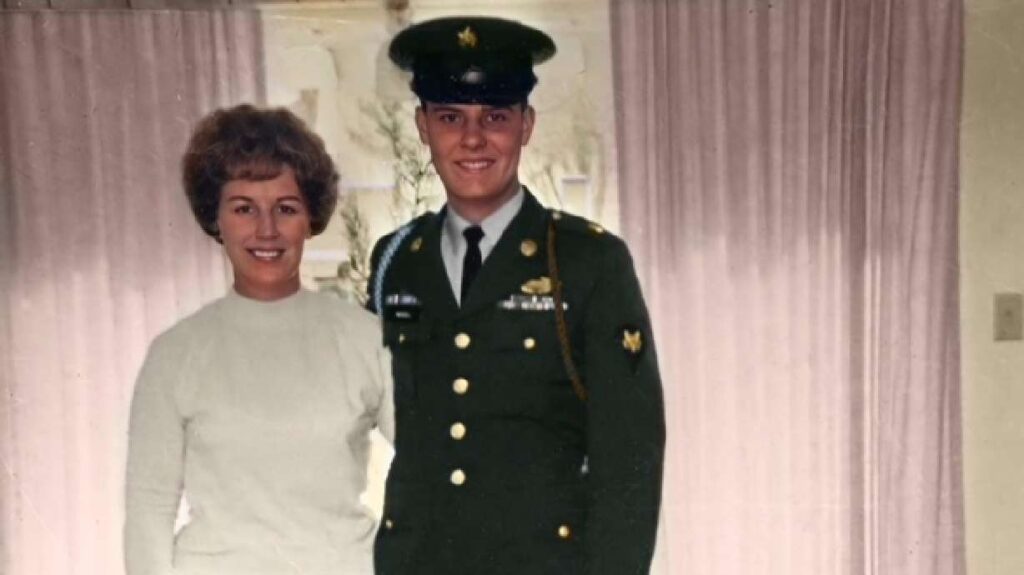
On Saturday night, Greg met up with a girl on a blind date, a woman who has never been identified, & after they went dancing, they stopped off at a scenic overlook outside of town sometime after 1 am on Sunday morning. While they were in the car, they heard a knock on the window & when they rolled it down, a man stood there, saying that he needed help after he’d been in a car crash. He asked them for a ride back into town so he could report the crash & Greg agreed to help. In an instant, his date heard what she initially thought were firecrackers, until she realized it was actually gunshots from a .22-caliber pistol.
After Greg rolled the window down, the man fired at least three shots at him while Greg attempted to shield his date from the barrage of bullets. After the first shot, his body slumped over, but he managed to sit back up until he was shot a second time. When Greg’s body fell back in his seat, the man continued shooting & then pushed Greg’s body on top of his date who sat in the passenger seat. Once behind the wheel, he drove down US Route 40, pointing the gun at her head, threatening her as he drove.
They drove around for hours to various locations in Uintah & Duchesne counties until a second car flashed its headlights from behind & pulled out in front of them. As the gunman followed this other car for about 30 miles southwest, the woman realized that Greg’s killer had a partner.
They eventually drove to a remote area near the Brough Reservoir in Uintah County. The car they had been following was the gunman’s accomplice & the two men doused Greg’s car in gasoline, setting it on fire with Greg’s body still inside.
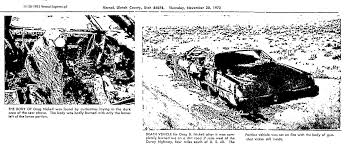
They moved the woman to the backseat of the second car & covered her head with a coat or a blanket so she was unable to see. After driving about 60 miles away from where they had been ambushed, they each raped Greg’s date. After about six hours, they finally left her on the side of the road & one of the men told her that if she looked back, they would shoot her.
The car drove away as the sun was rising & the young woman began running until she reached a farmhouse & called for help. She was able to give investigators limited details about the attack, including a description of her attackers, who she referred to as Tex & Johnny.
Since her head had been covered through much of the attack, she hadn’t been able to see much. She also wasn’t able to say where they had taken her in between the time they killed Greg & when they released her. She described the shooter who had repeatedly shot Greg & later raped her, as a braggart & very cocky.
That night, a police officer in Rangley, Colorado reported seeing a car that was occupied by two men & one woman. When the driver spotted the officer, he quickly made a U-turn & sped away, heading toward the Book Cliffs. Sadly, the officer was unable to catch them.
Greg’s sister, Lynette Ray, was home in Vernal that night & says that she hasn’t forgotten a minute of that awful night since the details will be burned into her head for the rest of her life. She woke up in the morning to a sheriff & her brother’s date standing at her front door. When she asked where her brother was, his date stood silently, only shaking her head until she finally managed to say, They killed him.
Greg was someone who was loved by all who knew him. He’d only just come home a hero & Lynette couldn’t wrap her head around who would have killed him.

The sheriff’s office set up roadblocks & conducted a four-day air & ground search of the Book Cliffs, but the men were sadly not caught & the case quickly went cold.
Vernal had previously been a quiet community where violent crimes didn’t happen, but now residents were terrified to go out after dark, knowing that the men responsible were out on the loose.
Investigators sent more than 30 pieces of evidence to the FBI crime lab, but it was the DNA that was collected from the woman during the sexual assault evidence kit at a hospital in Vernal shortly after she was released that eventually proved to be key.
It wasn’t until 20 years later when a then-Uintah County Attorney, Harry Souvall, announced that with the use of new DNA testing techniques, they were able to identify the shooter as 52-year-old Willard Dale Taylor of Salt Lake City, who was charged with first-degree homicide.
It turned out that back on March 13, 1974, a detective from the Salt Lake County Sheriff’s Department interviewed Susan Dixon, Willard Taylor’s stepdaughter, who said that on November 26, 1972, Taylor had arrived home after being gone all night & said that he had killed someone. For unknown reasons, investigators never brought the man in for questioning while sources suggest that her interview had been lost in the case files.
A friend of Greg’s father recognized Taylor’s face when he saw it on a TV news report because they used to hang out at the same bars. Although he didn’t know the man’s name, he heard others refer to him as Tex & Greg’s date had referred to her attackers as Tex & Johnny. Although the man intimidated people, he never saw him cause any trouble.
The female survivor, who in 1992, was 38-years-old & living out of state, testified for three hours & described the attack upon her & Greg, detailing the events of the horrifying five to six hours she spent with their two attackers. After he pushed Greg aside & climbed into the car, he asked her if he looked like the type of man who could rape a 13-year-old girl.
As they drove, he continued to play with what she described as his cowboy type gun & often held it to her head & neck. He had a Texas accent & a very filthy mouth. When they met up with his accomplice, he told him that he’d gotten carried away shooting Greg, something he was very proud of.
After the cold case had been reopened in 1992, prosecutors took a blood sample from Taylor & compared his DNA to semen found on Greg’s date’s clothing. This proved that Taylor’s DNA was not a match. He went on to file a $1 million lawsuit against the Uintah County Sheriff’s Office for false arrest, but it was dismissed.
During the seven weeks that Taylor had been in prison, he indicated that his wife divorced him, his reputation was destroyed, his children were shamed by the community & he was left in financial ruin. Even after the charges were dropped, suspicions toward him & his children continued.
Taylor’s son, Wes, who was 27-years-old at the time, recalls coming to his parent’s home to find his dad in handcuffs on the front lawn, wearing nothing but his underwear while police were everywhere. Wes later learned that while his father had been in an argument with his half-sister, he had boasted about killing Greg in a fit of anger as well as a way to try & scare her.
In 1993, Taylor spoke with Deseret News after his lawsuit was unsuccessful & indicated that despite being proven innocent, he felt he was unable to go anywhere without looking over his shoulder. He said that he was terrified that they were going to come down on him.
In 1998, Taylor, who had always been a drinker, greatly ramped up his alcohol consumption in the aftermath of his accusations that left him ostracized, until he eventually turned to drugs & died that same year.
In January 2020, the evidence that had been collected at the hospital back in 1972 was resubmitted to the Utah state crime lab for testing. Two unknown male DNA profiles were developed & submitted to various databases. In September 2020, one of these profiles was a match from a sample within the national database.
Rather than pointing at Willard Taylor, DNA proved that one of the men responsible for the attack was Daniel Aruthur Bell. Bell, who was a former Marine, died in Yakima, Washington in March 2019 & his body was cremated when he was 87-years-old, making him 40-years-old at the time of the crime.
Now realizing that the man who was responsible was deceased, authorities turned their attention to his accomplice, someone they believed was several years younger than Bell.
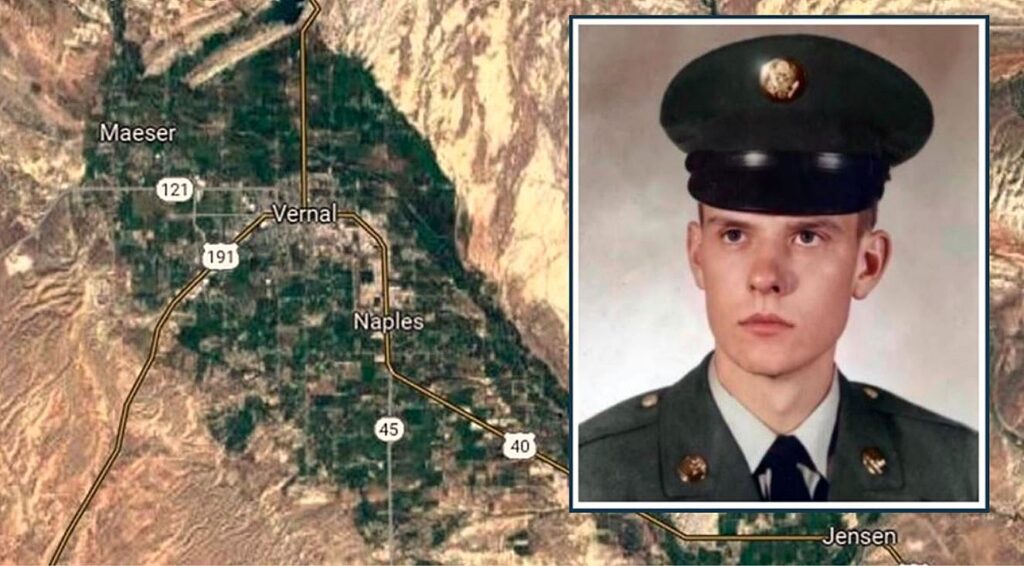
They continued to investigate Bell, hoping they could find additional evidence that would link him to the second man responsible. They learned that he lived in the Uintah Basin in 1972 & he worked on a ranch in the Book Cliffs south of Vernal. This made him familiar with the back roads within Vernal. He eventually moved out of state & in 1988, he was convicted of rape in Oregon.
After Bell was paroled eleven years later in 1999, he moved to Washington where he re-married & lived until his death. Working with the man’s widow & his family in the Uintah Basin, the detectives were able to find two of his adult children who submitted DNA evidence for testing, confirming that he had been one of the suspects.
In 2022, on the 50th anniversary, authorities announced that they had found half of the men responsible for Greg’s death & his date’s rape. They voiced their hope that they would soon find the other suspect, whose DNA was not in the national database.
Bell’s wife later told investigators that her husband revealed this his friend Gene had been involved in a rape in Washington. Gene, who also allegedly stole Bell’s marine uniform, hadn’t seen Bell since the 1980s or 90s.
The DNA of the second man was sent to a private lab for additional testing. They were able to determine that the man was linked to the family surname, Choate.
It wasn’t until November 26, 2024, exactly 52 years to the day that Greg was murdered, when a 75-year-old man, Darrel Eugene “Gene” Choate was taken into custody by Uintah County Sheriff Detectives at a Salt Lake City hospital. His warrant was issued on November 1, but due to unspecified medical issues, he wasn’t arrested at that time. He was then transported to Vernal where he was held in the Uintah County Jail.
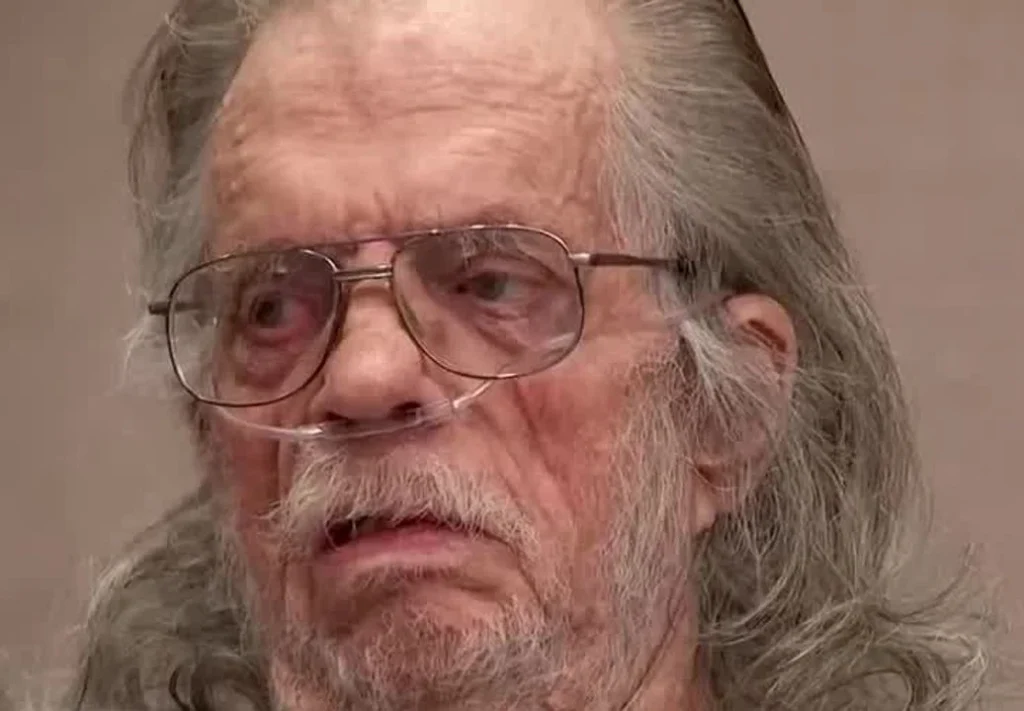
After authorities responded to Choate’s Tooele, Utah home on an unrelated call, they obtained a DNA sample from him which was compared to the sample from the cold-case & proved to be a direct match.
At the time of the rape & murder, Choate was 22-years-old, making him 18 years younger than his partner, Daniel Arthur Bell. Residential history indicates he lived throughout multiple counties in Utah as well as Washington, Oregon, Arizona, Idaho, Nevada, New Mexico & Texas. He worked as a horseman, a marksman, a truck driver, a ranch hand, an oil field worker as well as within the mining industry.
Choate also had an extensive criminal record, including sexual offenses in Price, Utah.
In May 2025, a judge ruled that there was enough evidence to move forward with the case. Choate pleaded not guilty in June 2025 during a brief court appearance that was held virtually. His defense attorney, Colleen Coebergh, requested more than four months to prepare for the next hearing.
According to prosecutors, not only does DNA evidence tie him to the crime scene, but multiple family members have also submitted sworn affidavits alleging that Choate admitted to pulling the trigger, killing Greg.
Although Greg’s sister, Lynette Ray, who was in court in May, is thankful that the second suspect has been identified & is being held in prison, she was hoping she wouldn’t have to face a trial. She’s always made a vow to her brother that she wouldn’t stop until justice was served for those responsible for his death. She wants to look Choate in the eye & ask him why.
Lynette recalls the moment she received the text from authorities that they’d found their guy. She felt as if a 50# brick had been removed from her chest after the passage of more than five decades. She feels that it was the first time she’s been able to take a deep breath in so many years.
Authorities attribute advancements in DNA technology since 1972 to finding their suspects. Over the past thirty years, rather than needing a quarter-size amount of blood, even just the tiniest fleck can solve a case. According to Amy Newman, laboratory director for the Utah of Forensic Services, it used to take about 2,500 cells to conduct DNA testing, but it now takes only around 50.
One of the biggest advancements has been Y-STR analysis (Y-chromosome short tandem repeat), which tracks male lineage through DNA even when individual profiles cannot be identified. This is passed from father to son to grandson, running through the male line of a family.

In 2023, Utah introduced probabilistic genotyping, a cutting edge method that deciphers complex DNA mixtures, even if they’re degraded or low-level. These samples, which were previously determined to be inconclusive, can now be analyzed.
Another crucial piece of the puzzle has been CODIS (Combined DNA Index System), the FBI’s national database that is used by law enforcement agencies across the country. The more samples within CODIS, the better the chance of generating leads in cold cases.
However, advanced DNA testing is expensive & in 2020, Utah allocated a $1.5 million grant for forensic testing, followed by an additional $300,000 grant in 2023 for forensic genetic genealogy training & testing. Since Uintah County was unable to afford the $12,000 cost for the necessary DNA testing, they used state grant funding.
Without this funding, Choate may have remained a free man. In a lot of these cold cases, due to the extensive passage of time, many of the suspects are now dead so when someone is alive & can still be charged, that’s the ultimate goal.
For half a century, Greg’s family were forced to move on in their lives without answers after his life ended far too soon in such a violent way. However, time doesn’t erase a murder, nor did it erase the determination of investigators who refused to let Greg be a forgotten name in a dusty file box.
It took advancements in forensics to solve a case that many assumed would remain cold. Although Daniel Arthur Bell never faced justice for his role in Greg’s murder & his date’s traumatic kidnapping & rape, it will hopefully be only a matter of time before justice is served to Gene Choate.
References:
- Law & Crime: After painful false arrest, Utah Sheriff’s Office names a suspect in the 1972 Thanksgiving cold case murder of a Vietnam veteran shot to death while on a date
- News 4 Utah: The Justice Files: Innocent but reputation is tarnished
- News 4 Utah: Tooele man charged with murder in 50-year-old cold case
- The Sacramento Bee: Army veteran killed on a date, Utah cops say. Arrest comes 52 years later ‘to the day’
- The Chronicle: DNA points to late Yakima man as a suspect in 1972 Utah murder
- KJZZ 14: Utah man pleads not guilty in 1972 Vernal murder case
- Independent: A Vietnam veteran was murdered as his date was raped. Half-century later, cops have made an arrest
- KMYU: Breakthrough in forensic science helps Utah police arrest suspect in decades-old cold case
- NBC Right Now: DNA leads Utah cold case investigators to dead Yakima man
- Deseret News: Murder victim remembered as exuberant war survivor
- Deseret News: Rape victim describes 1972 Vernal slaying
- 2 KUTV: Judge finds probable cause in 1972 Vernal murder case
- Facebook: Uintah County Sheriff’s Office Post
- ABC 3340 News: DNA advancements lead to cold case breakthrough in Utah abduction, murder mystery