Watch on YouTube. Listen on Apple or Spotify.
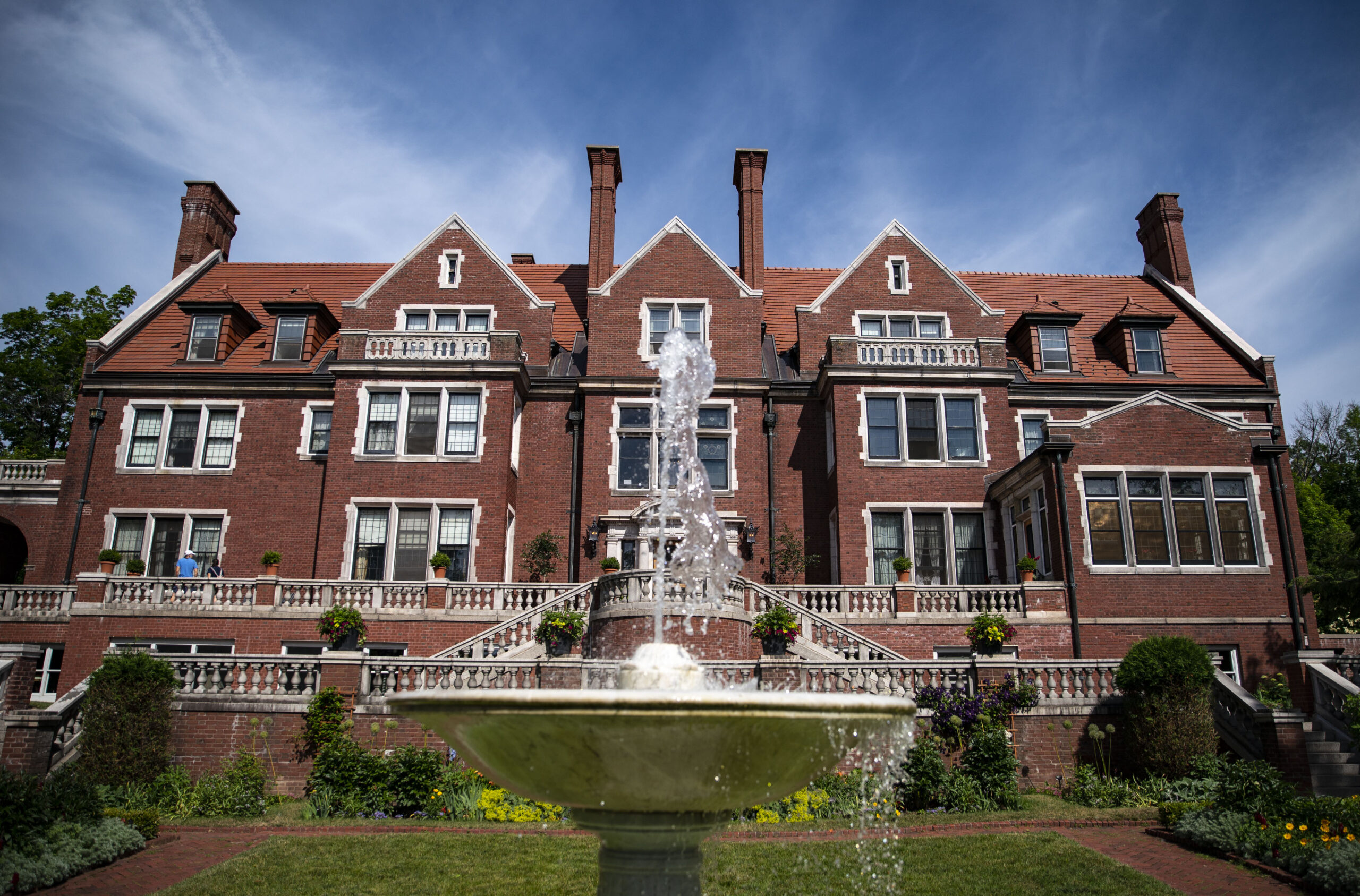
49 years ago, someone crept through the sprawling halls of a five-story, 32,000 square-foot mansion known as Glensheen. It’s a massive red-brick home that’s situated along Lake Superior in Duluth, Minnesota. In late June 1977, when Elisabeth Congdon, the 83-year-old mining heiress, was being cared for by her night nurse, a shadowy figure crept up the grand staircase of the home. Night nurse Velma Pietila was bludgeoned to death with a candlestick holder as she came face-to-face with this person, the killer then moving on to their next victim, a helpless Elisabeth, who had been peacefully asleep in her bed.
Some compare this tragedy to a story straight out of the pages of an Agatha Christie novel, but sadly, this was real life & two innocent women were violently murdered that night with greed at the center of it all.
Heiress Elisabeth Mannering Congdon was born on April 22, 1894 as the sixth child & youngest daughter to Chester & Clara Congdon, who had seven children, three girls & four boys. Three years before Elisabeth’s birth, her brother John died of scarlet fever when he was two days shy of his second birthday.
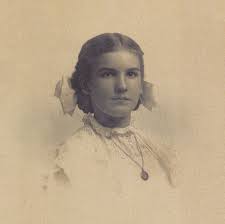
Chester, who was originally from Upstate New York, was a lawyer & a businessman who married Clara Bannister in 1881 after meeting at Syracuse University in 1871.
When the Mesabi Iron Range was discovered in northeastern Minnesota 1890, Chester had been working as a real estate lawyer in St. Paul. The range’s discovery sparked a boom in land deals & contracts, which made lawyers like Chester in high demand so he & his family relocated to Duluth in 1892, two years before Elisabeth’s birth. Chester began working as a lawyer for the Oliver Mining Company, soon making millions of dollars. When he formed the Chemung Iron Company in 1901, he made millions more.
Chester went on to earn the majority of his wealth developing the Mesabi Iron Range, the most prolific iron range to be mined in Minnesota. Since the 1890s the Mesabi has been transporting its ore to steel-processing facilities that create structural steel for buildings, bridges, auto parts as well as parts for ships, trains & household appliances.
In 1916, at 63-years-old, Chester died of cardiac arrest. When Clara died 34 years later at 96-years-old, because Elizabeth was the last living child, in 1950, she became the sole owner & resident of the family’s mansion known as Glensheen.
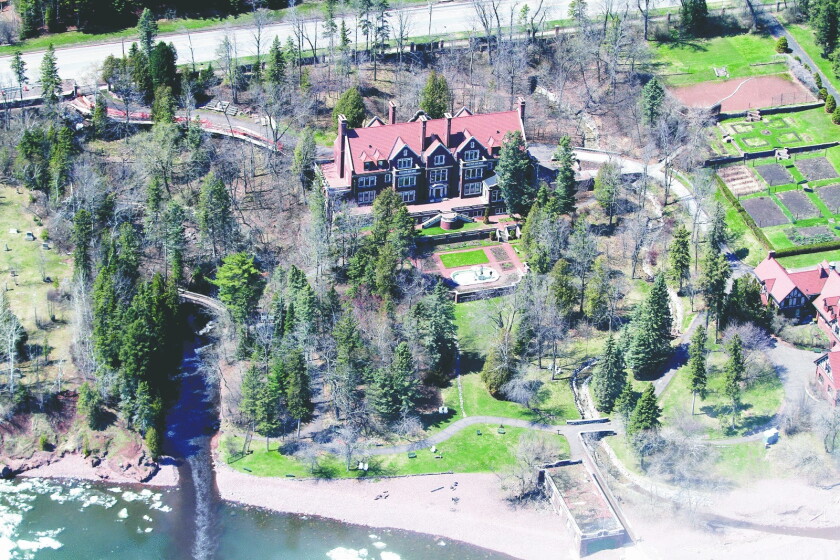
The five-story, 39-room, 32,000 square-foot mansion is situated on 12-acres of land along the banks of Lake Superior in Duluth, about 154 miles north of Minneapolis. After she inherited her father’s fortune, she became one of Minnesota’s wealthiest women.
Although Elisabeth never married, in 1932 she adopted a daughter, Jacqueline Barnes, renaming her Marjorie Mannering Congdon. Three years later in 1935, she adopted a second daughter, Jennifer Susan Congdon. Although the girls were not particularly close as they grew up in Glensheen, they each served as the other’s maid of honor just to appease their mother.
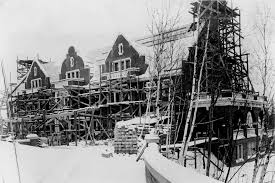
Construction of Glensheen took three years & when the family moved in in 1908, Elisabeth was about 14-years-old. She lived there with her siblings & her cousin, Alfred, much of her life in between attending Dana Hall prep in Massachusetts as well as Vassar College in New York.

In addition to opening up local iron mining, the Congdon family also set aside land for public use, such as the North Shore Scenic Highway as well as Congdon Park. Chester gave the city the park, paying for its development on the condition that Duluth stop using the creek as an open sewer. It’s now an area where the community can hike along Tischer Creek while enjoying gorgeous bridges & stunning waterfalls.
Two years after Elisabeth & her night nurse were murdered, Glensheen mansion was donated to the University of Minnesota in 1979, opening to the public as a historic museum. The home was left frozen in time, exactly as it had been when the family lived there. Letters written by Clara remain in a desk drawer while the closet stacked with sheets is left as it had been organized by the family’s 2nd floor maid nearly 100 years ago.
It had been Clara’s dream that their home would serve as a calming escape for generations to come. The location at 3300 London Road was far removed & during the three years of construction, the once heavily wooded area was quickly transformed into a sprawling estate complete with a carriage house, a boathouse, a gardener’s cottage, a pier & four greenhouses.
At the time of its construction, Glensheen cost $854,000 to build (equivalent to $32 million in 2026). The ornate ceilings are 16-inches thick, there are 15 completely unique fireplaces, while the floors are made with fire retardant material.
The public is now welcome to peruse through all five floors of the mansion, including the previously closed third floor & attic. 70% of its visitors come for the sole purpose of seeing the home rather than from morbid curiosity since many are too young to know about the violence that happened nearly five decades ago. Although the murders are not a central part of any of the tours, guides will answer & discuss questions visitors might have at the conclusion of the tours.
It all began in the early morning hours of Monday, June 27, 1977 when a killer lurked in the darkened cemetery that bordered the mansion grounds. Elisabeth was asleep in her bedroom on the second floor of Glensheen while nurse Velma Pietila made her final checks for the night just across the hall. Velma had not intended to be there that night since she’d actually retired about one month earlier.
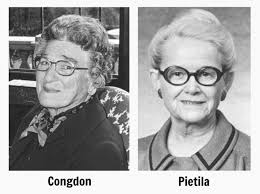
After working as Elisabeth’s nurse for years, she’d grown close to the heiress, but at 66-years-old, she was ready to enjoy her free time with her grandchildren or golfing with her husband. When another nurse asked for Sunday night off & no replacement could be found, Velma agreed to step in for that night only. Her husband urged her not to go, reminding her that she’d already hung up her nursing hat when she’d retired.
Moving forward to 7 am on Monday morning, when day nurse Mildred Garvue arrived at Glensheen for her shift, she was surprised to find the front door unlocked. After she stopped by the kitchen & said hello to the cook, she noticed Velma lying at an angled position along the window seat of the grand staircase.
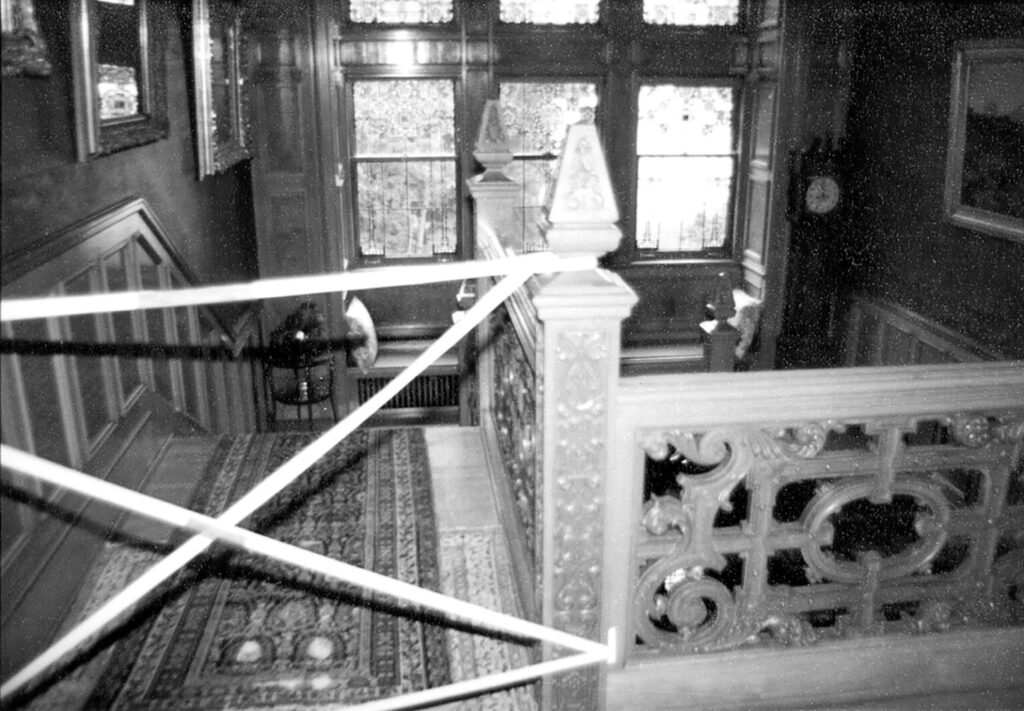
The first thought that popped into Mildred’s mind was, Is Velma taking a nap? However, this thought was quickly pushed away because as she got closer, she could see that Velma was beaten, bloody & very clearly dead. Absolutely shocked & terrified, she rushed up the stairs to check on Elisabeth, finding her deceased in her bed with a satin pillow covering her face.
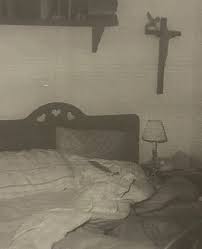
Elisabeth’s room was in disarray with jewelry strewn across the floor while another pillow had been tossed to the side. Mildred immediately turned to run downstairs to contact the police while the dispatcher remained on the line in case the killer was still in the home.
As police arrived & did a sweep of the expansive home as well as its grounds, they determined that the killer was no longer on the premises. As they walked through the house & looked at all of the evidence, they came to believe that the killer had likely gained access to the home through a window in the billiards room on the lowest level, finding the window broken.
They theorized that after the killer climbed in & began making their way through the darkened rooms, they headed up the stairs to the second-floor where Elisabeth slept. Velma, who likely heard something, confronted them on the expansive landing. Although she tried to fight her attacker, clawing at them, she sadly collapsed across the window seat after she was struck with a brass candlestick holder which fractured her skull.
Now upstairs, the killer made their way into Elisabeth’s bedroom, which once belonged to her older sister, Helen. As a pillow was suddenly pressed against her once-sleeping face, the partially paralyzed woman had been unable to fight back. Once she stopped struggling, the killer moved through her bedroom, combing through her jewelry box in search of any valuables. The diamond ring that she wore on her finger as well as the gold watch around her wrist were slipped off while an ancient gold coin that had been in her dresser had also been taken.
By late morning, after police secured the crime scene, they gave their first official statement, announcing that the violent double murder had likely been a robbery-gone-wrong due to the fact that some of Elisabeth’s valuables had been taken.
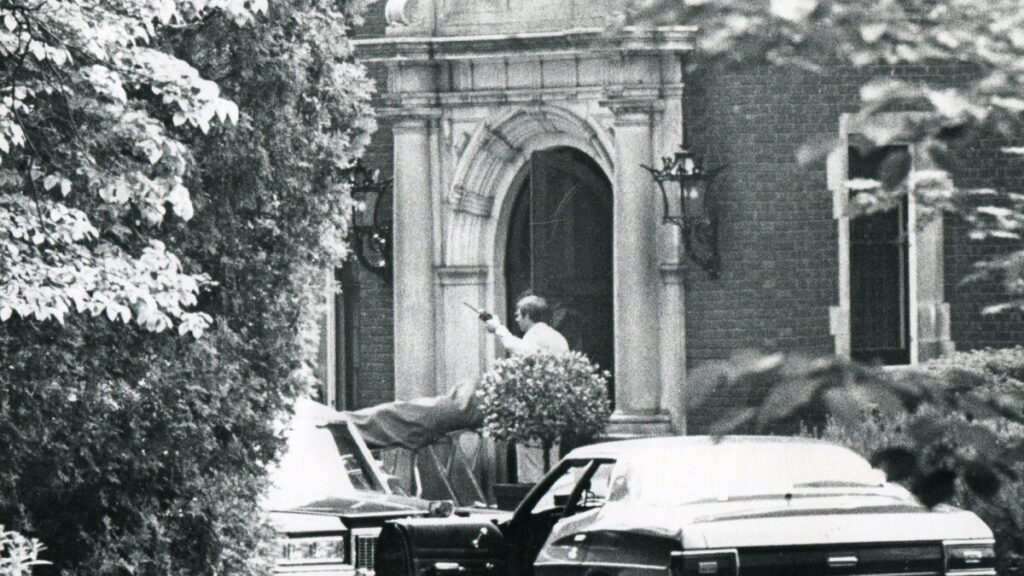
Three days later, the family traveled to Duluth from around the country for Elisabeth’s funeral. 44-year-old Marjorie Caldwell, Elisabeth’s adopted daughter, had traveled in from Colorado with her 43-year-old husband of two years, Roger. Investigators couldn’t help but notice that Roger had a scratch on his lip & swelling of his right hand. When they asked about these injuries, Marjorie claimed he’d been kicked by a horse.
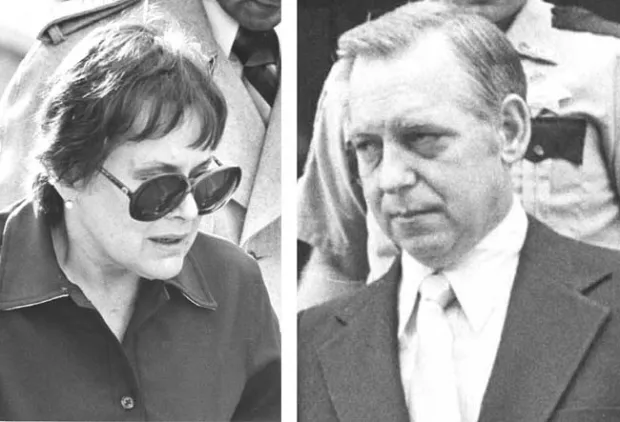
Although the story of a botched burglary remained the public’s narrative over the first week of the investigation, police were exploring other ideas. Upon hearing the horrific story of Elisabeth’s murder, several members of the Congdon family reached out to authorities to let them know about Marjorie’s financial issues & her elaborate spending habits, urging them to look into her & Roger as suspects. They explained that her behavior had been devious since childhood & as a teenager, she was diagnosed a sociopath.
Even more concerning, they mentioned strange incidents that happened in the years previously, one that included a time when Elisabeth became very ill during a family gathering after Marjorie fed her some homemade orange marmalade. After seeking medical attention, tests showed the presence of a dangerous chemical in Elisabeth’s blood, but because the jar of marmalade had vanished, authorities were never notified.
Investigators came to learn that Roger & Marjorie, who were desperate for money, were set to inherit $8.2 million on Elisabeth’s passing. They began wondering if they may have sped up the process by murdering Marjorie’s mother. At the time of her mother’s death, she was unemployed, receiving about $22,000 per year from the trust (equivalent to about $120,000 in 2026).
Roger Caldwell was an unemployed salesman from Golden, Colorado who married Marjory LeRoy two years earlier. At the time, she was a middle-age divorcee with seven children. He later claimed that when they met, he had no idea that she was a granddaughter of Chester Congdon, the man who had made a fortune in iron ore.
Elisabeth’s other adopted daughter, Jennifer, had moved to Wisconsin with her husband while Marjorie lived in Minneapolis after marrying an accountant, Richard LeRoy. After seven children & 20 years of marriage, her husband filed for divorce when he could no longer handle her overspending.
Marjorie, a now single woman, decided to relocate to the mountains of Colorado. While attending a Parents Without Partners meeting in 1975, Roger was immediately charmed by Marjorie’s bubbly, vivacious personality. Very quickly after they married, Roger came to realize that his wife had outlandish spending habits, mostly funded by what seemed to be her mother’s bottomless bank account.
By this point, Marjorie had already blown through her million-dollar trust fund, buying extravagant clothing that included hundreds of matching outfits for her children to wear at their horse shows as well as their ice skating competitions. Because she was spending the money so freely, she often bounced checks, each time expecting that her mother would swoop in behind her to pick up the pieces & each time, she did.
This all changed when Elisabeth’s health began going downhill after she had a massive stroke in 1964. She continued to handle her own affairs until September 1974, when she appointed trustees to manage her father’s will, a time when she began requiring around-the-clock care of private duty nurses. With Elisabeth no longer in a place to jump in & rescue her daughter each time she needed it, the Congdon trustees finally stepped in & put an end to the cash flow.
As the spring of 1977 rolled around, Marjorie & Roger found themselves flat broke, their house in foreclosure, their cars repossessed. However, this didn’t stop them from touring multi-million dollar ranches as they told the realtors that her mother would be handling the purchase. Marjorie indicated that the mountain air would help her youngest son, 17-year-old Ricky, with his asthma.
Meanwhile, while the murder investigation continued, Duluth police officers combed over evidence in the mansion for days, cataloging blood & hair, finding absolutely no unexplained fingerprints. Being only 1977, forensic DNA testing as it’s known today didn’t exist, but regardless, a trail of evidence began to emerge.
Investigators discovered a handwritten will that was dated three days before the murders in which Marjorie signed over a $2.5 million portion of her expected $8 million inheritance. They also learned that one month earlier, Roger had flown to Duluth, asking Elisabeth & the Congdon trustees for $750,000 (equivalent to over $4 million in 2026) to purchase a ranch. He told them that, at the very least, they would need $500,000 so he could pay off his debts & stay out of jail, but each of these requests were denied.
Investigators also found a handwritten envelope in the mailbox of the Caldwell’s Colorado home that arrived after they’d left for Elisabeth’s funeral. There was a Byzantine-era coin, just like the one that had been stolen from Elisabeth’s bedroom. Not only did an expert determine that a thumbprint on the envelope matched Roger’s, but the writing on the envelope also appeared to be in his handwriting while the letter had been postmarked in Duluth one day before the murders.
Hair found at the mansion closely matched Rogers while some of the blood found matched his blood type. Jewelry found in Marjorie & Roger’s hotel room after the funeral was strikingly similar to what was stolen from Glensheen, including the ring & watch that had been taken from Elisabeth’s body, but when Marjorie was questioned about it, she claimed that they were her pieces & only closely resembled that of what her mother owned.
At 8:30 am, maintenance workers at Minneapolis-St. Paul Airport found the car keys to Velma’s car as well as a parking ticket with a time stamp of 6:35 am on the morning of the murders in a garbage can. Velma’s car itself was found in the airport’s short-term parking lot later that morning at 11 am. No fingerprints were found on the parking ticket & the only fingerprint found in the car belonged to Velma’s husband. The medical examiner estimated Elisabeth & Velma’s time of death at 2 am, giving the killer enough time to make the 160 mile, 2 ½ hour drive from Duluth.
While the Caldwell’s hotel room was being searched, police found a receipt from a MSP airport gift shop for a suit bag that was purchased on the morning of the murders. When Roger’s photo was shown to two of the shop’s employees, they thought he could have been the buyer. Being only 1977, there was no surveillance footage from the airport & a passenger’s identity was not rigorously verified.
Although there was no smoking gun, chief prosecutor John DeSanto & he team believed they had a strong case against the couple. Learning that a Minneapolis newspaper planned to publish a story about the connection to Marjorie & Roger, Roger was arrested nine days after the murders on July 6, 1977.
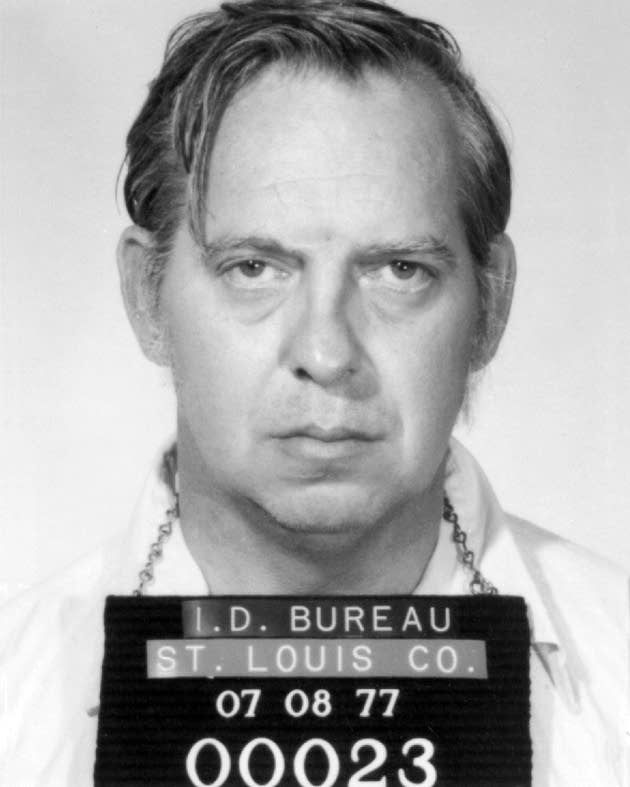
Since the Congdon legacy was so strong in Duluth, Roger’s defense team worried about him getting a fair trial there. Not only is there a Congdon Boulevard & a Congdon Park, but there’s also Congdon Park Elementary School. A judge agreed to move the trial to Brainerd, 114 miles southwest of Duluth.
Ten months after the murders, jury selection began in April 1978 & it took more than three weeks to select 12 jurors. Testimony began on May 9 where lead investigator Sergeant Gary Waller took the jurors through the evidence, showing them gruesome photos of Elisabeth & Velma.
Since police were unable to identify two handprints that were found in the bathroom where the killer washed up, the defense argued that these belonged to the true killer. To clear things up, investigators went back to the lab to reexamine the evidence & came back to say that while one print belonged to one of Elisabeth’s nurses, the other actually belonged to Sergeant Waller, who left his print on the sink during the investigation.
In the midst of the trial, one juror was dismissed after she received an unsigned letter offering her $10,000 for a guilty verdict. The judge ruled that she couldn’t be fair under the circumstances & no one was ever charged for sending the letter.
No eye witnesses could definitely place Roger in Duluth during the timeframe of the murders & he wasn’t on any airline passenger lists for flights from Denver to Minneapolis, but again, airport security wasn’t nearly as tight as it is today.
Investigators also couldn’t come up with a logical explanation as to why Roger would have sent the stolen gold coin from Elisabeth’s room to himself rather than just taking it on the night of the murders. Meanwhile, the defense claimed that the envelope had been part of an elaborate frame-up.
It’s also unclear how the killer planned to get away on the night of the murders as Velma just happened to be a last-minute fill-in while many of the usual nurses didn’t drive themselves to work. Her car had been parked near the front door & after the killer found her keys, he drove her car to the airport, tossing the keys in a nearby garbage can.
The defense argued that Roger’s arm had been too large to fit through the shards of glass on the broken basement window that the killer had utilized to gain entry into the home. Roger’s attorney created a cardboard mockup of the window & a police officer, whose arm was thinner than Roger’s, had been unable to reach through without dislodging the simulated glass shards.
Throughout the eight weeks of testimony, Roger did not take the stand. More than 500 pieces of evidence were presented & 109 witnesses testified. After 2 ½ days of deliberation, the jurors came back, finding Roger Caldwell guilty of both murders. He was then sentenced to two consecutive life terms in prison with a minimum of 35 years behind bars.
One day after his sentencing, DeSanto charged Marjorie with planning the murders. No one alleged that she had any part in the murders themselves as many witnesses had seen her in Colorado over 1,000 miles away during the timeframe of the murders.
The theory was that Marjorie had been the driving force behind her mother’s murder as Roger lacked ambition, he didn’t know his way around the mansion, he was easily persuaded & he liked to drink. In the hours & days after the murders, Marjorie’s statements had been inconsistent as to why her husband hadn’t been seen in Colorado during this crucial period of time.
Marjorie hired top Minneapolis defense lawyer Ron Meshbesher, who was well-known for some highly publicized acquittals. Since he had the transcript of Roger’s trial, he knew exactly what evidence the prosecution would present against his client during her trial. He also had an additional 10 months to find holes in the case that could show reasonable doubt.
A then 47-year-old Marjorie’s trial was held in Hastings in July 1979, 171 miles south of Duluth. Ron Meshbesher presented two key points during the trial; a waitress, now two years after the murders, suddenly recalled seeing Roger at 10 pm on the night before the murders as in earlier interviews, she did not recall seeing the Caldwells. He also found an expert to testify that the fingerprint on the envelope containing the gold coin, the key link placing Roger at the crime scene, was not actually from Roger.
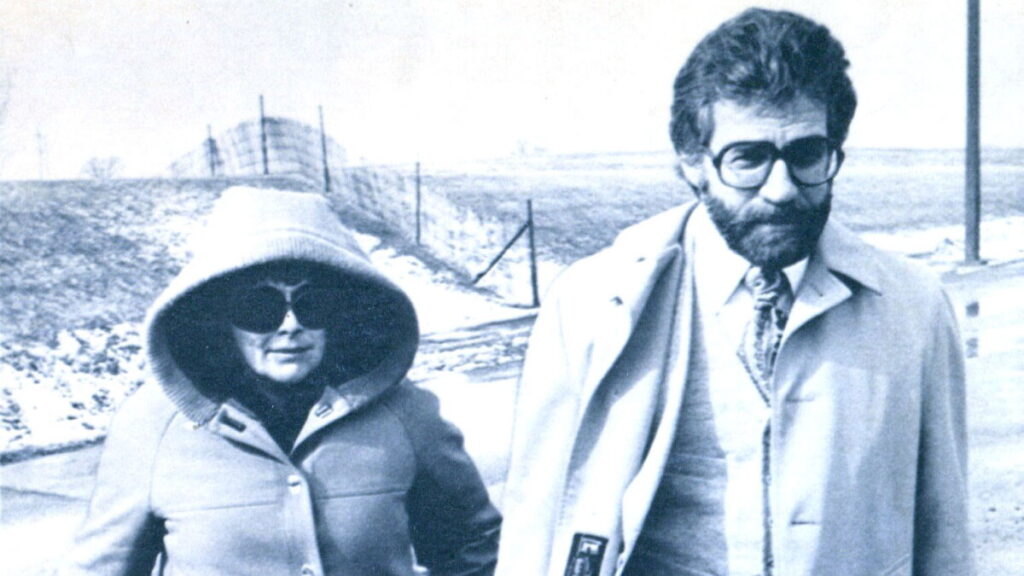
Marjorie presented herself to jurors as anything but a conniving plotter, knitting at the defense table, openly smiling at jurors while she kept a book nearby. She chatted with reporters, spectators & even the prosecution during breaks & even brought a chocolate cake to the courtroom on Meshbesher’s birthday.
After six weeks of testimony & 10 hours of deliberations, on July 20, 1979, the jury came back, finding Marjorie not guilty. After the verdict was read, some of the jurors came forward to hug & congratulate her. She later told a reporter that she’d celebrated her victory by enjoying a bag of White Castle sliders at Como Park in St. Paul.
Prosecutors, who were understandably disappointed, believed that the defense’s theories were false, but they felt grateful that the actual killer was safely behind bars.
During Roger’s time behind bars, a then 49-year-old Marjorie only visited her husband occasionally & in August 1981, she married a man 23 years her senior, 72-year-old Wally Hagen. They were married in North Dakota before she even divorced Roger. Although bigamy charges were filed against her, she was never arrested because it’s not an extraditable crime.
Marjorie had been close friends with Wally & Helen Hagen, his wife of 44 years, since the 1960s & they were of the few who remained friends with her after her mother’s murder. After her acquittal, Helen was moved to a nursing home after she was diagnosed with Alzheimer’s disease, but only days after her arrival, she fell into an unexplained coma. Three days later, she died at 63-years-old while nurses at the facility reported that the last person to have visited Helen had been Marjorie. After her death, Marjorie & Wally became inseparable.
After their wedding, they sold their home in the Twin Cities & the very night they moved, the home was set on fire. Marjorie, who still owed money on the home, was charged with arson. Investigators began uncovering other, unexplained fires in her background dating back to her youth. Once again, attorney Ron Meshbesher defended her, but this time she lost. After she was convicted of arson as well as insurance fraud, she was sentenced to time in a women’s prison.
On her release 20 months later, she & Wally relocated to the southwest in an RV, settling in the tiny town of Ajo, Arizona, close to the Mexican border. Wally was battling cancer at the time so Marjorie often crossed the border with her husband to purchase the medication he needed. Nearby fires began popping up inside homes & garages which police attributed to local kids.
Wally & Marjorie had a contentious relationship with their neighbor, who they accused of throwing trash into their yard & agitating their dog. One night, the man heard a rustling near the window & when he came over to investigate, he found a kerosene-soaked rag on his window sill. After he contacted the police, they set a trap & at 1 am, they chased a figure down a dark alley & captured Marjorie.
Once again, she was charged with arson, this time spending 8 months in jail after she was unable to make bail. Wally, who had been previously confined to a wheelchair, seemed to improve during his wife’s time behind bars. The ailing man was suddenly alert, able to drive around town going to restaurants & flirting with other women. After her release, Wally’s health once again began going downhill which was when a neighbor accused her of giving him sleeping pills.
When Wally testified at his wife’s trial, he claimed that Marjorie’s arthritis was so advanced that she couldn’t even grasp a match. Although he had been wheeled into the Tucson courtroom on a gurney, jurors later saw him walking by himself in the parking lot.
Marjorie was convicted of attempted arson & would later plead no-contest to additional arson charges. After she was sentenced to 15 years in prison, she asked the judge for one more day of freedom so she could take care of Wally. Although police suspected that she planned to flee to Mexico, the judge agreed, instructing officers to patrol their Ajo home.
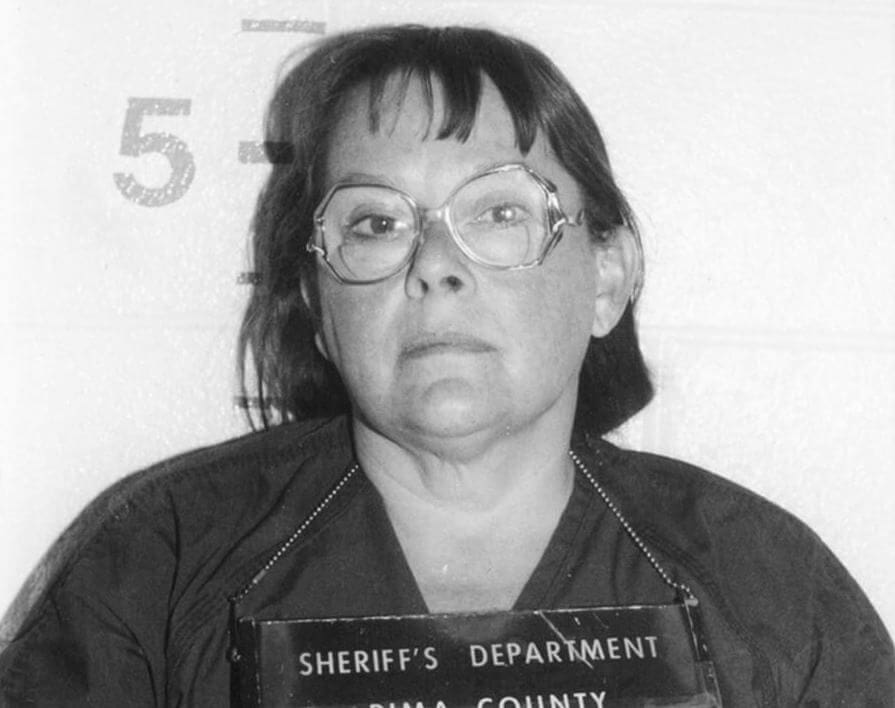
On the following day, October 30, 1992, officers smelled natural gas coming from their house, but when they came to the door Marjorie insisted that everything was fine, saying that the pilot light had blown out on their stove. Only hours later, she called to say that 83-year-old Wally was dead.
When police responded to the home, they found a piece of hose that was cut just long enough to stretch from the oven to the bedroom. Prescription pills lay near Wally’s body as well as a double-suicide note & it was later determined that he’d died from a drug overdose rather than carbon monoxide poisoning.
In her suicide note, Marjorie wrote that she had been unjustly convicted & did not want to go to prison. She claimed that because Wally’s health was so poor, he would be unable to live without her & she wished for them to be buried together alongside their dog.
Marjorie was arrested for her husband’s murder, but as the deadline for calling a grand jury approached, prosecutors worried that their evidence wouldn’t hold up in court. Jurors might believe that she & Wally had planned this double-suicide together & after he’d died first, she backed out. The charge was dropped.
When Wally’s three children requested that their father’s body be returned to Minnesota so he could be buried next to Helen, his wife of 44 years, from behind bars, Marjorie refused. After a drawn out, expensive legal battle, a judge granted the children half of their father’s ashes while Marjorie received the other half. This was when the Hagen family began to publicly speculate that Marjorie could be responsible for their mother’s death as she’d been the last person to visit Helen before she died.
When Marjorie began seeking early release in 2001, two of Wally’s children attended her parole board hearing in Phoenix. Taking no responsibility for her actions, she only ranted to the board about how the three Hagen children had caused her so much grief over the years. Meanwhile, several of her own children also had written letters to the board, opposing her early release. She was denied early parole.
In 2004, after serving a decade in prison, she was released & moved to Tucson. Within a year of her release, she accused her attorney of stealing her money while she was behind bars as she’d been receiving about $4,8000/month from the Congdon estate as well as from Wally’s pension. As a result, attorney Ed Bolding was convicted of embezzling $1 million from her as well as another client.
In 2007, Marjorie befriended a man named Roger Simms, who lived at an assisted living facility, offering to help manage his finances. Although he soon died, she continued writing checks to herself. When police tried to determine his cause of death, they realized that he had been cremated at Marjorie’s decision as she had been his power of attorney. After she was charged with fraud & forgery, she was sentenced to intensive probation.
Three years later, when she went to court to try to have her probation dropped in order to move to an assisted living facility herself, the judge denied the request.
When Marjorie had been acquitted back in 1979 for planning her mother & Velma’s murders, Roger’s attorneys filed an appeal. Without the incriminating fingerprint on the envelope that contained the coin, they were sure they would be granted a second trial. However, the Colorado waitress had since recanted her statement of seeing Roger on the day of the murders, but by this time, it was too late for Marjorie’s case.
In August 1982, over five years after the murders, the Minnesota Supreme Court overturned Roger’s conviction & ordered a new trial. After serving more than five years, he was released from prison.
By this time, the case was proving to be difficult for authorities due to the new evidence from Marjorie’s trial as well as the fact that witnesses had since died. The cost of a second trial would also be massive. They worried that if they lost & Roger walked free, the city’s biggest murder case would remain unsolved.
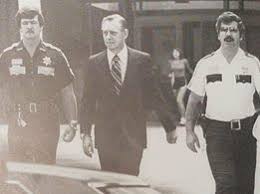
They proposed a plea bargain; should Roger confess, he would be offered a much shorter sentence, just one additional year in prison.
By this time, Roger was living in his hometown of Latrobe, Pennsylvania when he decided to hold off on a decision in hopes of negotiating an even better deal, a guilty plea in return for no further prison time. When given this promise, he pleaded guilty to second-degree murder.
Roger traveled to Duluth to make his confession, telling the courtroom that on the night of June 27, 1977, he waited outside the mansion that night before he broke in & murdered both Velma & Elisabeth. He claimed that because he had been drinking heavily, details were fuzzy, such as how he’d flown from Minnesota without detection. He didn’t recall taking the gold coin from his mother-in-law’s bedroom & he showed absolutely zero remorse for what he’d done & made no mention of an accomplice.
He claimed that when he’d gone to Glensheen that night, he only intended to rob the mansion, rather than kill Elisabeth & Velma. He admitted that he had no plan, including a way to flee from the home. Even though Marjorie was in the clear due to double-jeopardy laws, Roger denied that she’d had any involvement & claimed that she hadn’t even known about his plan. He was sentenced to time served which was five years & went back to his home in Latrobe.
Roger’s life was bleak; he was in poor health, an alcoholic & living on welfare, receiving $186 per month. He eventually reached out to the Congdons, saying that if they paid him $50,000, he would provide evidence that proved others had been involved in the murders. The family agreed, but requested proof that the evidence was solid. When Roger upped the price to $100,000, they broke off all negotiations.
In May 1988, a 54-year-old Roger sat on his living room floor & bled to death after slitting his wrists with a steak knife. He left three suicide notes behind, one that claimed that he was innocent of the murders. He wrote about the difficulty he faced getting a job in town & the notoriety that haunted him in connection with the murders. Only nine people attended his funeral.
Although Roger wrote that he’d never hurt a soul in his life, at the time of his death, his girlfriend in Latrobe had been hospitalized with a broken collarbone after he’d badly beaten her, making it clear that the contents of his notes couldn’t be taken seriously.
Based on the most recent available information, as of August 2025, Marjorie Congdon Caldwell Hagen was still alive & living in Tucson. She’ll be celebrating her 94th birthday in July 2026. Her sister, Elisabeth’s other adopted daughter, Jennifer Congdon Johnson, died in Chandler, Arizona at 81 years-old on May 15, 2017.
Although Jennifer & her husband, Charles had been convinced that a second person may have been in the mansion with Roger on the night her mother was murdered, they’d been unsuccessful in their attempts of getting more information from him prior to his death. After Elisabeth’s murder, Jennifer was completely estranged from her sister & had written letters of opposition for Marjorie’s early release in relation to her string of Arizona arsons.
On the night of June 27, 1977, when a drunken Roger Caldwell entered the sprawling mansion of Glensheen, he crept through a basement window & began to climb the grand staircase. Here, he came upon Elisabeth’s devoted nurse, Velma Pietila, who hadn’t even been meant to be there that night. After she was beaten to death on the grand staircase with a brass candlestick holder, Roger moved on to a helpless 83-year-old Elisabeth Congdon. After living a full life of privilege, philanthropy & deep ties to the city of Duluth, she sadly, had no chance of fighting her killer away.
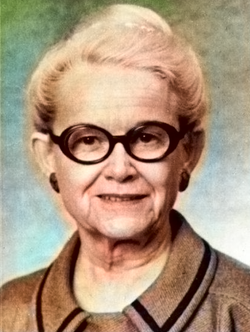
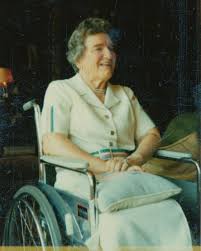
This story is a reminder that even wealth & status cannot shield someone from tragedy or betrayal. Greed is one of the most predictable motives of murder. When someone starts viewing another person as nothing more than a paycheck or an inheritance, a killer can convince themselves that they’re owed something, making the decision that money matters more than a human being.
References:
- MNOPEDIA: Mesabi Iron Range
- City of Duluth, Minnesota: Parks & Recreation: Congdon Park
- Glensheen
- Los Angeles Times: Obituaries: Roger Caldwell; murder figure in 1977: Suicide notes claimed innocence, blamed problems on notoriety
- MINNPOST: Elisabeth Congdon’s other daughter, Jennifer Johnson, has died
- MINNPOST: Duluth’s Glensheen estate is one of the best-preserved mansions of its kind in Minnesota
- Artful Living: A retelling of Minnesota’s infamous Glensheen Murders
- Find a Grave: Wallace Howard Hagen
- Find a Grave: Helen Aileen Schmidt Hagen
- MPR news: 40 years later, Glensheen murder still grip Duluth
- University of Minnesota: Congdon family papers
- University of Minnesota: Congdon family
- The Current: ‘Glensheen’: Chan Poling’s History Theatre musical revisists Minnesota’s most infamous murders
- Justia U.S. Law: Pietila v. Congdon
- Justia U.S. Law: State v. Caldwell